
Pinterest Ad Creative Testing: A Framework for Fashion & Beauty Brands

This guide provides a systematic framework for fashion and beauty brands to test Pinterest ad creative. It is for performance marketers and founders who need to move beyond repurposed content and unlock ROAS on this visual-first platform.
- Understand why Pinterest requires a unique creative testing approach.
- Identify the most impactful creative elements to test for fashion and beauty.
- Follow a step-by-step process to set up and launch a structured ad creative test.
- Learn how to analyze test results to make data-driven decisions for your campaigns.
Fashion and beauty brands often treat Pinterest like another social channel, repurposing ad creative from Meta or TikTok and wondering why performance falls short. The reality is that Pinterest users are not passively scrolling; they are actively planning. This fundamental difference in user intent requires a dedicated creative testing framework to discover what truly resonates and drives sales.
Why is Pinterest creative testing different for fashion & beauty brands?
Unlike other platforms where ads interrupt a user's feed, Pinterest ads are part of the discovery process. Users, often called 'Pinners,' come to the platform with high purchase intent, actively searching for ideas and products. For fashion and beauty brands, this means creative isn't just an ad; it's a solution. A Pinner isn't just seeing a dress; they're planning an outfit for an upcoming event.
This makes the creative's job different. It must inspire and inform, fitting seamlessly into a user’s board of ideas. The metrics for success also shift. While clicks and conversions matter, 'Saves' are a powerful, Pinterest-specific indicator of purchase intent. A user saving your Pin to their "Summer Wedding Guest Outfits" board is a strong signal of future purchase. A robust testing strategy for fashion and beauty must account for this unique user behavior, prioritizing inspirational visuals over hard-sell tactics.
| Platform | User Intent | Optimal Creative | Key Metric |
|---|---|---|---|
| Planning & Discovery | Inspirational, lifestyle, "how-to" | Saves, Clicks | |
| Meta (Instagram/Facebook) | Social Connection & Entertainment | Authentic, engaging, trend-focused | Engagement, CTR |
| TikTok | Entertainment & Trend Discovery | Short-form video, UGC, sound-on | Views, Shares |
Key creative elements to test on Pinterest for fashion & beauty
A successful Pinterest testing strategy isolates variables to understand what drives performance. Instead of testing entirely different concepts against each other, focus on iterating specific elements within a consistent creative format. For fashion and beauty, the most impactful elements include:
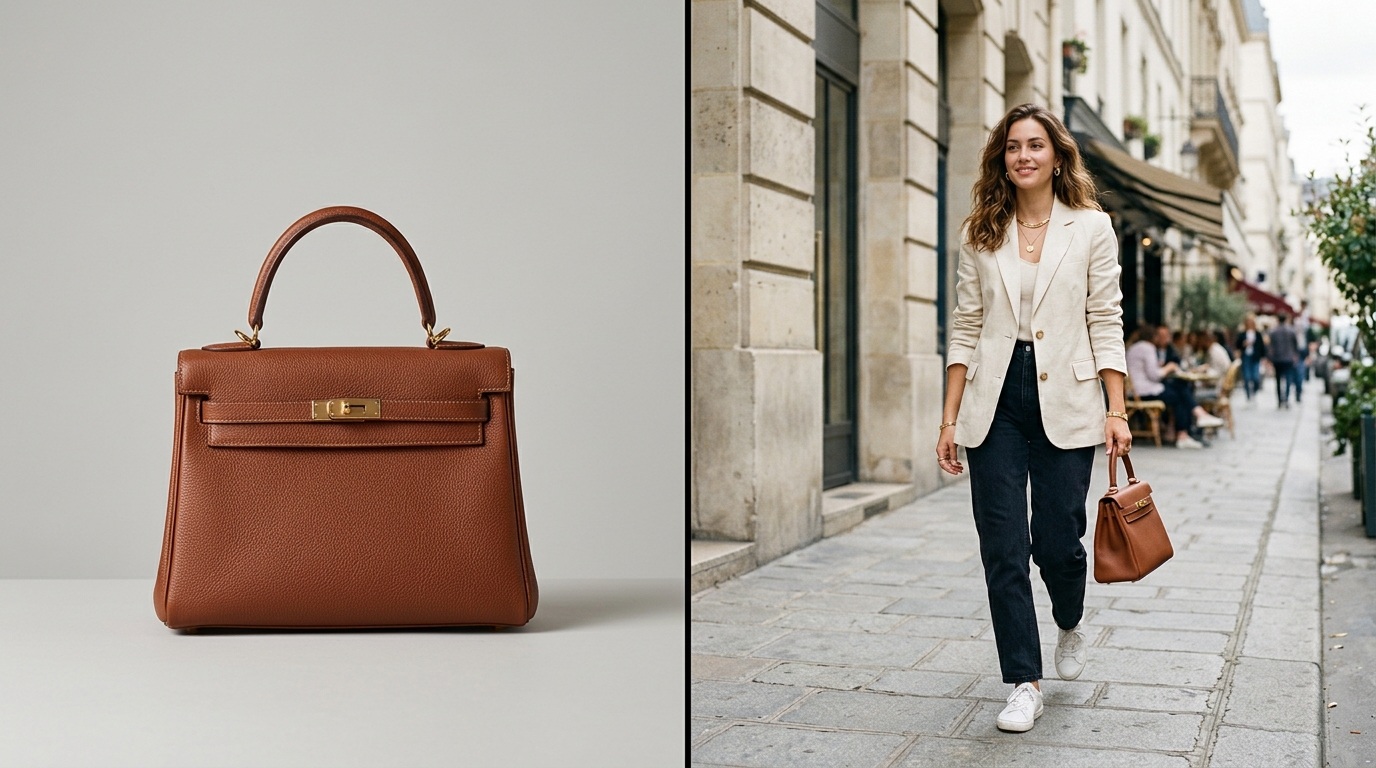
- Image & Video Style: Test different visual approaches. For example, a studio shot on a plain background vs. a lifestyle image in a real-world setting. Or a polished, professionally shot video vs. a more authentic, UGC-style clip.
- Model & Presentation: If using models, test variations in pose, expression, or even the model choice itself to see what resonates with your target demographic. For products, test flat lays vs. on-model shots.
- Text Overlay & Copy: Evaluate the impact of text on your creative. Test ads with and without text overlays. When using text, experiment with different messaging—highlighting a benefit ("Flawless Glow"), a special offer ("Free Shipping"), or a call-to-action ("Shop the Look").
- Pin Format: Don't limit yourself to static images. Test different Pin formats against each other, such as a standard Pin, a Video Pin, or a multi-image Collection Ad. Each format serves a different purpose in the user journey.
- Color & Composition: Minor visual tweaks can have a major impact. Test different background colors or compositions to see what makes your product stand out in a crowded feed. A simple A/B test of a vibrant vs. a neutral background can yield significant insights.
How do you set up a Pinterest ad creative test step-by-step?
A structured approach to setting up your test is crucial for obtaining clean, actionable data. Rushing the setup can lead to muddled results that don't provide clear direction. Follow these steps to ensure your test is built on a solid foundation.
- Define Your Hypothesis: Start with a clear question. For example: "We believe that lifestyle images showing our handbag in use will achieve a higher click-through rate than our standard product-only shots." A strong hypothesis guides your entire test.
- Isolate a Single Variable: The cardinal rule of testing. If you are testing image style, keep the copy, headline, and targeting identical across all ad variants. Changing multiple elements at once makes it impossible to know what caused the change in performance.
- Set Up Your Campaign Structure: Use Pinterest's Campaign Budget Optimization (CBO) for creative tests. Create a single campaign with one ad set. Within that ad set, create multiple ads, one for each creative variant you are testing. This setup allows Pinterest to allocate budget to the top-performing creative automatically, but you should still monitor results manually to understand the 'why'.
- Determine Your Budget and Duration: Allocate a sufficient budget to allow your test to exit the 'learning phase' and gather enough data for a statistically significant conclusion. A typical test runs for 7-14 days. This timeframe is long enough to smooth out daily fluctuations in performance.
- Launch and Monitor (But Don't Touch): Once your test is live, resist the urge to make changes. Let the test run its course to ensure the data is clean. Prematurely turning off an ad variant can invalidate your results.

Analyzing Pinterest creative test results for ROAS
Analyzing the results of your creative test goes beyond simply picking the ad with the highest click-through rate. A holistic analysis will give you a much richer understanding of what drives your business forward. Focus on a combination of metrics to get the full picture.
Start with top-of-funnel engagement metrics. Look at your Outbound Click-Through Rate (CTR) to see which creative is most effective at driving traffic off of Pinterest to your website. Also, pay close attention to the Save Rate. A high save rate indicates that your creative is resonating with users and has future purchase intent, even if it doesn't lead to an immediate click.
Next, move down the funnel to your primary business objective: Return on Ad Spend (ROAS). An ad might have a great CTR but fail to convert. By connecting your Pinterest Ads account to your e-commerce platform, you can track revenue generated by each creative variant. Your winning creative is the one that delivers the highest ROAS, not just the most clicks. For a deeper dive, analyze Add to Carts and Checkout conversions to understand where users might be dropping off in the funnel.
What are common mistakes in Pinterest ad creative testing?
Even with the best intentions, several common pitfalls can derail a creative testing strategy. Being aware of these mistakes can help you avoid them and ensure your testing efforts are productive and insightful.
- Testing Too Many Variables at Once: This is the most common mistake. If you change the image, the headline, and the call-to-action all at the same time, you'll have no idea which element was responsible for the change in performance. Always isolate a single variable per test.
- Ending Tests Too Early: It's tempting to declare a winner after just a few days, but performance can fluctuate. Wait for your test to reach statistical significance, which typically requires at least a week of data and a sufficient number of conversions.
- Ignoring Pinterest-Specific Metrics: Focusing only on CTR and ignoring Saves is a missed opportunity. Saves are a unique indicator of intent on Pinterest and can tell you a lot about the long-term value of your creative.
- Using Low-Quality or Off-Brand Creative: Pinterest is a visual platform. Low-resolution images, poorly designed graphics, or creative that doesn't align with your brand's aesthetic will perform poorly, no matter how well-structured your test is.
- Not Testing Continuously: Creative testing isn't a one-and-done activity. Audience preferences change, and creative fatigues. The insights from one test should inform the hypothesis for your next one. Build an "always-on" testing muscle to consistently improve your performance.
Frequently asked questions
Are Pinterest ads effective for fashion brands?
Yes, Pinterest ads are highly effective for fashion brands because they reach users who are actively seeking inspiration and planning purchases. The platform's visual nature is ideal for showcasing apparel and accessories in lifestyle contexts, driving both discovery and conversions.
What type of creatives perform best for fashion brands on Pinterest?
High-quality lifestyle imagery and videos that show products in use perform best. Pins that feel native to the platform—aspirational, well-composed, and offering styling ideas—tend to generate more saves and clicks. Short-form video, Idea Pins showcasing 'how-to' content, and curated Collection Ads also see strong performance.
How much should I budget for Pinterest ad testing?
A common starting point is to allocate 10-20% of your total Pinterest ad budget specifically for creative testing. For a small brand, this might be a few hundred dollars per test, while larger brands may invest thousands. The key is to budget enough to reach statistical significance without scaling up unproven creative.
How long should I run a Pinterest ad test?
Run a test long enough to exit the learning phase and gather statistically significant data, typically between 7 to 14 days. Shorter tests can be skewed by daily performance fluctuations, while longer tests can waste budget on underperforming creative. The duration depends on your budget, audience size, and conversion volume.
Can I repurpose my Instagram creative for Pinterest ads?
While some assets can be adapted, a direct repurposing strategy often underperforms. Pinterest's audience has a different intent—planning versus social scrolling. It's best to edit creative for Pinterest's vertical aspect ratio and to ensure the content is inspirational and actionable, rather than purely promotional or entertaining.