Video Ad Hooks for Fashion & Beauty: Stop the Scroll

This article breaks down how fashion and beauty brands can create effective video ad hooks to capture audience attention instantly. It is for performance marketers and creative teams looking to stop the scroll, increase engagement, and improve return on ad spend (ROAS). You will learn actionable strategies for crafting and testing hooks that convert.
- Understand why the first three seconds of a video ad are critical for ROAS.
- Discover 5 proven video ad hook formulas for fashion and beauty.
- Learn a framework for testing and validating your ad hooks for performance.
- See how AI can help scale your winning ad creative.
Your video ad has less than three seconds to stop a potential customer from scrolling. For fashion and beauty brands, this fleeting window is the single most critical factor in turning ad spend into revenue. An effective hook doesn't just grab attention; it qualifies the audience and sets the stage for conversion.
Why the First 3 Seconds of Your Video Ad Matter for Fashion & Beauty ROAS?
In the fast-scrolling world of social media, the first few seconds of a video ad determine its fate. Research shows that a significant percentage of viewers drop off almost immediately if not engaged. According to a 2024 study by Animoto, you have about 3 seconds to convince viewers your video is worth watching. For fashion and beauty brands, where visuals are paramount, this initial impression directly impacts metrics like Click-Through Rate (CTR), cost per acquisition (CPA), and ultimately, ROAS.
The social media algorithms on platforms like Meta and TikTok are designed to prioritize engaging content. When a user stops to watch your ad, it signals relevance, and the platform rewards you with better placement and potentially lower costs. A strong hook, therefore, is not just a creative choice—it's a financial lever.
The Psychology Behind a Scroll-Stopping Hook
Understanding the "why" behind an effective hook is as important as the "what". At its core, a scroll-stopping hook leverages basic principles of human psychology to interrupt a passive state of information consumption. When users scroll through their social media feeds, they are often in a state of cognitive ease, filtering out most of what they see. A successful hook must break this pattern.
- Curiosity Gap: A hook that presents a question or an incomplete piece of information creates a "curiosity gap". The viewer feels a psychological need to close this gap by watching the rest of the video to find the answer. This is why hooks like "Did you know you might be applying your serum wrong?" are so effective.
- Pattern Interruption: As mentioned earlier, visual disruption is key. This is a classic example of pattern interruption. By presenting something unexpected—a sudden movement, a surprising color, a strange camera angle—you force the brain to switch from a passive to an active state of processing. This momentary switch is often all you need to get the viewer to consciously engage with your content.
- Emotional Resonance: The most powerful hooks tap into core human emotions: joy, surprise, humor, or even frustration. A hook that shows a genuine, relatable emotional reaction (like the joy of unboxing a long-awaited purchase) creates an instant connection with the viewer. This is particularly potent in the fashion and beauty space, where purchasing decisions are often driven by emotion and aspiration.
What Makes a Video Ad Hook "Scroll-Stopping" for Fashion & Beauty Audiences?
A scroll-stopping hook for fashion and beauty is a combination of visual intrigue, emotional resonance, and clear value. It's not about shock value, but about instantly connecting with the viewer's aspirations or problems. According to HubSpot, 54% of consumers want to see more video content from a brand or business they support, but their attention is finite. Your hook must earn that attention.
- Visual Disruption: Unexpected camera angles, rapid cuts, or a sudden change in motion can break the hypnotic trance of scrolling. A close-up of a unique fabric texture or a surprising color combination can be enough to make someone pause.
- Relatability: The hook should reflect the target audience's reality. A User-Generated Content (UGC) style video showing a real person's reaction to a product often outperforms polished studio content because it feels authentic. Wyzowl's 2024 report notes that people are twice as likely to share video content with their friends than any other type of content, and authenticity is a key driver of that sharing.
- Benefit-Driven Opening: The hook should immediately communicate the "what's in it for me?" for the viewer. This could be solving a common problem (e.g., "The perfect lipstick that doesn't smudge") or showcasing a desired transformation.
Five Proven Video Ad Hook Types for Fashion & Beauty Brands (with examples)
Generic hooks don't work for fashion and beauty. Your audience is visually sophisticated and responds to specific emotional and aesthetic triggers. Here are five proven hook types tailored for this market, with expanded examples to illustrate how they can be applied.
- The "Problem/Solution" Hook: Start by highlighting a common frustration. This approach is effective because it creates an immediate sense of shared experience. It tells the viewer that you understand their specific challenges.
Example (Beauty): A close-up shot of foundation creasing under the eyes, followed by a quick swipe of a new product that blends flawlessly. Text overlay: "Tired of cakey concealer?". This works because it's a highly relatable problem for anyone who uses makeup. The immediate visual solution is compelling and satisfying. Example (Fashion): A person struggling to find an outfit for an event, with a closet full of clothes behind them. Text overlay: "Nothing to wear? We've been there.". This hook taps into a universal feeling of being overwhelmed by choice yet underwhelmed by the options. 2. The "Unexpected Transformation" Hook: Show a dramatic and satisfying before-and-after. This hook works by creating curiosity and demonstrating the product's value in a visually compelling way. The key is to make the transformation feel both aspirational and achievable.
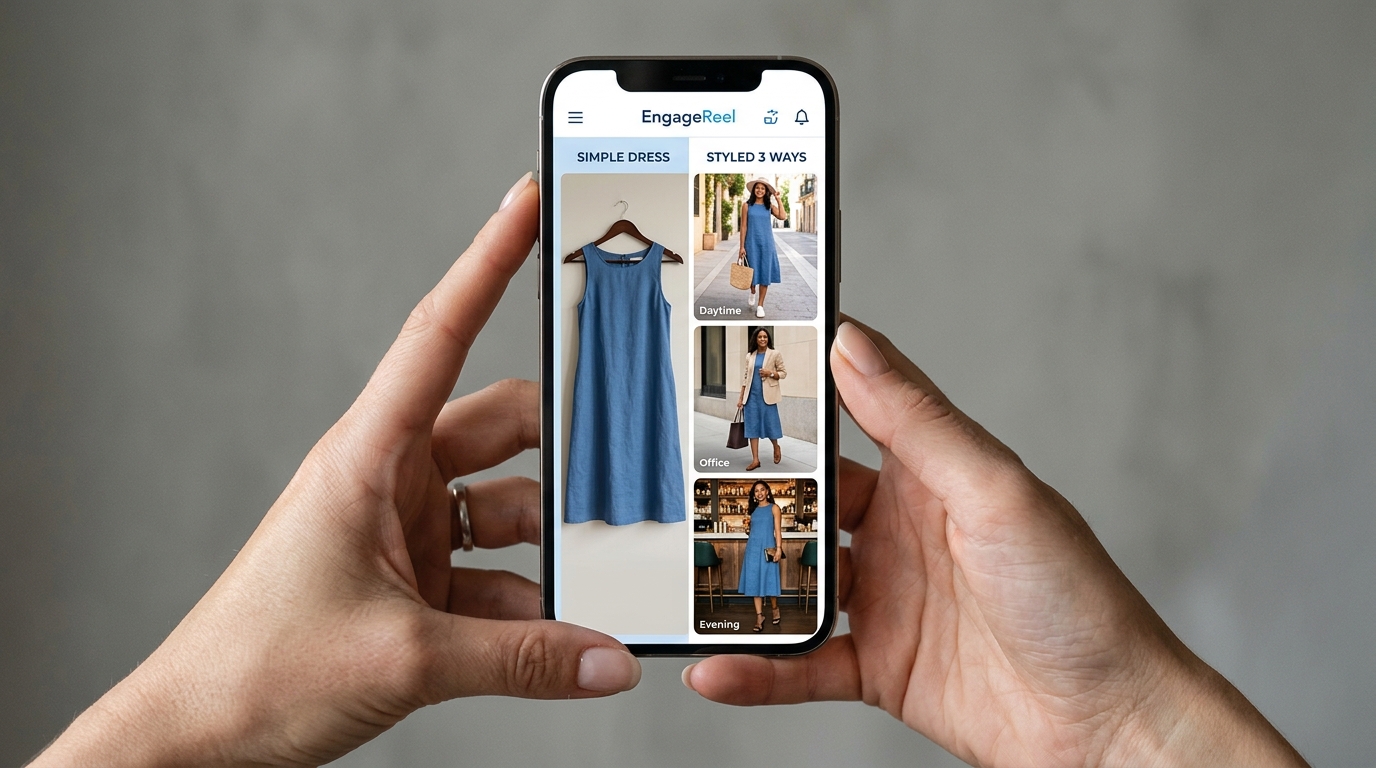
Example (Fashion): A plain white t-shirt is instantly styled into three completely different, high-fashion looks with accessories. This not only showcases the versatility of the product but also provides styling inspiration, adding value beyond the product itself. Example (Beauty): A quick-cut sequence showing the application of a skincare product and the immediate glowing result. The speed of the transformation is key here, as it implies that the product is both effective and easy to use. 3. The "Behind the Scenes" Hook: Give a glimpse into the creative process or product story. This builds brand transparency and can create a deeper connection with the audience. It makes the brand feel more human and less like a faceless corporation.
Example (Fashion): A quick shot of a designer sketching a pattern or a craftsman stitching a detail on a handbag. This highlights the artistry and craftsmanship that goes into the product, which can be a powerful differentiator in a crowded market. Example (Beauty): A shot of raw, high-quality ingredients being sourced or mixed for a cosmetic product. This appeals to consumers who are increasingly interested in the ingredients and ethics behind their beauty products. 4. The "Social Proof" Hook (UGC): Open with a genuine customer reaction. As noted by the Sprout Social Index, authenticity from creators is the second most important qualification for consumers, just after their knowledge of the topic.
Example (Fashion): An unboxing video where the creator's face lights up as they feel the quality of a sweater for the first time. This kind of raw, unfiltered emotion is difficult to fake and can be more persuasive than any polished ad copy. Example (Beauty): A split-screen showing a popular influencer testing a new mascara and being visibly impressed with the length of their lashes. This leverages the trust and authority that the influencer has built with their audience. 5. The "Question" Hook: Pose a direct question that makes the viewer think and reflect on their own needs. A good question hook should be relatable and lead naturally into the solution that your product provides.
Example (Fashion): "What if one dress could work for the office, a date night, and a weekend brunch?". This question speaks directly to the desire for versatile, cost-effective clothing. Example (Beauty): "Did you know you might be applying your serum wrong?". This hook creates a sense of intrigue and positions the brand as an expert source of information.
A Framework for Crafting and Testing Your Hooks
Creating a winning hook is a process of disciplined testing, not guesswork. Relying on a single creative is a recipe for creative fatigue and declining ROAS. A systematic approach to testing is essential for sustainable growth. This process ensures you're making data-backed decisions rather than relying on intuition alone. The goal is to create a repeatable system that consistently identifies high-performing creative.
| Step | Action | Key Metric to Watch |
|---|---|---|
| 1. Ideate | Brainstorm 3-5 different hook ideas for a single product or campaign based on the hook types above. Each hook should represent a distinct angle. For example, for a new summer dress, you might test a "Problem/Solution" hook (e.g., "Finally, a dress that doesn't wrinkle"), a "Transformation" hook (e.g., showing the dress styled for three different occasions), and a "UGC" hook (e.g., a customer trying on the dress for the first time). | N/A |
| 2. Create Variants | Produce short (3-5 second) video clips for each hook idea. Keep the rest of the ad (the body and CTA) consistent across all variants. This is crucial for isolating the impact of the hook itself. Using the same body copy, music, and call-to-action ensures that any performance differences can be attributed directly to the opening seconds of the ad. | Hook Rate / ThruPlay Rate |
| 3. Test in Isolation | Run a creative test campaign (e.g., using Meta's A/B testing feature) with a limited budget, targeting your core audience. It's important to give the platform enough budget and time to gather meaningful data, but not so much that you're wasting spend on underperforming creative. A typical testing phase might last 3-5 days. | Cost Per Click (CPC), Click-Through Rate (CTR) |
| 4. Analyze and Iterate | After the testing period, identify the winning hook based on a combination of cost and engagement metrics. Look for the hook that not only has the highest CTR and lowest CPC, but also drives the most valuable downstream actions, such as add-to-carts and purchases. The winning hook then becomes the new control creative, against which you'll test future iterations. | Cost Per Purchase / ROAS |

Beyond the Hook: Scaling Winning Creative with AI
Identifying a winning ad hook is a major victory, but it's only the beginning. The next challenge is scaling that success without burning out your audience—a phenomenon known as creative fatigue. This is where AI-driven creative platforms become invaluable for fashion and beauty brands. According to Insider Intelligence, AI is projected to influence nearly $1.6 trillion in enterprise IT spending in 2024.
Manual creative iteration is a significant bottleneck for growth. A single winning ad concept might require dozens of variations to stay fresh and resonate with different audience segments (e.g., new customers vs. returning shoppers, different age demographics, or different geographic markets). Creating these assets manually is slow, expensive, and often inconsistent. A creative team can only produce so many high-quality variations per week, limiting the brand's ability to test, learn, and scale.
Once you've found a hook that resonates, AI can help you generate hundreds of variations around that winning theme. It can change backgrounds, swap models, adjust garment colors, and even generate entirely new lifestyle scenes, all while keeping the core product and hook consistent. This allows you to refresh your ads continuously, keeping them relevant and effective for different audience segments and preventing the performance dips associated with ad fatigue. This process of data-driven creative iteration is the key to maintaining high ROAS over the long term. By automating the production of these variations, you free up your creative team to focus on high-level strategy and ideation, rather than repetitive production tasks. This is not about replacing human creativity, but augmenting it with the power of data and automation, allowing brands to move faster and make smarter decisions.
Unlocking Creative Potential with EngageReel
EngageReel is an AI ad performance and creative platform for fashion eCommerce. It helps brands move from guesswork to data-driven decisions. The platform's Content Engine can take your winning ad concepts and autonomously generate a high volume of on-brand creative variations—from hook-first videos to lifestyle scenes—helping you scale what works and combat creative fatigue. By connecting creative elements directly to performance metrics, EngageReel gives you the insights to know not just what hook worked, but why, and what to create next. Learn more at EngageReel.com.
Frequently asked questions
How long should a video ad hook be?
A video ad hook should be between 1 and 3 seconds long. The goal is to capture attention and convey the core message or value proposition almost instantly. If you can't communicate the main idea in that timeframe, the viewer is likely to scroll past.
What are common mistakes to avoid in video ad hooks for beauty?
Common mistakes include using generic stock footage, making claims that are too good to be true, and focusing on features instead of benefits. Another major error is poor lighting or low-quality video, which can make a product look unprofessional and untrustworthy.
Can UGC videos use specific hooks for fashion brands?
Absolutely. UGC is incredibly effective for hooks because of its authenticity. The most powerful UGC hooks often feature a genuine, unscripted reaction, an unboxing experience, or a "get ready with me" (GRWM) style clip that shows the product in a real-life context.
How do I know if my video ad hook is working?
Look at your ad platform's metrics. A high "Hook Rate" (the percentage of people who watch the first 3 seconds) or a low drop-off rate after 3 seconds is a strong indicator. Ultimately, the best hooks will lead to a higher Click-Through Rate (CTR) and a lower Cost Per Purchase.
What is the ideal video length for social media ads?
While hooks are short, the ideal total video length varies by platform. For TikTok and Instagram Reels, ads between 15 and 30 seconds perform well. For platforms like YouTube, you have more flexibility, but the principle of a strong, front-loaded hook remains the same.