
Lifestyle vs. Studio On-Model Ads: Which Wins for Fashion ROAS?
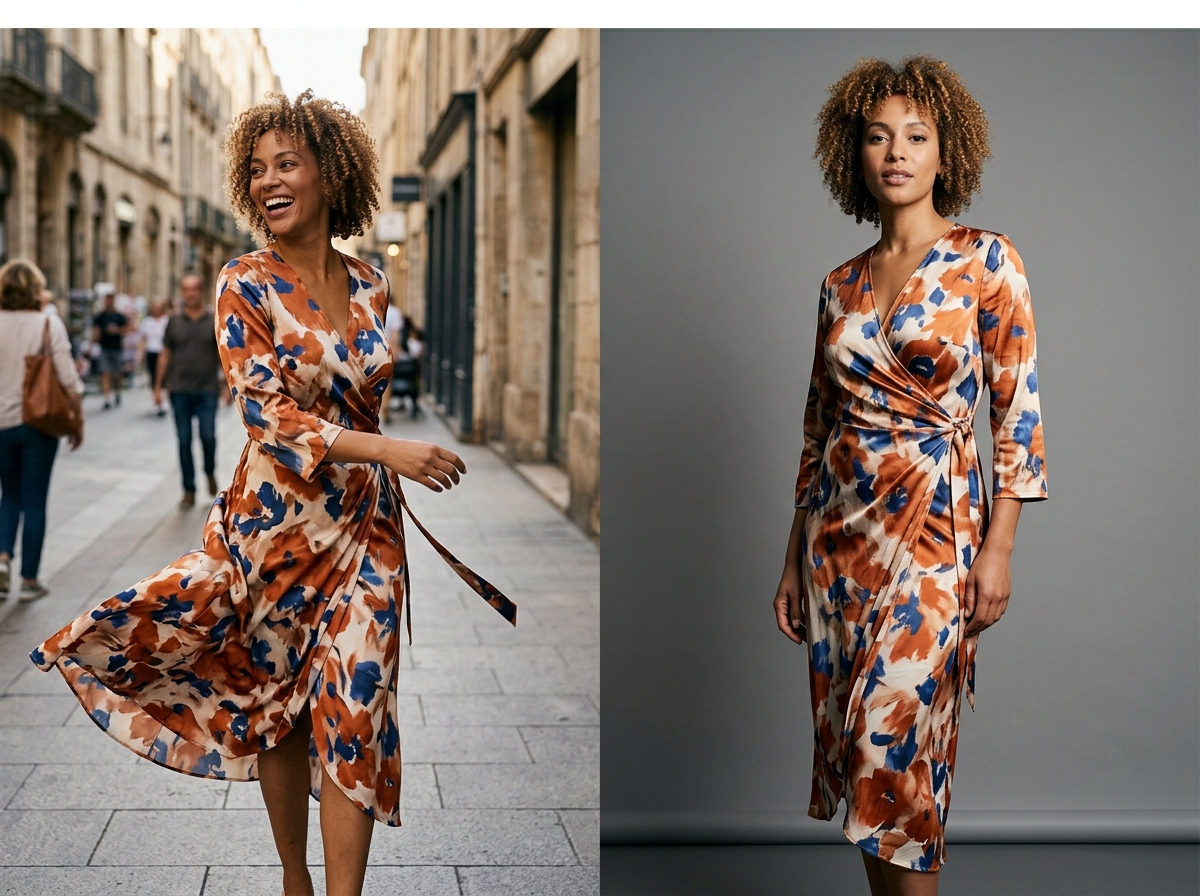
This article provides a clear framework for fashion and beauty marketers to decide between lifestyle and studio on-model ad creative. It breaks down which style best supports specific campaign goals—from brand awareness to direct conversion—to help you optimize your ad spend and maximize ROAS.
- Understand the strategic role of both lifestyle and studio photography in your ad funnel.
- Learn when to deploy each creative style for maximum impact on different platforms.
- Discover how to blend both approaches for a full-funnel creative strategy.
- See how AI can help you create and test both styles at scale.
Choosing between a relatable lifestyle scene and a crisp studio shot for your next ad isn't just a creative preference—it's a decision that directly impacts your ROAS. While both have a place, deploying the right on-model creative for the right campaign goal is what separates stalled ad accounts from those that scale profitably. The key is understanding that lifestyle creative builds connection, while studio creative builds confidence.
What Defines Lifestyle On-Model Photography for Ads?
Lifestyle on-model photography places your product in a narrative context. It's about showing the product in use, within an environment that reflects the aspirations and daily life of your target customer. Think of a trench coat worn on a misty morning in London, or a sundress at a picnic in the park. The focus isn't just the garment; it's the feeling and the story associated with it. For ad creative, these images are designed to be emotionally resonant and are crucial for building brand affinity and making your products feel more tangible and desirable.
According to a 2025 study by Stackla, 79% of people say user-generated content (a form of lifestyle creative) highly impacts their purchasing decisions because it feels authentic and relatable. This style works to stop the scroll on crowded social feeds by creating an immediate connection with the viewer. As noted by Modelize (2026), social media ads with lifestyle imagery also typically outperform studio shots in click-through rates, making them ideal for top-of-funnel campaigns where attention is the primary currency.
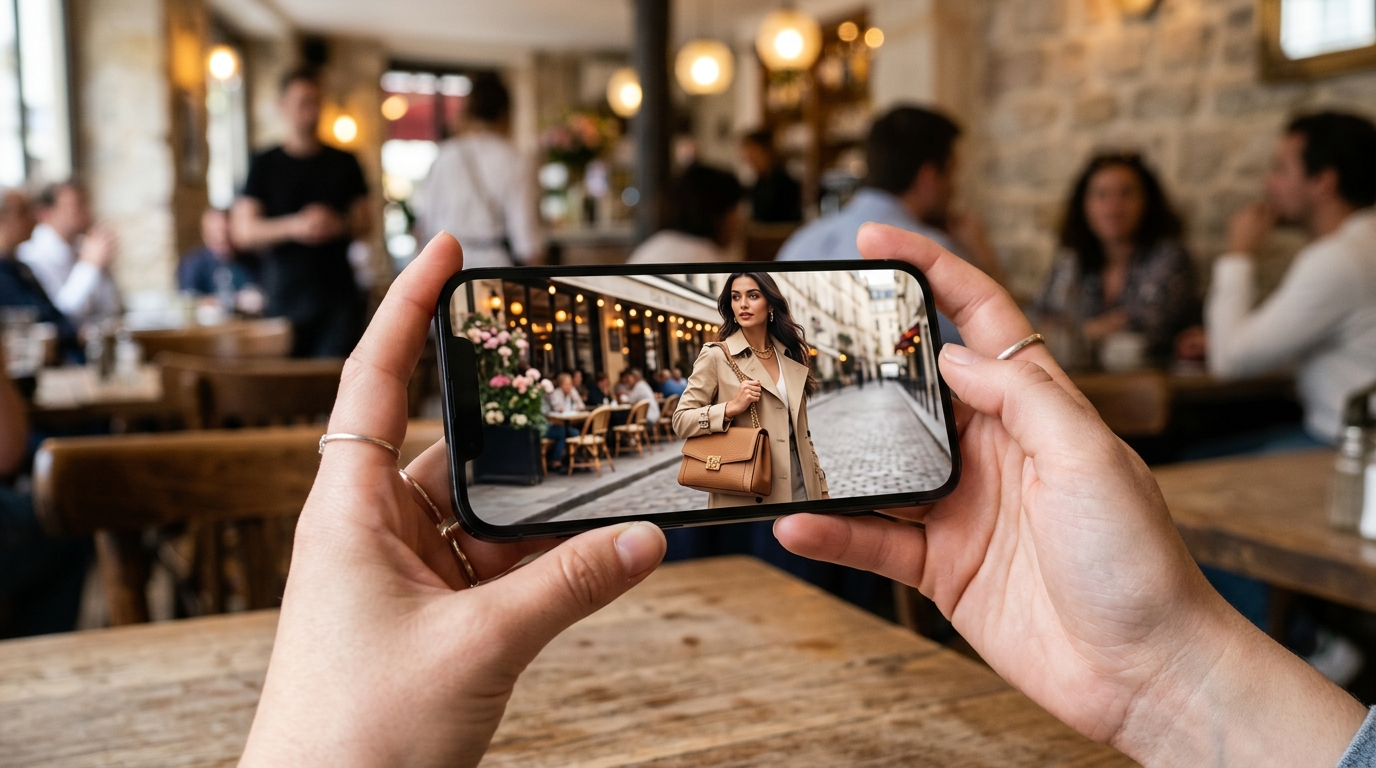
Why is Studio On-Model Photography Critical for Conversion?
Studio on-model photography isolates the product and the model against a clean, non-distracting background—typically solid white, gray, or a single brand color. The lighting is controlled and even, designed to showcase the garment's fit, texture, color accuracy, and details with absolute clarity. Every pleat, stitch, and seam is visible. This level of detail is essential for building trust and reducing friction in the final stages of the purchasing decision.
In advertising, studio shots are the workhorses of conversion. They are crucial for product-focused formats like Dynamic Product Ads (DPAs) and Google Shopping listings. By providing a clear, unambiguous view of the item, they reduce purchase uncertainty. According to BigCommerce (2026), 67% of consumers consider clear, high-quality photos to be more important than product information. Research from Weebly suggests that 22% of online product returns are because the item looks different in person, a problem high-quality studio shots are designed to solve.
When Should You Prioritize Lifestyle On-Model Ads?
Lifestyle creative excels at the top and middle of the marketing funnel, where the goal is brand awareness, engagement, and consideration. It’s the ideal format for capturing the attention of cold audiences who are not yet familiar with your brand. These visuals help you tell a story and build a community around your products, which is essential for long-term growth.
Use lifestyle ads for:
- Brand Awareness Campaigns: Introduce your brand's aesthetic and values through aspirational storytelling.
- Social Media Content (Instagram, Pinterest, TikTok): These platforms are visually driven and reward content that feels native and authentic. Lifestyle shots blend in seamlessly with user-generated content.
- Retargeting for Engagement: Show users who have visited your site different ways to style a product or see it in a new context to re-engage their interest.
- Highlighting a Specific Use Case: Launching a new collection of rainwear? Show it being worn in the rain. Selling activewear? Show it in motion at the gym.
How Do Studio On-Model Ads Drive Sales?
Studio creative is most powerful at the bottom of the funnel, where the user has high purchase intent and is actively evaluating your product against competitors. The clarity and detail provided by studio shots help close the sale by answering specific questions the customer may have about the product, thereby increasing conversion rates and reducing returns.
Deploy studio ads for:
- Dynamic Product Ads (DPAs) & Catalog Sales: Meta and Google algorithms use your clean product shots to serve highly relevant ads to users who have viewed specific items.
- Retargeting for Conversion: Remind a user who abandoned their cart of the exact product they considered. The clean, detailed shot reinforces the product's quality and features.
- Showcasing Technical Details: For items where fabric, fit, and construction are key selling points (e.g., performance outerwear, tailored suits), studio shots provide the necessary proof of quality.
| Factor | Lifestyle On-Model Ads | Studio On-Model Ads |
|---|---|---|
| Primary Goal | Brand Awareness, Engagement | Conversion, Clarity |
| Funnel Stage | Top/Middle | Bottom |
| Best Platforms | Instagram, TikTok, Pinterest | Google Shopping, Meta DPAs |
| Key Metric | CTR, Engagement Rate | ROAS, Conversion Rate |

Are You Blending Lifestyle and Studio Creative for Max ROAS?
The highest-performing fashion brands don’t choose one style; they build a full-funnel creative strategy that leverages both. The goal is to guide the customer from discovery to purchase with a seamless visual narrative. This integrated approach ensures that you are speaking to your customer in the right visual language at every stage of their journey, which is key to maximizing your return on ad spend.
A successful blended approach looks like this:
- Top of Funnel (Prospecting): Use captivating lifestyle video and static ads to introduce your brand and products to new audiences on social platforms.
- Middle of Funnel (Consideration): Retarget website visitors with carousel ads that feature both lifestyle shots (showing the product in context) and studio shots (revealing details).
- Bottom of Funnel (Conversion): Use DPAs with clean studio shots to retarget users who added items to their cart. This laser-focused approach reminds them of the specific product they wanted and makes it easy to complete the purchase.
By mapping your creative style to the customer journey, you deliver the right visual information at the moment it’s most likely to persuade, driving up your overall ROAS. This also allows you to test and learn which combinations of creative work best for different audience segments, leading to more efficient and effective campaigns over time. For example, you might find that your younger audience on TikTok responds best to raw, user-generated-style lifestyle content, while your older demographic on Facebook prefers more polished lifestyle shots. Similarly, you might discover that certain product categories, like technical outerwear, require more studio-shot details to convert, while others, like fashion accessories, sell better through aspirational lifestyle creative. The key is to let the data from your A/B tests guide your creative strategy, continuously optimizing your ad spend for maximum profitability.
Frequently asked questions
Do lifestyle images always perform better than studio shots in fashion ads?
Not always. Lifestyle images typically generate higher engagement and click-through rates at the top of the funnel (e.g., on social feeds), but clean studio shots often have a higher conversion rate in bottom-funnel formats like Dynamic Product Ads. The best performance comes from using both strategically.
Which platforms favor lifestyle vs. studio on-model creative?
Platforms like Instagram, Pinterest, and TikTok heavily favor authentic, story-driven lifestyle content. In contrast, e-commerce marketplaces and ad formats like Google Shopping and Meta's catalog ads require clean, white-background studio shots for primary product listings.
How can AI help create both lifestyle and studio on-model ads?
AI platforms like EngageReel allow brands to generate both creative styles from a single product image. You can take a simple studio shot and instantly place it into countless lifestyle scenes or generate new on-model variations without needing a photoshoot, making it possible to test and scale both approaches affordably.
Can I use studio on-model photos for brand awareness campaigns?
While possible, it's generally less effective. Studio shots lack the emotional, narrative context that captures the attention of users who aren't yet familiar with your brand. Lifestyle creative is better suited for telling your brand story and making a strong first impression.
How do I test which creative style works best for my audience?
Run structured A/B tests. For a given campaign objective, create two ad sets with identical targeting, budget, and copy, but use lifestyle creative in one and studio creative in the other. Measure metrics like CTR, Add to Carts, and ROAS to see which style resonates more effectively with that specific audience segment.
References
- Stackla — Post-Pandemic Shifts in Consumer Shopping Habits (2025)
- Weebly — Why Your eCommerce Business is Seeing So Many Returns (2024)
- BigCommerce — The Ultimate Guide to Product Photography (2026)
- Instagram for Business — How to Create More Effective Video Ads (2026)
- Google Merchant Center Help — Image link [image_link] (2026)