
TikTok Fashion Ads: Test Creative Elements for Better ROAS

This article provides a data-driven framework for fashion brands to systematically test creative elements in TikTok ads. It is for performance marketers and creative strategists who need to move beyond guesswork and identify precisely which variables drive conversions and ROAS.
- Discover the most impactful creative elements to test, from hooks to CTAs.
- Learn how to structure an A/B test for clear, actionable results.
- Identify common testing mistakes that waste ad spend and invalidate data.
- Understand the metrics that define a winning creative element on TikTok.
How do you systematically improve TikTok ad performance for fashion? By isolating and testing individual creative elements—such as the hook, visuals, music, and call to action—brands can move from guessing what works to knowing what drives return on ad spend (ROAS). This data-driven approach is the key to scaling successful campaigns in a competitive market.
Why is granular creative testing crucial for TikTok fashion ads?
Simply producing more ad variations without a systematic testing process often leads to wasted spend and creative fatigue. Granular testing is crucial because it helps you understand the why behind an ad's success or failure. According to TikTok's own ad testing guide, creative variety is at the heart of optimization, but without isolating variables, it's impossible to learn and iterate effectively.
For fashion brands, where visual and emotional appeal are paramount, knowing whether the model, the scene, the hook, or the sound made the difference allows you to build a library of proven elements. This transforms your creative strategy from a series of one-off gambles into a repeatable, scalable engine for growth.
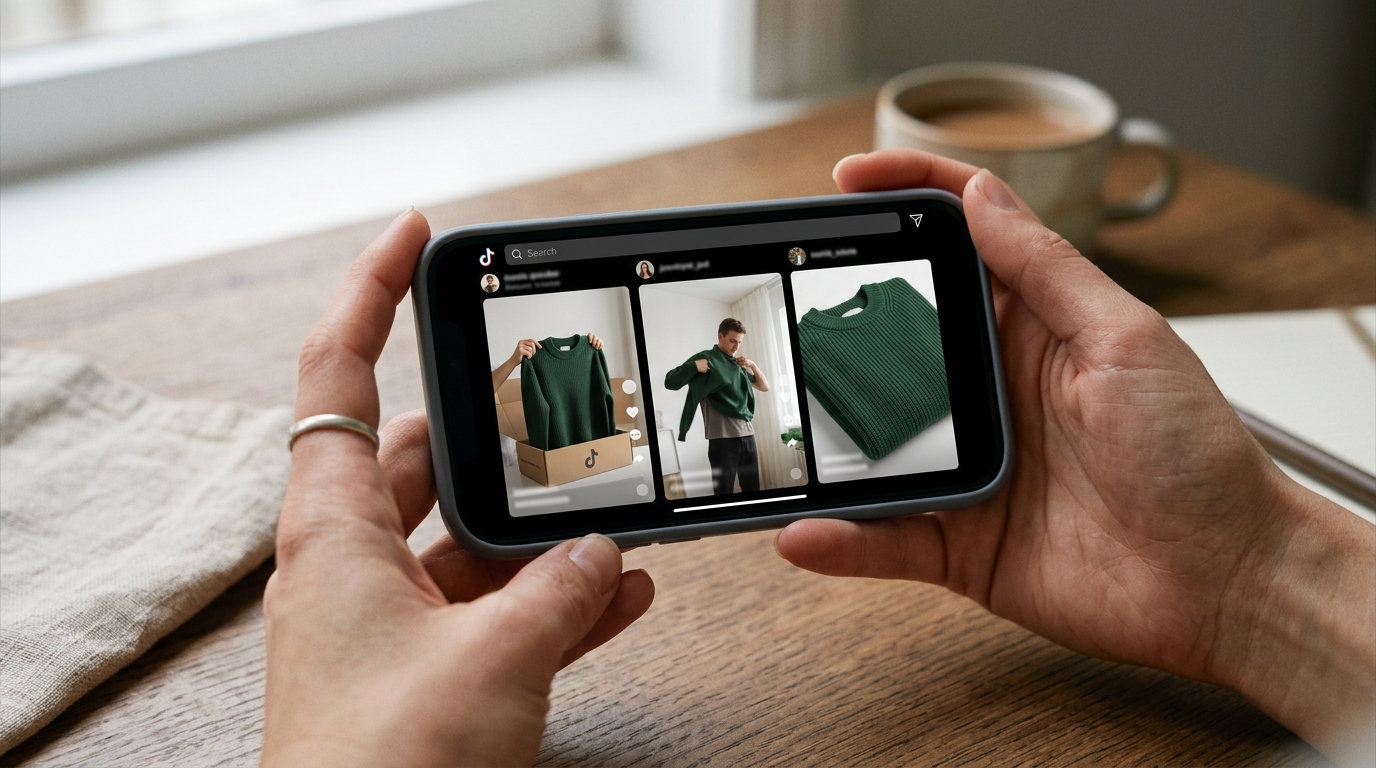
Key creative elements to test in your TikTok fashion ads?
To run an effective test, focus on changing one significant element at a time while keeping everything else constant. This isolates the variable and ensures your results are reliable. Prioritize testing elements that are most likely to have an outsized impact on performance.
| Creative Element | What to Test | Why It Matters |
|---|---|---|
| The Hook (First 3 Seconds) | Test different opening visuals, on-screen text questions, or initial voiceover lines. For example, a product-in-use shot vs. a user-generated content (UGC) style unboxing. | The hook is the single most important element. It determines whether a user stops scrolling. Testing hooks is a fast way to find winning angles. |
| Visuals & Scene | Compare lifestyle shots vs. studio settings, different models (or no models), and various garment styling choices. | The visual context communicates brand identity and product appeal. A lifestyle scene might resonate more with a specific audience segment than a plain studio background. |
| Audio (Music & Voiceover) | Test trending TikTok sounds vs. original audio or voiceovers. Compare a problem-focused voiceover vs. a benefit-focused one. | Sound is native to the TikTok experience. A trending sound can provide an instant boost in relevance and engagement, while a clear voiceover can drive home a key message. |
| Text Overlays & Captions | Experiment with different headline copy, font styles, and placement. Test short, punchy captions against longer, more descriptive ones. | Text overlays can reinforce the value proposition even when the sound is off. They are a powerful tool for highlighting offers, benefits, or a call to action. |
| Call to Action (CTA) | Test different CTA text ("Shop Now" vs. "Learn More"), button styles, or end card designs. | The CTA directly impacts conversion rates. A clear, compelling CTA that aligns with the ad's message can significantly increase click-through rates. |
Structuring an effective A/B test for TikTok fashion ad elements
A structured approach ensures your test results are clean and actionable. Avoid testing too many things at once, which can muddy the data and make it impossible to draw clear conclusions. Follow these steps for a reliable creative test.
- Establish a Control Creative: Start with a current best-performing ad or a baseline creative. This "control" is what you will test against.
- Isolate One Variable: Create a new version of the ad (the "challenger") where only one element is changed. For example, if you are testing the hook, only the first three seconds should be different. The rest of the video, the caption, and the CTA must remain identical.
- Use TikTok's Split Test Feature: In the TikTok Ads Manager, use the Split Test feature to create two ad groups. This ensures that TikTok serves both ad versions to similar audiences under the same conditions, providing a fair comparison.
- Define Your Success Metric: Determine the primary Key Performance Indicator (KPI) for the test before you launch. For a direct response campaign, this might be ROAS, Cost Per Purchase (CPA), or Click-Through Rate (CTR).
- Run the Test with a Sufficient Budget and Timeline: Allocate enough budget for each ad group to exit the learning phase (typically 50 conversions). Let the test run long enough (e.g., 7 days) to gather statistically significant data, avoiding knee-jerk reactions to early results.

What defines a winning TikTok ad creative element?
A creative element is a "winner" if it achieves statistical significance against your primary KPI. Don't just look at one metric in isolation. A high CTR is good, but if it doesn't lead to conversions, it's a vanity metric. A winning test is one where the challenger ad outperforms the control ad by a meaningful margin on the metric that matters most to your business goal.
Once you identify a winning element, like a specific type of hook, it becomes the new control. You then iterate on this new, improved ad by testing another element. This continuous cycle of testing and iteration is how you compound gains and build a resilient, high-performing creative strategy.
How EngageReel fits
Systematic creative testing requires a platform that can connect creative elements to performance data automatically. EngageReel's AI platform tags every element in your fashion ads—the hook, model, garment, scene, and CTA—and maps it directly to your ROAS and conversion data. This eliminates manual data-pulling and provides clear insights into what’s truly driving performance, allowing you to make smarter, faster decisions on what creative to scale and what to create next. Find out more at EngageReel.com.
Frequently asked questions
What kind of ads work best on TikTok for fashion?
User-generated content (UGC) style ads that feel native and authentic tend to perform best. These often feature real people using the product in everyday settings, "get ready with me" (GRWM) formats, or unboxing videos. Polished, high-production ads can work, but they must still capture the fast-paced, engaging tone of the platform.
How do you make a good hook for a fashion ad on TikTok?
A good hook grabs attention within the first 1-3 seconds. Effective hooks for fashion often involve a surprising visual transformation, a question posed in on-screen text (e.g., "3 ways to style this dress"), or a bold statement that challenges a common belief. The key is to create curiosity and stop the scroll immediately.
What is a good CTR for fashion on TikTok?
While benchmarks vary, industry data suggests an average CTR for fashion and apparel brands on TikTok is around 1.28% ([Hawky.ai, 2026](https://hawky.ai/blog/tiktok-ads-benchmarks)). However, top-performing creatives can see CTRs of 2-5% or even higher. It is more important to benchmark against your own ads and focus on improving your baseline CTR through continuous testing.
How often should you refresh TikTok ad creative for fashion?
Creative fatigue is rapid on TikTok. For campaigns with significant spend, best practices suggest refreshing ad creative every 1-2 weeks to maintain performance ([Superads.ai](https://www.superads.ai/blog/creative-ad-fatigue)). Monitor frequency and performance metrics closely. When you see a decline in ROAS or CTR for a specific ad, it's time to swap in a new variation.
Can you test more than one element at a time?
This is called multivariate testing. While it can be faster, it requires a significantly larger budget and more traffic to achieve statistically significant results. For most brands, it's more effective to start with A/B testing, which isolates a single variable and provides clearer, more actionable insights.
References
- TikTok for Business – Ad Testing Guide
- Hawky.ai – TikTok Ads Benchmarks by Industry (2026 Data)
- Superads.ai – How to Beat Creative Ad Fatigue
- Shopify Blog – A Beginner's Guide to Advertising on TikTok (2024)
- Revealbot – The Ultimate Guide to High-Performing TikTok Ad Creatives
- AdEspresso – TikTok Ads: A Beginner’s Guide for 2024
- Business of Fashion – The State of Fashion 2024