
Omnichannel Synergy: Aligning Meta Ads with Google Ads Search
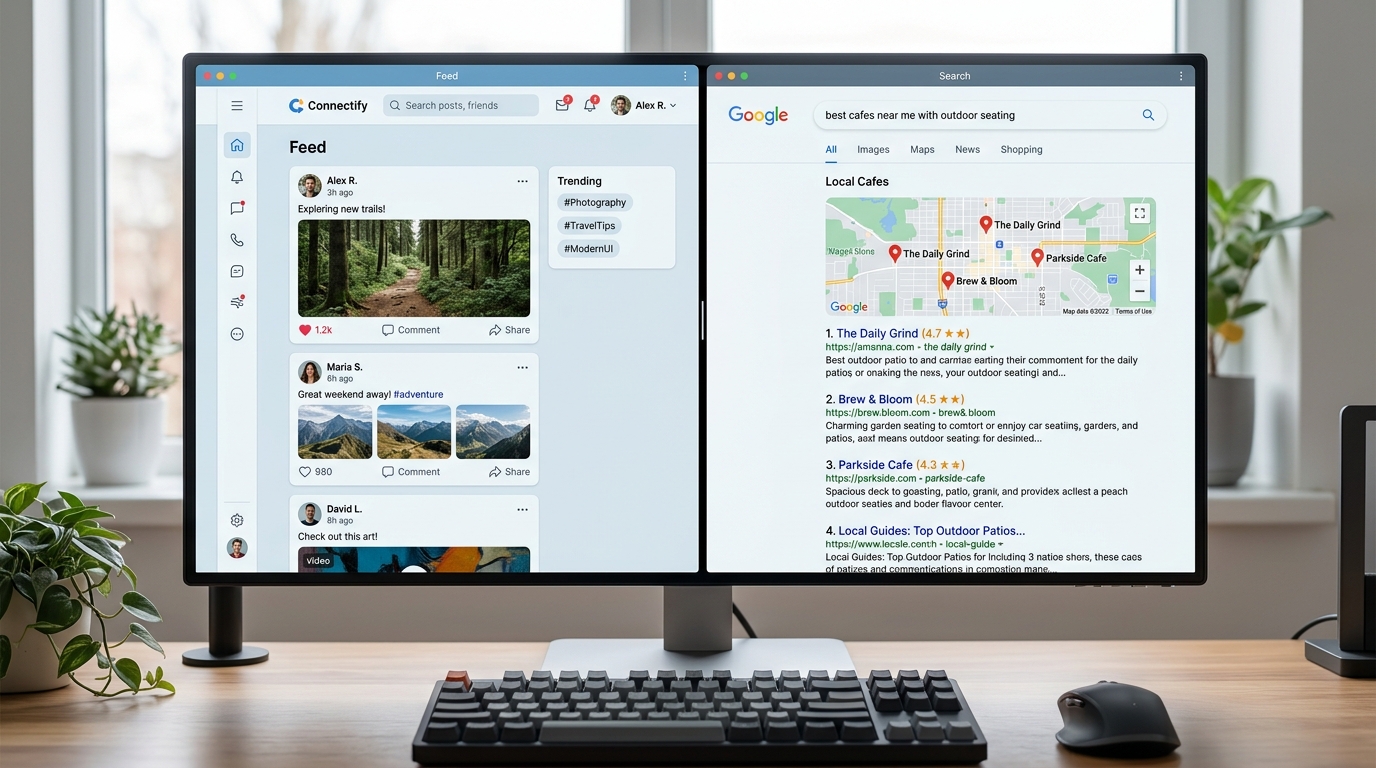
Meta ads and Google Search solve different jobs in the same purchase journey. Meta generates demand by putting your brand in front of cold shoppers. Google captures demand when those shoppers open a new tab and search your name. If Google branded campaigns are underfunded while Meta scales, competitors intercept the traffic you paid to create.
An omnichannel marketing strategy for fashion ecommerce treats both platforms as one system. Align ad copy, offers, and landing pages. Use GA4 data-driven attribution to measure branded search lift from Meta spend, not just last-click ROAS inside Ads Manager.
Teams using AI ad performance and creative for fashion eCommerce consolidate creative testing, budget pacing, and cross-channel reporting so Meta campaigns improve without manual spreadsheet work.
Demand generation vs demand capture across Meta and Google
Demand generation on Meta means prospecting campaigns that introduce products to people who were not searching for you. Reels video, carousel ads, and Advantage+ Shopping fall here. Demand capture on Google means bidding on branded keywords and high-intent category terms when someone is ready to buy. Many shoppers see a Meta ad, do not click, and search your brand name on Google within 24 hours. That path is invisible if you only measure Meta on platform-reported ROAS. An AI product video generator for fashion ecommerce can feed Meta prospecting, but Google branded search is what closes the loop when the shopper decides to act.
How Meta ad spend lifts branded Google search volume
When you scale Meta prospecting, branded search impressions in Google Ads typically rise one to two weeks later. The correlation is strongest for video campaigns where users remember the brand name even without clicking. Track branded search volume weekly in Google Ads and compare it to Meta spend changes. If branded search rises but branded campaign impression share drops below 90%, you are likely losing conversions to competitors bidding on your name. Increase branded search budget in proportion to Meta scale, not as a fixed monthly line item.
- Meta Ad Spend ($k)
- Google Branded Search Volume
Using GA4 attribution to credit Meta for downstream conversions
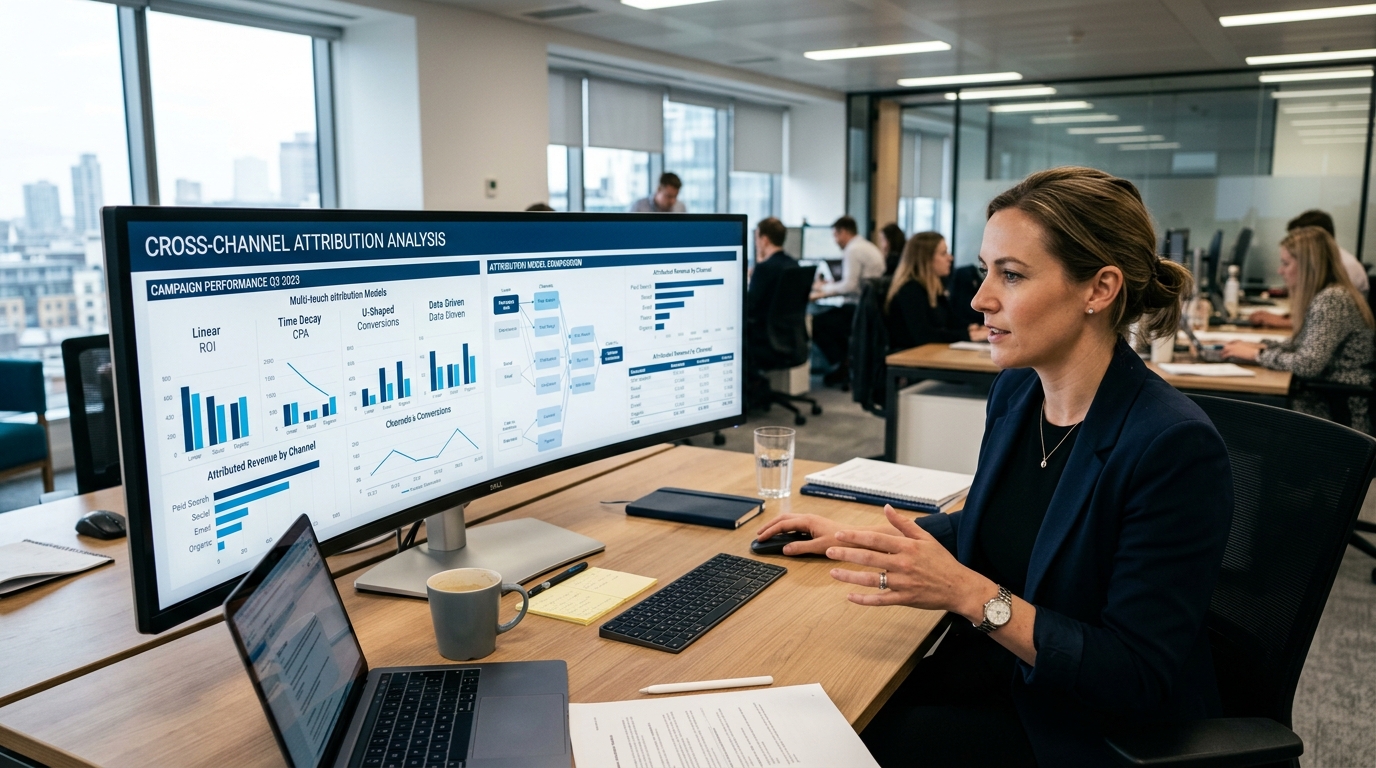
Last-click attribution gives Google 100% credit for any conversion that starts with a branded search, even when a Meta video view happened two days earlier. GA4 data-driven attribution distributes credit across touchpoints based on observed conversion paths.
Connect Meta and Google ad accounts to GA4. Enable enhanced conversions. Compare the channel report under data-driven attribution vs last-click. The gap between Meta's credited conversions often reveals the true value of prospecting spend that last-click models hide.
Aligning creative and offers across Meta and Google
Mismatched messaging between platforms breaks trust. If Meta shows "30% off summer dresses" and the Google landing page shows full price, bounce rate spikes and both platforms look worse in attribution.
- Use the same promo code in Meta primary text and Google ad headlines during a sale window.
- Match hero imagery between Meta video thumbnails and Google Performance Max asset groups.
- Run branded Google ads with the exact offer shown in your top-spending Meta creative that week.
- Exclude recent Meta clickers from redundant prospecting, but keep branded search coverage at 95%+ impression share.
Budget split between Meta and Google Search
There is no universal ratio. Start by protecting branded search whenever Meta prospecting scales. A practical rule: for every 20% increase in Meta spend, check branded search impression share. If it falls below 90%, shift 10–15% of the incremental Meta budget to Google branded campaigns until share recovers. Review blended CAC monthly using GA4 data-driven attribution, not siloed platform dashboards. The goal is lowest total customer acquisition cost across both channels, not the highest isolated ROAS on either platform alone. For Omnichannel Synergy: Aligning Meta Ads with Google Ads Search, track purchase ROAS, cost per purchase, and add-to-cart rate at the ad level-not only the campaign. Fashion accounts that review ad-level data twice weekly cut wasted spend faster because creative fatigue shows up in CPA before it appears in blended ROAS. Pair platform metrics with MER (total revenue divided by total ad spend) so iOS signal loss does not hide true profitability.
Metrics to track weekly on Meta fashion campaigns
Splitting budget across too many ad sets is the most common error: none reach 50 conversions per week and learning resets. Running only static catalog images in prospecting is second-Reels and Stories video with on-model motion consistently outperform flat product shots. Third, retargeting recent buyers in cold campaigns wastes budget; use a purchaser exclusion of at least 30 days.
Common mistakes that hurt fashion e-commerce ROAS
Add new ads inside existing ad sets instead of cloning whole campaigns. Test one variable per week: hook, offer, or thumbnail. When a variant beats the control by 15% on CPA after 1,000 impressions, duplicate the ad set and shift 20% of budget gradually. This preserves the performance history Meta uses for delivery optimization.
How to test creative without resetting campaign learning
The product shown in the ad must be above the fold on mobile PDPs. Load time under three seconds matters-every extra second can cost 7% of conversions on apparel traffic. Match price and promo copy between ad and page; mismatches increase bounce and hurt quality ranking.
Pre-launch checklist for omnichannel synergy
Before scaling meta ads google ads synergy, confirm your Meta Pixel and Conversions API both fire purchase events that match Shopify order volume within 10%. Exclude recent purchasers from prospecting for at least 30 days, load a minimum of three video variants per ad set, and set a frequency alert above 2.5 on cold audiences. Document your control creative so weekly tests have a clear baseline.
Budget split between prospecting and retention
Apparel brands in the $50K–$500K monthly revenue range typically allocate 70–80% of Meta budget to prospecting and 20–30% to retention. Raise the retention share during sale periods when cart abandoners spike, but avoid starving prospecting-new customer acquisition fuels long-term MER. Review the split weekly using blended ROAS, not platform-reported ROAS alone.
Reporting cadence for fashion performance marketers
Check spend pacing and CPA daily; review creative frequency and hook retention twice per week; run a full ad-level ROAS audit every Friday. Compare Meta purchase revenue to Shopify total revenue to calculate MER. When MER holds but platform ROAS drops, the issue is usually attribution signal-not true performance. Pair platform dashboards with a simple MER spreadsheet updated every Monday.
Frequently asked questions
How long before omnichannel synergy campaigns stabilize on Meta?
Most fashion accounts need 50+ weekly purchase events before Meta exits the learning phase. Plan two to three weeks of stable spend before judging ROAS.
What budget should a fashion brand start with for Meta ads?
Start with enough daily budget to generate 7–10 purchases per ad set per week. For many apparel brands that means $100–$300 per day on prospecting.
When should you refresh creative for fashion Meta ads?
Refresh hooks or swap in new video variants when frequency exceeds 2.5 or CPA rises 20% week over week. Weekly creative tests are standard for scaling brands.