
Low CTR on Google Shopping Ads: How Beauty Brands Fix It
Diagnosing and fixing low click-through rates across D2C Google Shopping campaigns.
In this article
- Why impression volume without clicks drains media budgets and inflates CPCs.
- Replacing sterile white-background studio shots with dynamic lifestyle product visuals.
- Restructuring Google Merchant Center title attributes for high-intent fashion and beauty queries.
- Eliminating zero-click spend using targeted negative keywords and custom labels.
When beauty and fashion D2C media buyers examine their Google Shopping accounts, seeing tens of thousands of daily impressions paired with a stagnating click-through rate (CTR) and climbing cost-per-click (CPC) signals a severe feed relevance mismatch. Fixing low CTR on Google Shopping ads requires auditing feed image assets to ensure dynamic lifestyle visuals stand out against standard stock shots, restructuring Google Merchant Center title attributes to surface high-intent search terms first, and adding negative keywords to prune non-converting traffic. Raising bids on unoptimized feed creative only inflates CPC without fixing search relevance.
Why is your Google Shopping CTR dropping while CPCs keep rising?
Google Shopping campaigns rely entirely on product data feeds rather than traditional keyword targeting. When impressions accumulate but shoppers refuse to click, Google's auction algorithm interprets the low engagement as poor relevance, steadily raising your CPC to maintain placement. For beauty and fashion brands, this decay typically stems from generic catalog images that blend into the carousel and ambiguous product titles that fail to match what high-intent buyers type into search bars.
Media buyers often make the critical error of increasing bids to combat sliding traffic. However, throwing budget at an unoptimized product card accelerates ad fatigue and wastes margin. Performance marketers must diagnose whether the bottleneck lies in visual creative differentiation, attribute hierarchy in Google Merchant Center, or irrelevant search queries triggering your ads.
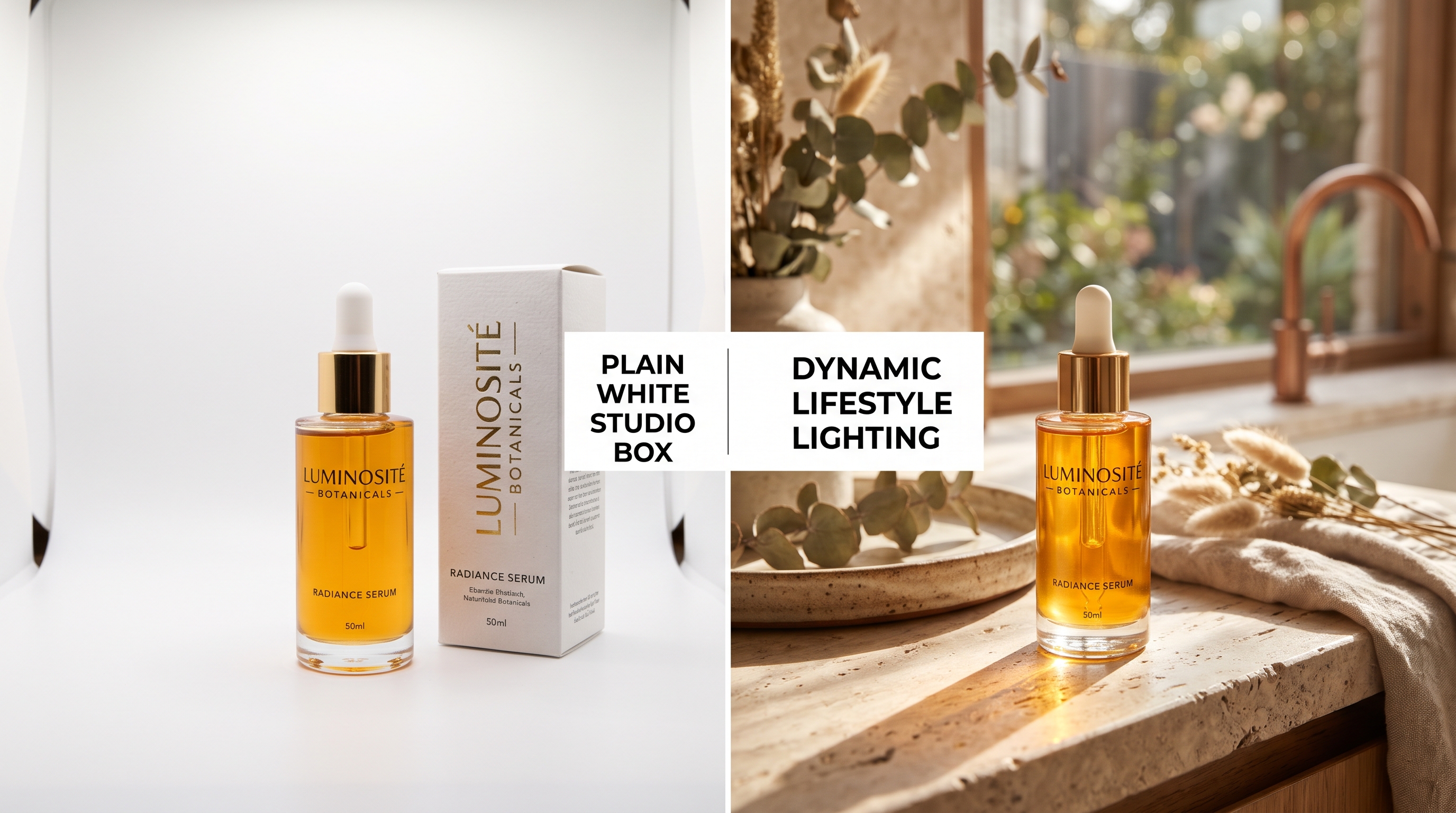
Dynamic lifestyle visuals capture attention in crowded shopping carousels far better than flat studio packshots.
Comparing studio packshots and lifestyle visuals for shopping ad CTR
Standard ecommerce best practices mandate clean, white-background studio packshots for primary product listings. While essential for compliance, relying exclusively on flat packshots in Google Shopping results in visual blending. When a shopper searches for liquid foundation or summer dresses, a grid of ten identical white-box images offers no distinct hook.
Transitioning secondary or promotional feed images to dynamic lifestyle visuals—such as foundation applied on skin showing texture, or apparel styled in real-world lighting—dramatically lifts CTR. EngageReel helps D2C brands test and scale creative variations across shopping feeds without requiring endless studio reshoots. By pairing compliance packshots with context-rich lifestyle frames, beauty and apparel brands capture attention immediately in high-competition search carousels.
| Creative Asset Type | Google Shopping CTR Impact | Primary Advantage | Production Complexity |
|---|---|---|---|
| White-Background Packshot | Low to Moderate (Baseline) | Guaranteed merchant compliance | Low (Standard studio photography) |
| Dynamic Lifestyle Visual | High (+35% to +60% lift) | Stands out in crowded carousels | Medium-High (AI generation / reshoots) |
| Structured Title Attributes | High (Intent alignment) | Matches exact buyer search queries | Low (Feed attribute mapping) |
Restructuring Merchant Center titles with brand, shade, formula, and size attributes
Google Merchant Center uses product titles as its primary matching engine. If your product feed title simply reads "Matte Liquid Lipstick" or "Summer Floral Dress," your ads will trigger for broad, low-intent searches that generate impressions without clicks.
High-converting merchant titles follow a strict attribute hierarchy: Brand + Product Type + Key Modifier (Shade, Finish, Material) + Size/Capacity. For instance, transforming a basic title into "GlossyBeauty Liquid Matte Lipstick - Ruby Red - Longwear 5ml" immediately aligns your ad with precise buyer intent. High-intent shoppers typing exact formula and shade combinations are significantly more likely to click when your ad title mirrors their query verbatim.
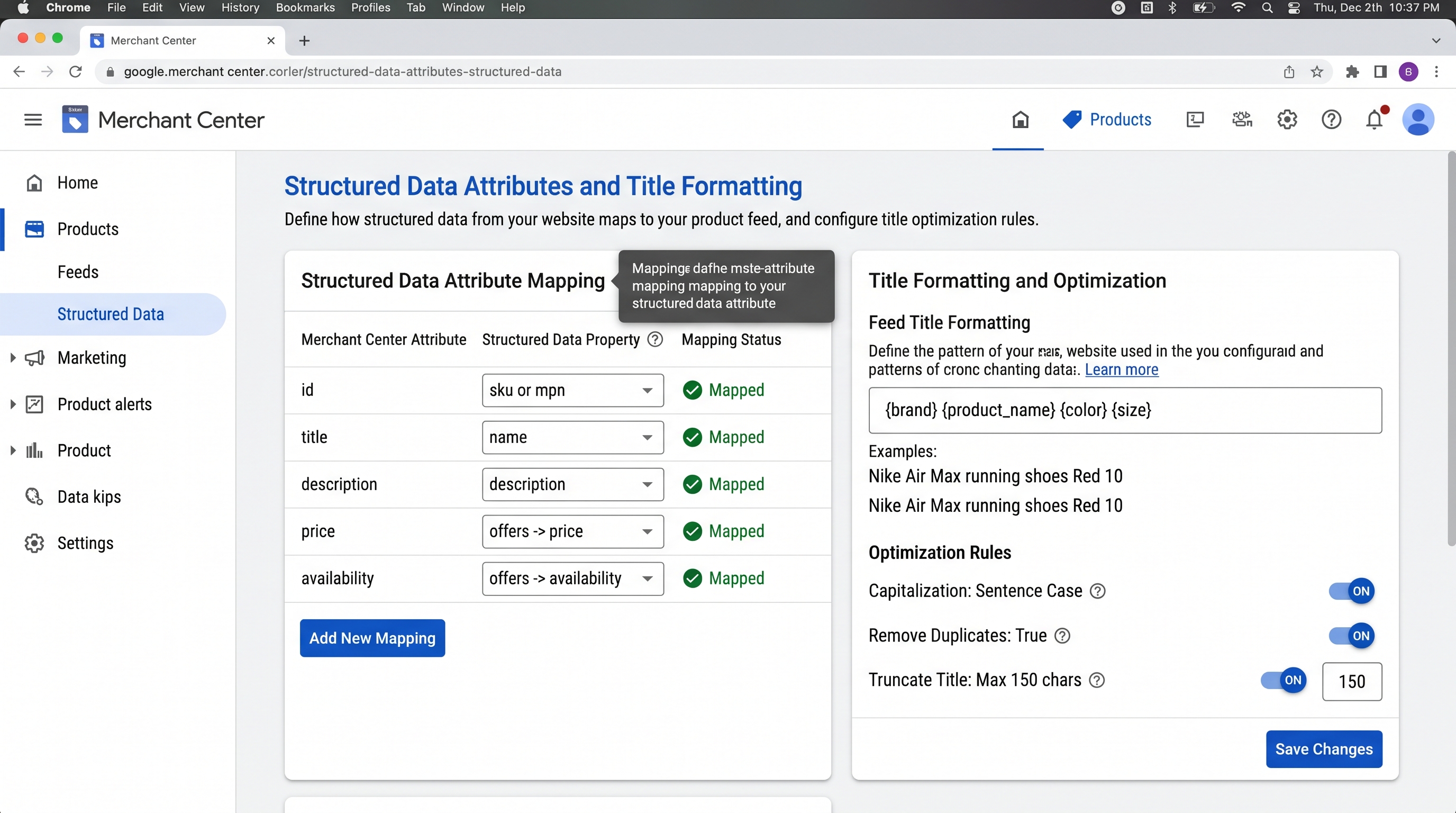
Optimizing attribute order in Google Merchant Center ensures your products appear for high-intent transactional searches.
How can you eliminate zero-click shopping spend with negative keywords?
A major hidden driver of low account-level CTR is ad spend wasted on irrelevant search terms. Because Google Shopping matches queries automatically based on your feed data, broad categories often trigger informational queries or misaligned product searches (e.g., searches for DIY makeup tutorials when you sell luxury cosmetics).
Regularly reviewing the Search Terms Report in Google Ads and building a robust negative keyword list ensures your budget is reserved for transactional intent. Additionally, utilizing custom labels in your product feed allows media buyers to segment high-margin or high-conversion SKUs into dedicated ad groups, bidding aggressively where CTR and conversion rates justify the spend while pulling back on low-performing items.

Pruning non-converting search terms protects ROAS and improves overall campaign relevance signals.
Conclusion and next steps for D2C growth leads
Overcoming low CTR on Google Shopping ads requires moving past the trap of bidding higher on stagnant inventory. By overhauling feed imagery with lifestyle context, structuring Merchant Center titles around buyer search intent, and relentlessly pruning irrelevant search terms with negative keywords, fashion and beauty brands can reverse declining engagement and lower their effective CPC. Explore our guide on Google Ads for Fashion Brands and learn how EngageReel automates ad performance optimization.
Frequently asked questions
What is a good CTR for Google Shopping ads in the beauty and apparel industry?
A healthy CTR for Google Shopping ads in fashion and beauty typically ranges between 1.0% and 2.5%, depending on brand recognition, product pricing, and query intent.
Does changing Google Shopping feed images reset campaign performance in Merchant Center?
Updating image URLs or secondary images in your product feed does not reset the core campaign learning phase as long as landing page URLs and product IDs remain unchanged.
How long does it take for title updates in Google Merchant Center to impact ad CTR?
Title updates typically take between 24 to 72 hours to re-crawl and re-index in Google Merchant Center, with CTR shifts visible as soon as the new titles serve in live auctions.
Why are my Google Shopping impressions high but clicks very low?
High impressions paired with low clicks indicate that your products are appearing for broad search queries where your images or pricing fail to differentiate against competitors.
Should I increase bids when my Google Shopping CTR drops?
No. Raising bids on unoptimized feed creative and poorly structured titles only inflates your CPC without resolving the underlying relevance mismatch causing low CTR.