Break-Even ROAS: Formula, Calculator and Examples for Indian D2C Brands
For a growing D2C brand, break-even ROAS is the single metric that tells you if your ad campaigns are actually profitable. This guide provides a clear formula, a step-by-step calculator, and a worked example for Indian brands, accounting for critical costs like GST, shipping, and RTOs.
- Understand the precise formula for break-even ROAS.
- Calculate your true profit per order before ad spend.
- Use a quick reference table to find ROAS targets by margin.
- Set smarter pause rules and scaling targets in your ad accounts.
Is a 3x ROAS actually making you money? For many Indian D2C brands, the answer is no. While your dashboard might look healthy, the reality of GST, shipping costs, and returned orders means your real break-even point is often much higher than you think. Calculating your break-even ROAS is the only way to know for sure if your ad spend is driving growth or just revenue.
What Defines Break-Even ROAS?
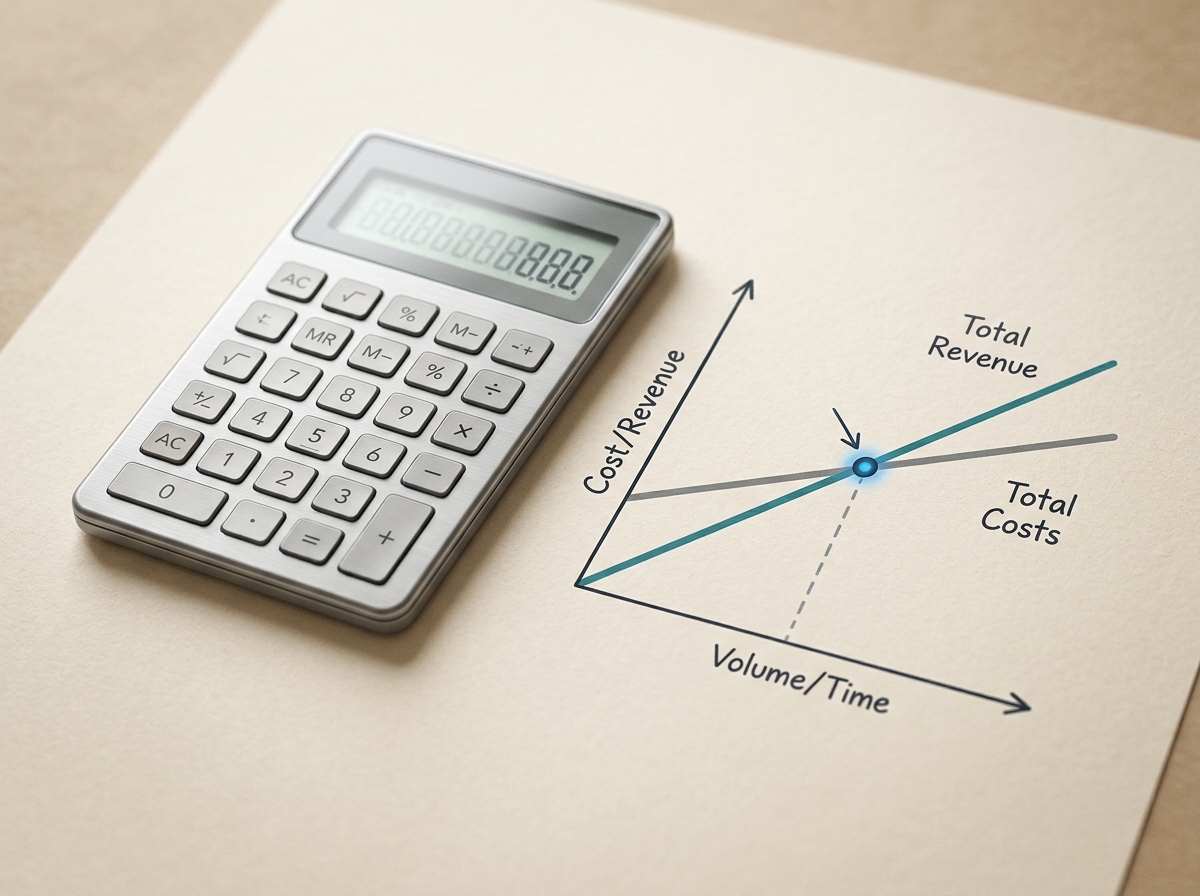
Break-even ROAS is the Return On Ad Spend at which a campaign generates exactly zero profit and zero loss. It’s your financial baseline. If a campaign’s ROAS is above this number, you’re making money on every sale. If it’s below, you’re losing money—even if the ROAS in Meta Ads Manager looks positive.
Think of it as your campaign’s floor. Any ad set that consistently performs below this floor is burning cash, regardless of the revenue it brings in.
Comparing Break-Even ROAS vs. Target ROAS
It's easy to confuse the two, but they serve very different purposes in your ad strategy:
- Break-even ROAS is the point of no profit, no loss. This is your kill-switch line.
- Target ROAS is the goal you set to ensure each sale generates a specific, desired profit. This is your scaling line, and it must always be higher than your break-even point.
Decoding the Break-Even ROAS Formula
The core formula is straightforward:
Break-even ROAS = Selling Price ÷ Profit Per Order (Before Ad Spend)
The "Profit Per Order (Before Ad Spend)" is the cash you have left from a single order after accounting for every cost except for the ads that generated it. This figure also represents your Maximum CPA (Cost Per Acquisition)—the absolute most you can afford to pay for a customer before the order becomes unprofitable.
If you know your contribution margin percentage, an even faster calculation is: Break-even ROAS = 1 ÷ Margin. For instance, a 40% margin (0.40) gives you a break-even ROAS of 2.5x, a common benchmark for D2C brands.
A Step-by-Step Guide to Calculating Your True Break-Even ROAS
The formula itself is simple, but its accuracy depends entirely on getting the inputs right. Here’s how to do it correctly in four steps.
Step 1: Exclude GST from Your Selling Price
Ad platforms like Meta and Google track revenue based on the final price the customer pays. In India, this includes GST. Since that tax revenue goes to the government, you must remove it to find your actual earnings.
For a ₹999 product in the 18% GST slab, your real revenue is ₹999 ÷ 1.18 = ₹846.61. Always verify the correct GST rate for your product's HSN code, as advised by the Central Board of Indirect Taxes and Customs.
Step 2: Account for Every Per-Order Cost
Compile a list of all expenses incurred for each order to be fulfilled. Exclude ad spend for this calculation.
- Product Cost (COGS): The manufacturing or sourcing cost of your item.
- Packaging: Includes the box, labels, inserts, and any filler material.
- Payment Fees: The transaction fee from your payment gateway for prepaid orders or the COD fee charged by your courier. As noted by platforms like Razorpay, these fees are a standard part of online transactions.
- Forward Shipping: The cost to ship the product to your customer.
What costs are most brands forgetting?
Commonly overlooked costs include discounts, coupon codes, marketplace fees, and even the prorated cost of customer support time. If you offer a "20% off" promotion, your break-even ROAS will increase for that period. Always recalculate it before a sale begins.
Step 3: Factor in Returns and RTOs
This is the most frequently ignored—and most critical—step. When a COD order is refused (Return to Origin) or a prepaid order is returned, you often lose money on both forward and reverse shipping while earning zero revenue. With RTO rates of 15-25% being common in India, skipping this step can make a losing campaign appear profitable. According to logistics provider Shiprocket, managing RTO is a major challenge in Indian e-commerce.
Use your actual return/RTO rate from the last 60–90 days. If the returned product is resellable, your loss is limited to shipping. If it's damaged, you must also add the product cost to your loss calculation.
Step 4: Calculate Your Final Break-Even ROAS
With all the variables assembled, you can calculate your true profit per order. Then, divide your full selling price (including GST, as reported by ad platforms like Meta) by this profit figure to find your break-even ROAS.
Worked Example: A ₹999 Face Serum
Let's apply the formula to a real-world example.
| Item | Amount |
|---|---|
| Selling Price (incl. 18% GST) | ₹999 |
| Price without GST | ₹846.61 |
| Product Cost | ₹300 |
| Packaging + Payment/COD Fee | ₹50 |
| Forward Shipping | ₹70 |
| Return / RTO Rate | 15% |
| Reverse Shipping Per Return | ₹70 |
Profit per order before ads = 0.85 × (₹846.61 − ₹300 − ₹50) − ₹70 − (0.15 × ₹70) = ₹341.62.
Break-even ROAS = ₹999 ÷ ₹341.62 = 2.92x | Max CPA = ₹341
This table shows how quickly the numbers change when costs are ignored:
| Calculation Method | Profit Per Order Before Ads | Break-Even ROAS |
|---|---|---|
| Ignore GST and returns (Common Mistake) | ₹579 | 1.73x |
| Remove GST, ignore returns | ₹426.61 | 2.34x |
| Remove GST and include 15% returns (Correct) | ₹341.62 | 2.92x |
A marketer who believes their break-even is 1.73x might run a campaign at 2.4x, thinking it's profitable. In reality, that campaign is losing the business money on every single order.
A Quick Reference Table for Break-Even ROAS by Margin
If you know your contribution margin (after all non-ad costs), you can use this table to quickly estimate your break-even ROAS:
| Contribution Margin Before Ads | Break-Even ROAS | Implication for Scaling |
|---|---|---|
| 20% | 5.00x | Very difficult to scale profitably. |
| 25% | 4.00x | Requires a strong repeat customer base. |
| 30% | 3.33x | Tight margins; monitor campaigns closely. |
| 40% | 2.50x | A workable baseline for many D2C brands. |
| 50% | 2.00x | Healthy room for testing and iteration. |
| 60% | 1.67x | Comfortable room to scale campaigns. |
| 70% | 1.43x | Significant room for aggressive growth. |
Why Applying Break-Even ROAS in Your Ad Accounts is Crucial
Once calculated, your break-even ROAS should become a core part of your day-to-day ad management.
Set Smarter Pause Rules
A generic rule like "pause anything under 2x" is arbitrary and dangerous. If your break-even is 2.92x, that rule allows losing campaigns to continue spending. Instead, give new campaigns a 5-7 day learning period, then pause anything that remains below your true break-even point.
Define Your Target ROAS for Scaling
Decide on your desired profit per order. For the ₹999 serum, a ₹100 target profit reduces your max CPA to ₹241.62 (₹341.62 - ₹100). This sets a new target ROAS of ₹999 ÷ ₹241.62 = 4.13x. Campaigns that consistently perform above this threshold are your winners for scaling.
Leverage Max CPA in Bidding Strategies
Your maximum CPA is a powerful tool. In Google Ads, use it as the ceiling for a Target CPA bid. In Meta Ads, apply it as a cost-per-result goal. Never set a bid or cost goal higher than your break-even max CPA.
Putting It All Together with EngageReel
Knowing your break-even ROAS is the first step. The next is systematically producing ad creative that can beat it. EngageReel's AI platform helps fashion and beauty brands turn static product images into high-performance video ads, using data from your winning campaigns to inform what to create next. By understanding which creative elements drive performance, you can more consistently launch campaigns that operate well above your break-even threshold. Learn more at EngageReel.
Common Questions About Break-Even ROAS
What is a good ROAS for an Indian D2C brand?
There is no single "good" ROAS. A successful ROAS is anything comfortably above your brand's specific break-even point. A high-margin brand might be profitable at 2x, while a low-margin brand could lose money at 3x. Calculate your break-even ROAS first to set a meaningful target.
Should I include GST when calculating break-even ROAS?
Yes and no. You must remove GST from your revenue when calculating your profit per order. However, you use the full, GST-inclusive selling price in the final formula (Price ÷ Profit) because ad platforms report revenue based on the final price the customer paid.
How do RTO and returns affect break-even ROAS?
Significantly. Every returned or refused order costs you in shipping fees and generates zero revenue, which eats into your margins. In our example, a 15% return rate increased the break-even ROAS from 2.34x to 2.92x. For brands with high COD volume, accounting for RTO is non-negotiable.
What is the difference between break-even ROAS and target ROAS?
Break-even ROAS is the minimum you need to not lose money. Target ROAS is the goal you set to ensure each order generates a desired amount of profit. Your target ROAS should always be set higher than your break-even ROAS.
How is max CPA related to break-even ROAS?
Max CPA (Cost Per Acquisition) is your profit per order before ad spend. It's the most you can pay to acquire a customer without losing money. The break-even ROAS formula is simply your selling price divided by your max CPA.