
Find Your Winning Creative Angle Before You Spend on Ads
In this article
This article provides a structured framework for fashion marketing teams to move beyond gut-feel creative testing. It’s for performance marketers who need to justify ad spend with data and find new, winning creative angles systematically. After reading, you’ll be able to build a repeatable process for creative hypothesis testing that reduces budget waste and scales winning campaigns faster.
- Discover the P.D.A. framework (Persona, Desire, Awareness)
- Learn to identify creative whitespace your competitors are ignoring
- Implement a 4-step playbook for testing creative angles
- See how to automate creative learning with EngageReel
How do you find winning creative angles before you commit serious budget? You stop testing random ideas and start testing structured hypotheses. Winning angles come from a disciplined process: mapping competitor strategies, identifying audience-specific desires, and testing one variable at a time. It’s the difference between guessing what works and building a library of creative that you know converts specific customer segments.
What Is the Real Cost of Creative Fatigue to Your Brand?
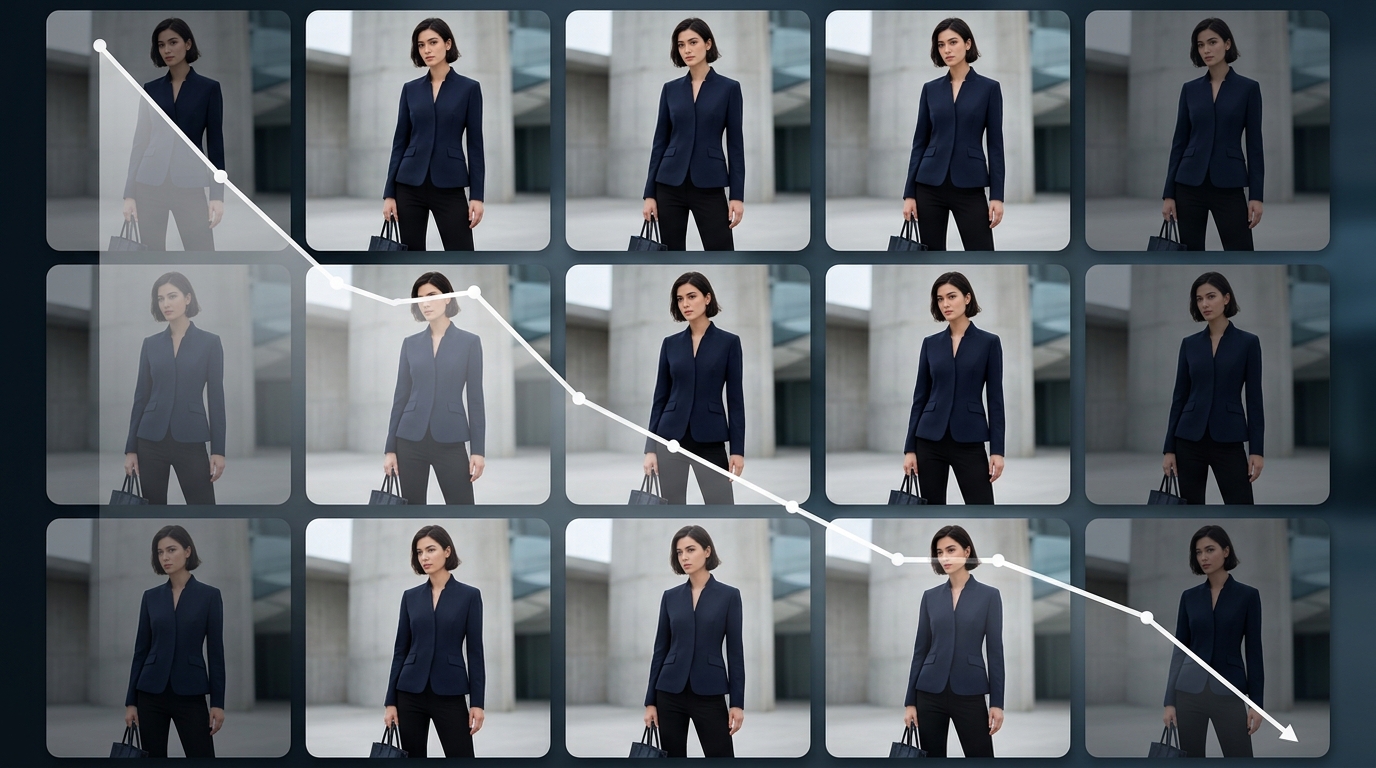
Creative fatigue is a direct tax on your ROAS, causing lower click-through rates (CTR) and higher costs-per-acquisition (CPA) as users ignore stale ads. For fashion brands spending heavily on Meta, even a small drop in ROAS means thousands in wasted spend.
Creative fatigue isn't a vague marketing concept; it's a direct tax on your ROAS. When users see the same ad concepts repeatedly, ad blindness sets in, leading to lower click-through rates (CTR) and higher cost-per-acquisition (CPA). For fashion brands spending five or six figures a month on Meta, a 10% drop in ROAS due to stale creative isn't just a rounding error—it's thousands in wasted spend. According to a landmark meta-analysis by NCSolutions (Nielsen) in 2017, creative accounts for as much as 49% of the sales lift from a campaign; letting it go stale is the most expensive mistake a brand can make. This problem is compounded in the fast-moving fashion industry, where trend cycles are short and audience attention is fragmented across multiple platforms. A winning creative from last season is unlikely to perform as well this season, making a continuous pipeline of fresh, tested angles a competitive necessity, not a luxury.
Why Your Competitors' Best Ideas Are Only a Starting Point
Analyzing competitor ads is a necessary first step, but it's a defensive move, not a winning one. The goal isn't to copy what's already working for them; it's to find the strategic gaps they've missed. Grouping their ads into 4-6 conceptual clusters (e.g., "UGC Social Proof," "Luxury Aspiration," "Problem/Solution") reveals the dominant angles in the market. The real opportunity lies in the whitespace—the combination of customer problems and desires that no one else is addressing. This is where you can build a truly differentiated and defensible creative strategy. For example, if all your competitors are focused on the aspirational, luxury angle, there may be a significant opportunity in a more practical, "cost-per-wear" or "versatility" angle that speaks to a different customer motivation. The goal of competitor analysis is not to imitate, but to find the conversation that isn't happening and start it.
A Framework for Endless Creative Angles: P.D.A.
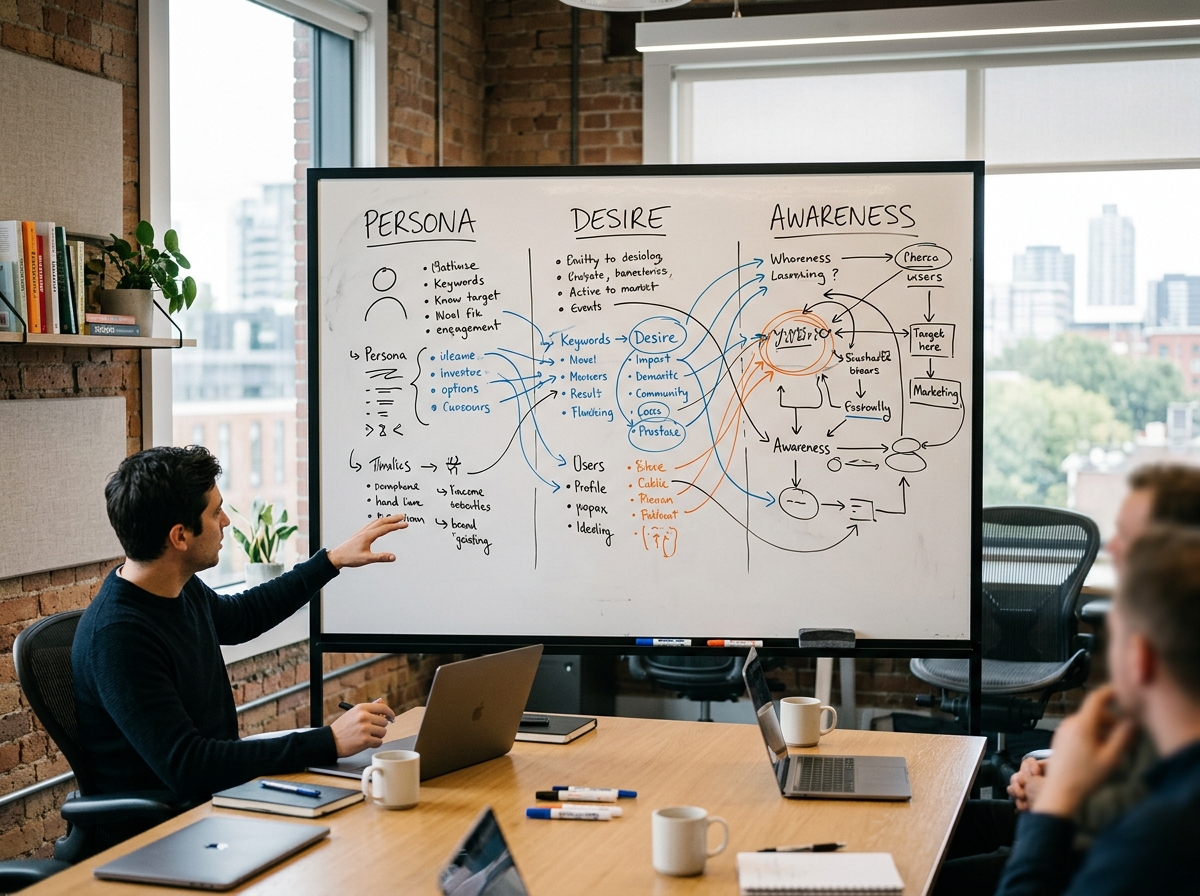
The P.D.A. (Persona, Desire, Awareness) framework, adapted from expert agency practices, turns creative brainstorming from an art into a science. It ensures your angles are always grounded in a specific customer mindset. It is a core concept for modern AI ad performance and creative for fashion eCommerce platforms. This structured approach helps to ensure that every creative asset you produce is purpose-built to resonate with a specific segment of your audience, rather than relying on a one-size-fits-all approach that is likely to fail in a diverse market. By systematically considering the unique characteristics of each persona, their underlying desires, and their current level of awareness, you can generate a rich matrix of potential creative angles that are both relevant and compelling.
| Dimension | Segment A | Segment B | Segment C |
|---|---|---|---|
| Persona | The Ethical Millennial | The Trend-Conscious Gen Z | The Investment Shopper |
| Desire | Transparency, Sustainability | Self-Expression, Social Status | Longevity, Cost-per-Wear |
| Awareness | Problem-Aware (knows fast fashion is bad) | Solution-Aware (knows sustainable brands exist) | Unaware (seeking quality, not yet considering ethics) |
| Creative Angle | "The true cost of that $10 t-shirt." | "Wear your values. Without compromising on style." | "The last jacket you'll need to buy. Here's why." |
How Can You Test These Angles Systematically?
A structured test with a clear hypothesis is essential for generating actionable data. By isolating variables and allocating enough budget to reach statistical significance, you can build a reliable process for identifying and scaling winning creative angles.
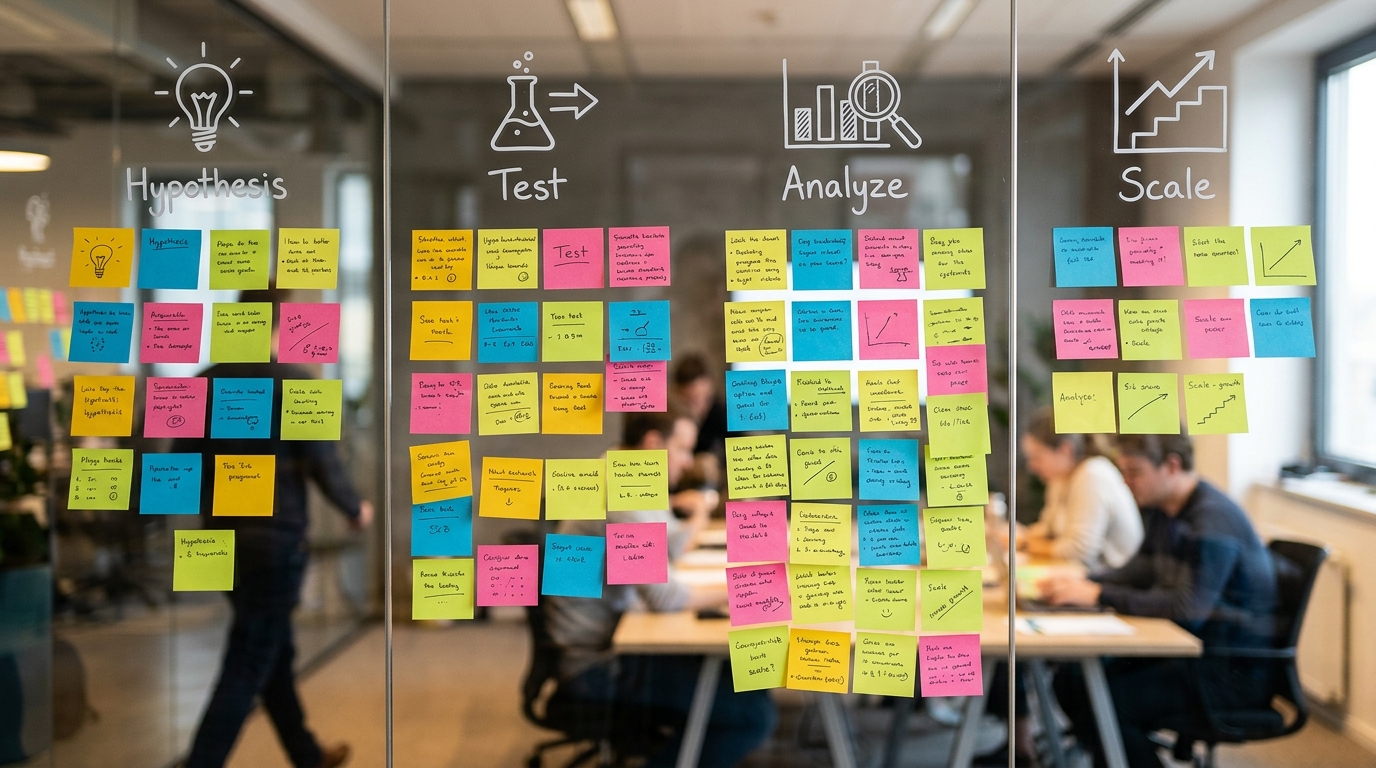
An idea is not a test. A test requires a hypothesis, a control, and a clear metric for success. Follow this four-step playbook to get real, actionable data from your creative tests.
- Isolate Your Variable. Test angles against angles, not angles against hooks. Set up separate ad sets for each core creative angle you're testing. Don't bundle them; Meta's algorithm needs clear signals.
- Write a Clear Hypothesis. Frame it as "We believe Angle X will outperform Angle Y with Persona A because [reason]. We will measure this with CPA." This forces clarity and defines what 'winning' means.
- Allocate Sufficient Budget. A test needs enough data to be statistically significant. As WordStream notes, you need to exit the learning phase to get reliable data, which often means aiming for 50-100 conversions per ad set.
- Scale the Winner, Analyze the Loser. Once you have a clear winner, allocate more budget to it. But don't discard the loser without understanding why it lost. The insights from a failed test are often as valuable as a winning ad.
Where Does EngageReel Automate Creative Learning?
Manually tracking every creative attribute across hundreds of ads is impossible at scale. This is where automation provides a critical advantage. EngageReel connects to your ad accounts and analyzes creative performance at the attribute level. It learns which hooks, models, backgrounds, and angles are actually driving ROAS, providing a data-driven foundation for your next round of creative. Instead of guessing, your team receives a clear, prioritized list of creative hypotheses to test next. The platform can identify patterns that would be invisible to the human eye, such as a particular background color performing well with a specific audience segment, or a certain type of call-to-action driving conversions on one platform but not another. This level of granular insight is what allows for the continuous optimization of creative performance at scale.
Which Metrics Signal a Winning Angle Early?
While ROAS is the ultimate measure, several leading indicators can signal that a creative angle is resonating early on. Monitor Hold Rate (the percentage of viewers who watch past the first 3 seconds) and Hook Rate on video ads. For static ads, a high outbound CTR combined with a low bounce rate on the landing page is a strong positive signal. These metrics can help you make decisions faster, without waiting for a full conversion cycle. By tracking these leading indicators, you can get a directional sense of which creative angles are most promising long before you have enough conversion data to declare a statistical winner. This allows you to iterate more quickly, doubling down on the concepts that are showing early signs of success and cutting the losers before they consume too much of your budget.
Frequently asked questions
What is a creative angle in advertising?
A creative angle is the core message or approach used to present a product to a specific audience. It's not just the visual elements but the underlying 'why' that connects the product's features to a customer's specific desires, problems, or awareness level. A good angle makes the same product appeal to different customer segments.
How often should you test new creative angles?
For fashion brands on platforms like Meta, continuous testing is key. A good starting point is introducing new angles every 2-4 weeks to combat creative fatigue. High-spending accounts may test weekly. The goal is to always have a new set of validated angles ready before the current winners see performance decline, a process platforms like EngageReel help automate.
What's the difference between a creative angle and a hook?
The angle is the strategic foundation—the 'what we are saying'. The hook is the tactical execution—the 'how we get their attention' in the first 1-3 seconds. You can have multiple hooks (e.g., a question, a shocking stat, a user-generated clip) for the same creative angle. Test hooks within a winning angle to optimize performance further.
How much budget do I need to test a new creative angle?
A common rule of thumb for testing a new angle on Meta is to budget for at least 50-100 conversions per ad set to reach statistical significance. According to [WordStream (2023)](https://www.wordstream.com/blog/ws/2015/05/21/advertising-budgets), a minimum of $50-$100 per day per ad set is often recommended to exit the 'learning phase' quickly. The exact amount depends on your product's price and typical CPA.
Can AI help find new creative angles?
Yes. AI can analyze performance data at a granular level that humans can't, identifying which attributes (models, backgrounds, CTAs, copy tones) are driving conversions. This data provides the foundation for new, evidence-based creative angles, moving teams from guessing to knowing. This is the core function of AI ad performance and creative for fashion eCommerce platforms.
References
- Meta for Business — How to test your creative (2024)
- WordStream — Advertising Budgets (2023)
- Ad Library — Creative Angle: The Decision That Decides Every Ad (2026)
- Medium — How to Plan Creative Angles That Win After Meta's Andromeda Update (2023)
- McKinsey — The creator economy: A new frontier for growth in fashion (2022)
- Marketing Charts - Creative's Still the Biggest Driver of Sales, Analysis Finds (2017)