
AI Creative Intelligence: Stop Repeating Last Season's Ad Mistakes

In this article
For D2C fashion brands, historical ad spend is a valuable but underused asset. This article breaks down how AI creative intelligence unlocks that data, turning months of campaign history into a predictive engine for what creative will convert next season. It's written for growth teams who need to stop guessing and start making data-backed creative decisions.
- Identify the hidden patterns in your past winning (and losing) ad creative.
- Understand the financial impact of creative fatigue and repetitive mistakes.
- Implement a framework for using historical data to brief new creative.
- See how EngageReel automates this analysis to guide your next campaign.
How much revenue is trapped in last season's ad campaigns? For most D2C fashion brands, the answer is "a lot." Teams start each new season from a blank slate, repeating expensive mistakes because the lessons from past campaigns remain locked in ad dashboards. AI creative intelligence solves this by systematically analyzing every image, video, and piece of copy you've ever run to build a data-backed model of what truly drives conversions for your brand.
The Real Cost of Creative Fatigue for D2C Fashion Brands
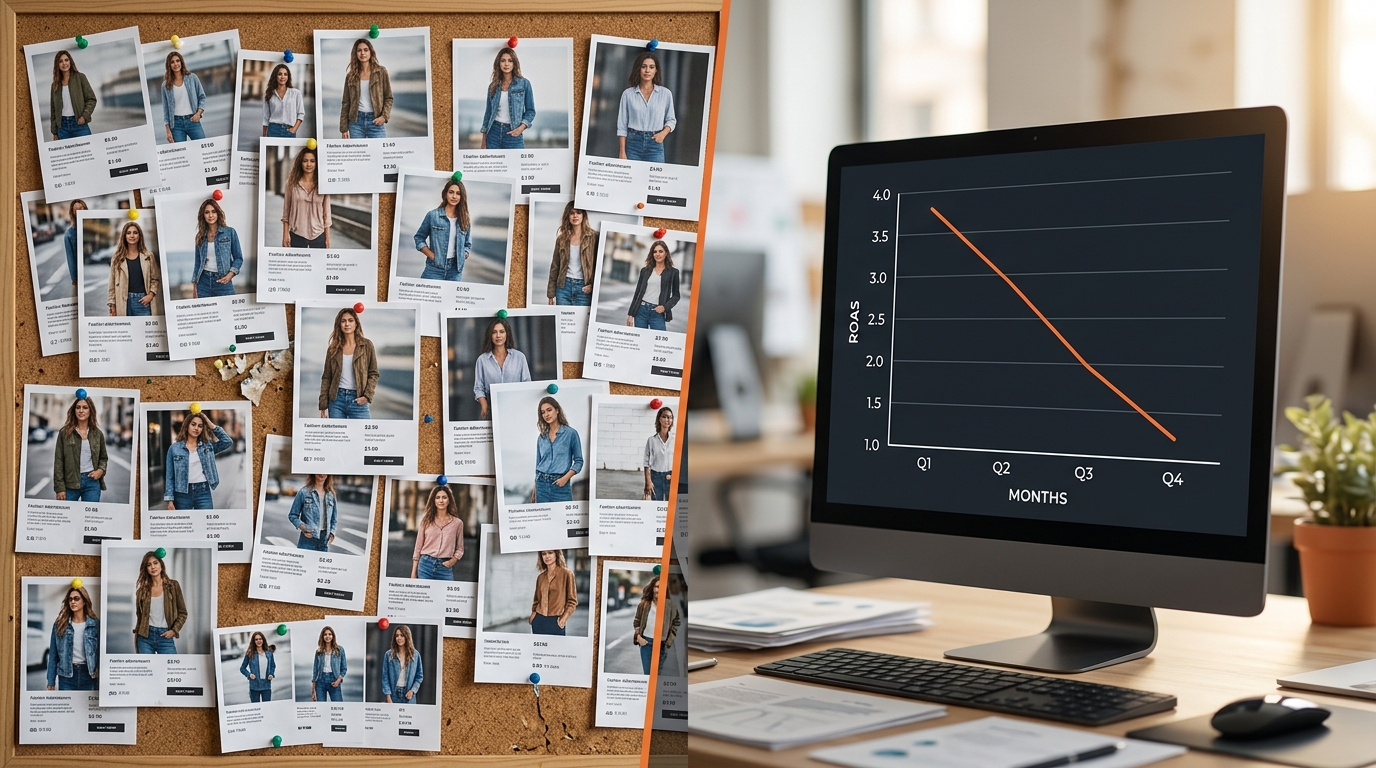
Creative fatigue isn't just a buzzword; it's a measurable drain on your budget. When audiences see the same creative concepts repeatedly, ad performance decays. According to McKinsey, generative AI has the potential to add up to $275 billion to the apparel and fashion sectors' operating profits, largely by improving marketing and sales efficiency. A significant part of that efficiency comes from producing more resonant creative, faster. Without a system to learn from the past, brands are stuck in a cycle of trial and error, with customer acquisition costs (CAC) rising as ad relevance drops.
Why Your Historical Data is a Goldmine for Future Creative
Every ad campaign you run is a large-scale market research study. You pay to learn what resonates with your target audience. The problem is that the results of these "studies" are often lost. A media buyer might have a gut feeling about what worked, but that intuition doesn't scale and leaves when they do. True AI creative intelligence treats your entire ad history—every impression, click, and conversion—as a structured dataset. It identifies the visual elements, copy angles, and audience combinations that consistently outperform, providing a blueprint for future success that is owned by the brand, not an individual.
Unlocking Ad Performance with AI Creative Intelligence
AI creative intelligence platforms connect directly to your ad accounts (Meta, Google, TikTok) and ingest your historical performance data. Using computer vision and natural language processing, they tag every creative with hundreds of attributes—from background color and model pose to headline sentiment and offer type. By correlating these tags with performance metrics like ROAS and conversion rate, the AI builds a predictive model unique to your brand. This isn't generic "best practice"; it's a specific, data-driven understanding of what makes your customers click and buy. This is a core function of AI ad performance and creative for fashion eCommerce.
| Dimension | Traditional Creative Process | AI-Powered Creative Intelligence |
|---|---|---|
| Briefing | Based on trends and last-call intuition | Based on a data model of past performance |
| Success Metric | Brand feel, subjective feedback | Predicted impact on ROAS and conversion |
| Learning | Lost after campaign ends | Continuously refines the brand's creative model |
| Speed | Weeks of manual review | Automated analysis in hours |
A 4-Step Playbook for Data-Driven Creative
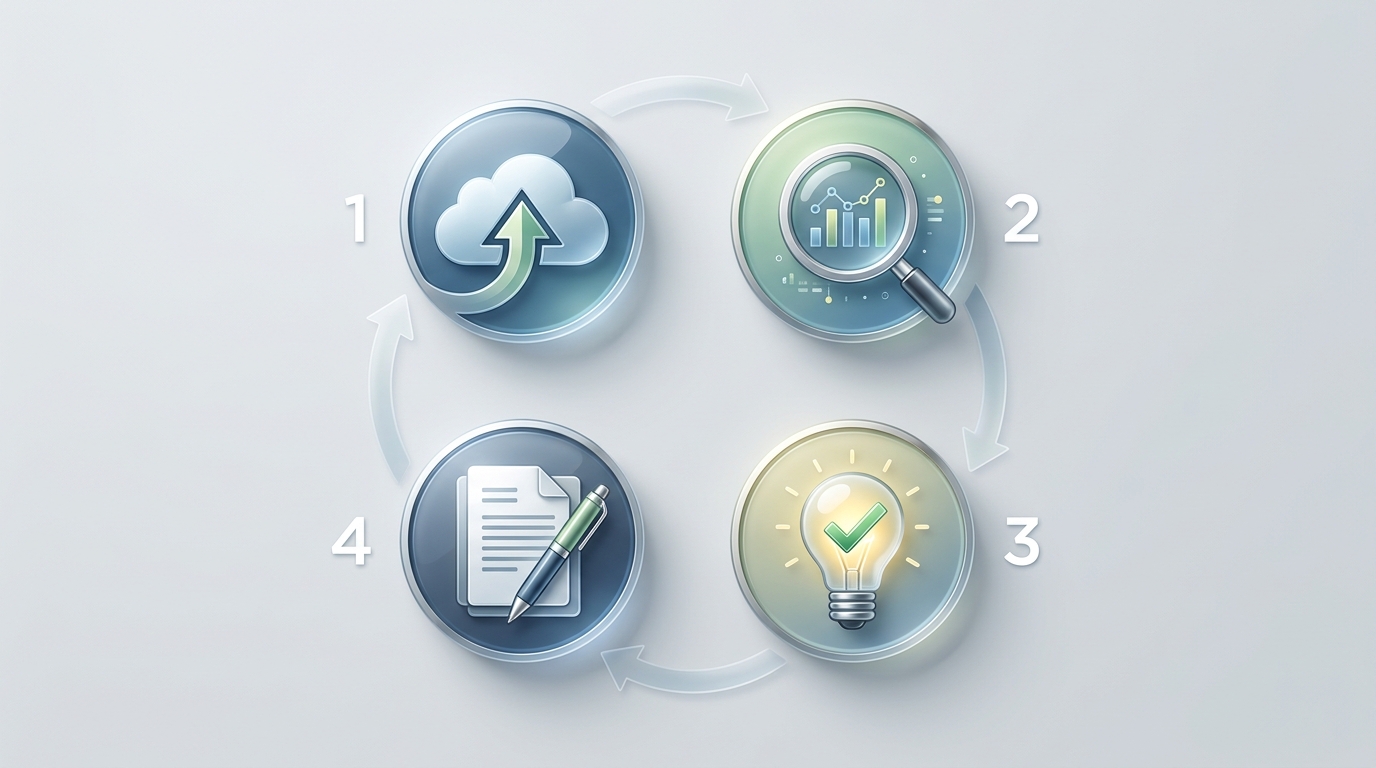
- Connect and Consolidate: Authorize a secure connection to your ad platforms (Meta, Google, TikTok). The AI will ingest and normalize your historical data, typically going back 12-24 months.
- Identify Core Drivers: The platform analyzes the tagged creatives against performance data to identify the top 20% of creative elements that drive 80% of your results. This might reveal that product-focused shots outperform lifestyle images in retargeting, or that a specific CTA drives higher AOV.
- Generate Actionable Insights: The AI surfaces these findings as clear, actionable recommendations. For example: "Creative featuring user-generated content (UGC) has a 35% higher CTR in top-of-funnel campaigns for the 25-34 female demographic."
- Brief from Proof, Not Opinion: Use these data-backed insights to write your next creative brief. Instead of asking for "something fresh," you can ask for "three new UGC-style videos featuring our spring collection, as this format has proven to be our top performer."
How Can Your Brand Automate Creative Insights?
EngageReel is designed to automate this entire process for D2C fashion brands. By connecting your ad accounts, our platform provides a continuously updated model of your brand's creative performance. We don't just show you what worked; we show you why it worked and how to replicate that success. EngageReel moves your team from reactive analysis to proactive, data-driven creative strategy, ensuring that every dollar you spend on creative is an investment in a smarter, more profitable future.
Connecting Your Ad Accounts: What to Expect
Connecting your accounts is a read-only process that typically takes less than five minutes. Within 24 hours, the platform will have processed your historical data and will present the first set of insights. You can expect to see a clear breakdown of your top-performing creative elements, audience segments, and messaging angles, providing immediate value and a clear path to improving your next campaign's ROAS.
Frequently asked questions
What is the difference between generative AI and AI creative intelligence?
Generative AI creates new content (like images or text) from a prompt. AI creative intelligence is an analytical process that studies your past creative performance to tell you what to make next. The latter informs the former, ensuring you generate creative based on proven data, not just interesting ideas.
How much historical data is needed for the AI to be effective?
Ideally, at least 12 months of consistent ad spend and creative history provides a robust dataset. However, the system can extract meaningful patterns from as little as six months of data, especially if it includes multiple campaigns and creative variations.
Will this replace our creative team or agency?
No. It empowers them. AI creative intelligence automates the data analysis that is too time-consuming to do manually. This frees up your creative team to focus on what they do best: building high-quality, on-brand creative, now guided by a clear, data-backed brief.
Is my brand's data kept private and secure?
Yes. Your performance data is used only to train your brand's private model. It is never shared with other brands or used for training general models. Security and data privacy are paramount, adhering to industry-standard protocols.
How quickly can we expect to see an improvement in ROAS?
Brands that implement insights from the AI analysis into their next creative cycle typically see a measurable lift in performance within the first 30-60 days. According to Shopify (2024), AI-driven product recommendations alone can boost online conversion rates by 25%, and similar principles apply to ad creative.
References
- McKinsey & Company — Generative AI: Unlocking the future of fashion (2023)
- Hexagon Blog — AI Marketing for Fashion Brands: The Complete Strategy Guide for 2024
- Shopify Plus — How AI in Fashion is Powering the Future of Ecommerce (2024)
- Boston Consulting Group — How AI Powers Next-Gen Fashion Supply Chains (2024)
- Vogue Business — The reality behind fashion’s AI-generated marketing content (2023)