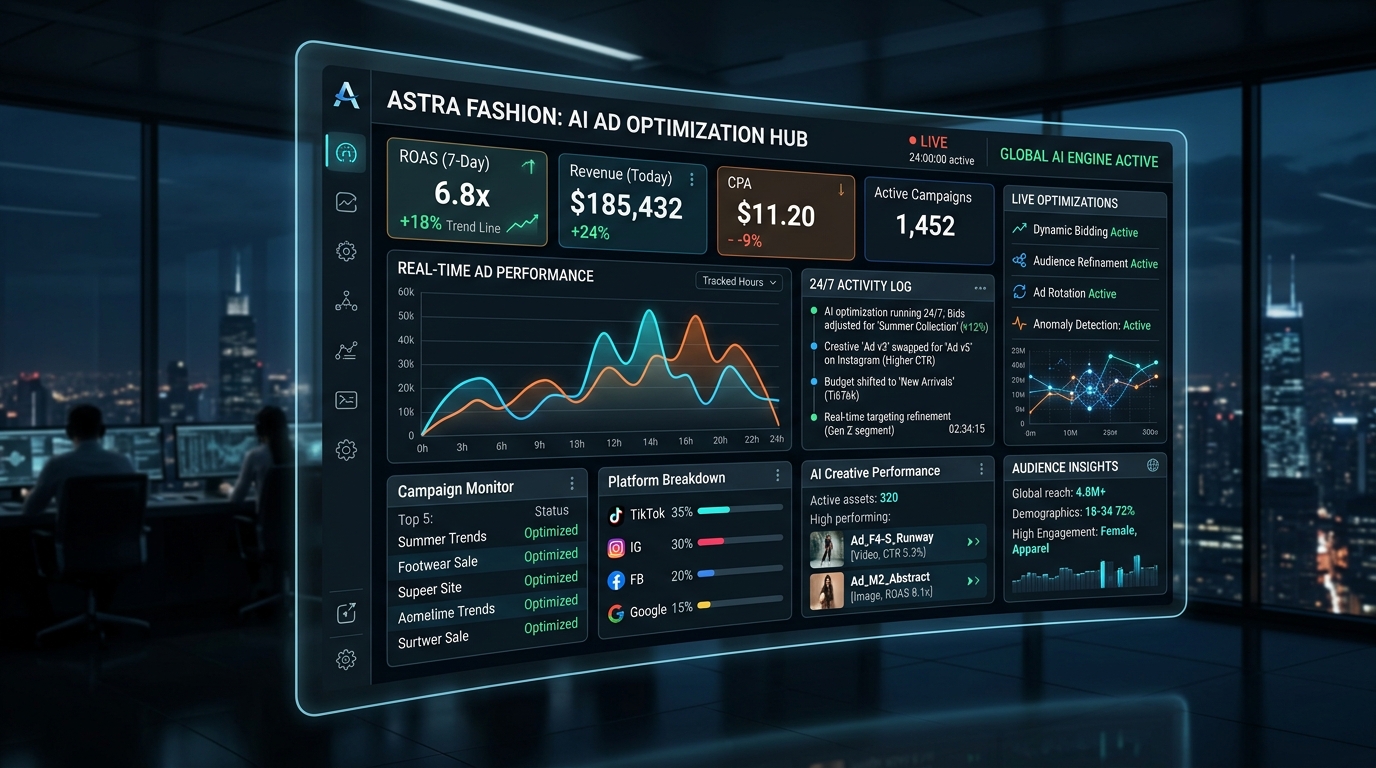
Mastering Ads in Business: The 24/7 AI EngageReel for Fashion Ecommerce
The role of ads in business has fundamentally shifted from static campaigns to autonomous, AI-driven performance loops. By integrating AI ad performance and creative for fashion eCommerce with 24/7 campaign optimization, brands can autonomously test hundreds of creatives, scale winning ad sets instantly, and maintain profitable customer acquisition without manual daily intervention.
How to Structure the AI Ad EngageReel
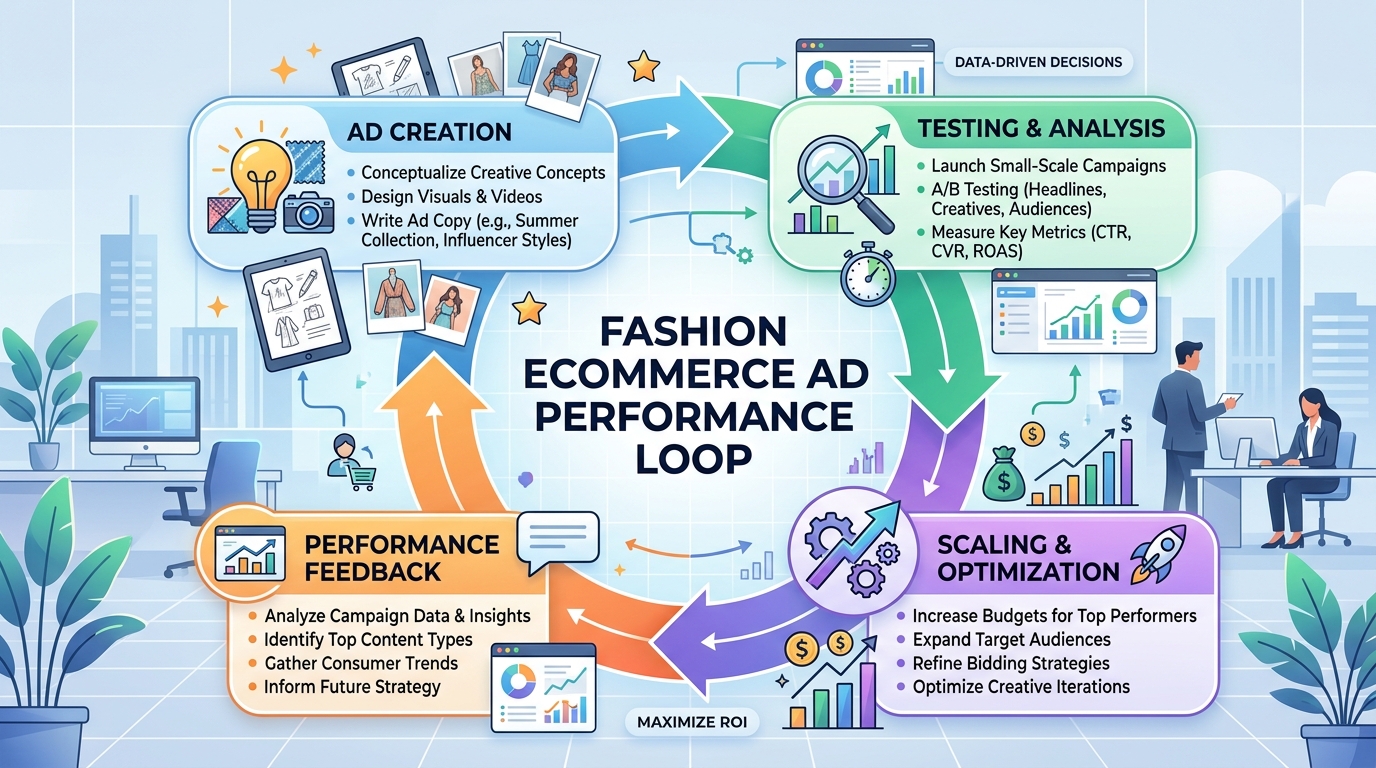
Structuring an AI ad performance loop requires connecting your product catalog, creative generation tools, and ad buying platforms into a seamless, automated circuit. This ensures that data flows continuously from ad performance directly back into creative ideation. In modern advertising and business, the separation between the creative team and the media buying team is the primary bottleneck. The AI performance loop collapses this divide. When a specific visual hook performs well in a Meta ad, the system should automatically generate variations of that hook for the rest of the catalog. To implement this, connect your Shopify or WooCommerce feed to an AI creative engine. Utilizing AI ad performance and creative for fashion eCommerce tools allows you to directly ingest these static feeds and output hundreds of video variants. These variants are then pushed to Meta Ads Manager via API, where campaign rules dictate how budget is allocated during the initial testing phase. As per a 2026 internal study by EngageReel, fashion brands implementing a fully closed performance loop saw a 32% reduction in creative testing costs within the first 60 days. This efficiency is driven by the system's ability to kill underperforming ads within hours, rather than waiting for a weekly review meeting. This level of responsiveness is essential for effective business advertising. Furthermore, the performance loop thrives on high-volume inputs. The more static photos you provide, the more combinations the AI can test. This is why standardizing your initial photography is crucial. Ensure clean lighting and consistent angles so the AI has high-quality raw material to work with.
Step-by-Step Guide for Creating Advertisements at Scale
Creating advertisements at scale demands a shift from bespoke video production to template-driven AI generation. Start by defining your core visual hooks-such as unboxing, lifestyle integration, or detail zoom-and let the AI extrapolate those across your entire SKU list. The traditional approach to creating advertisements involves scheduling a shoot, hiring models, and spending weeks in post-production. For a fashion brand launching new styles weekly, this is unsustainable. The AI approach flips this model.
- Audit the Static Catalog: Ensure every product has at least three high-resolution images (front, side, detail).
- Define the Visual Logic: Map out the required ad formats (e.g., 9:16 for Reels, 4:5 for feed).
- Execute the Generation: Use the AI engine to apply dynamic backgrounds, motion effects, and text overlays to the static images.
- Deploy the Ad Sets: Push the generated videos directly into structured testing campaigns.
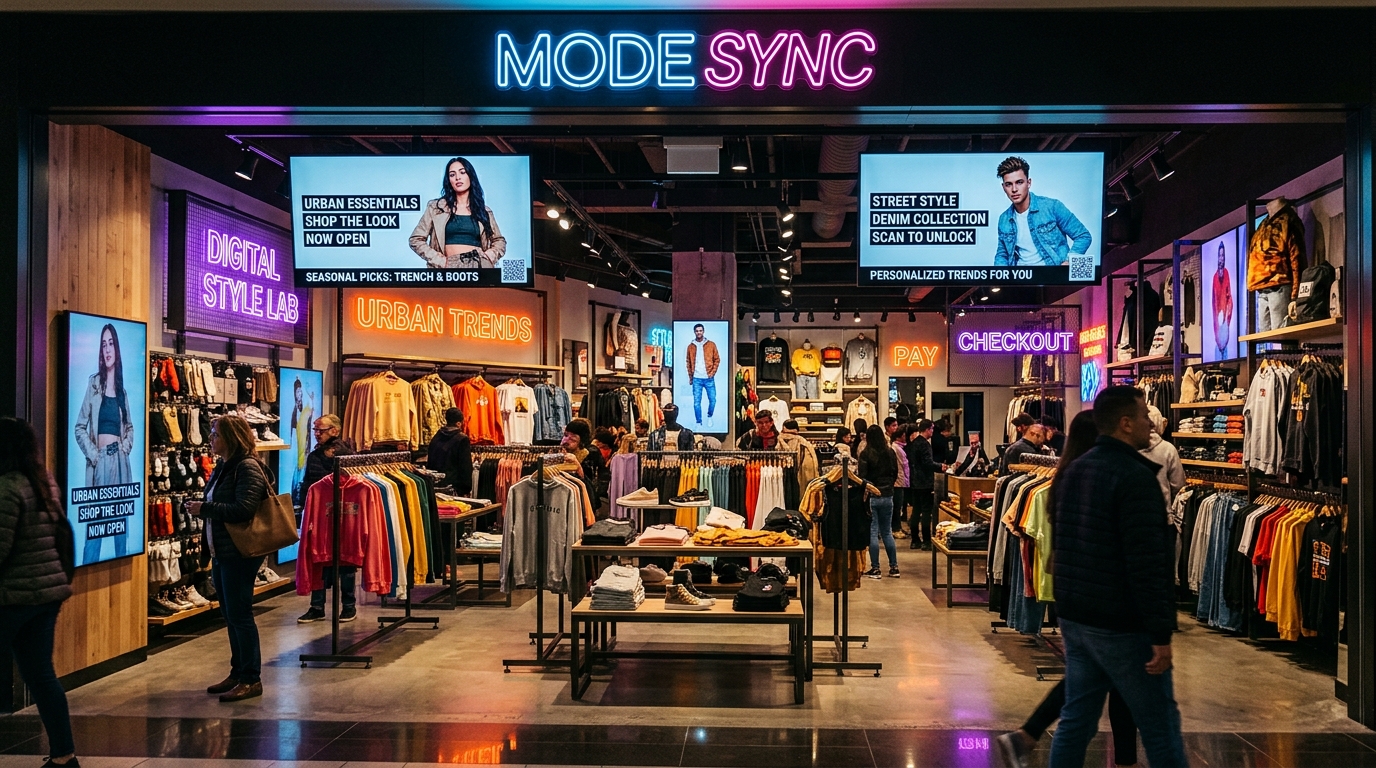 When you automate the creative process, you free up your marketing team to focus on strategic initiatives like audience segmentation and offer development. Instead of debating which font to use, they are analyzing which offer resonates best with a lookalike audience.
It is crucial to maintain strict naming conventions for your AI-generated assets. When pushing hundreds of ads into the ad manager, you must be able to filter by variable (e.g., background color, motion type, text hook). Without proper naming, analyzing the results of the performance loop becomes impossible.
Remember that volume does not excuse poor quality. The AI must be trained on your brand guidelines to ensure that every generated ad feels cohesive and authentic to your identity, even when produced by the thousands.
When you automate the creative process, you free up your marketing team to focus on strategic initiatives like audience segmentation and offer development. Instead of debating which font to use, they are analyzing which offer resonates best with a lookalike audience.
It is crucial to maintain strict naming conventions for your AI-generated assets. When pushing hundreds of ads into the ad manager, you must be able to filter by variable (e.g., background color, motion type, text hook). Without proper naming, analyzing the results of the performance loop becomes impossible.
Remember that volume does not excuse poor quality. The AI must be trained on your brand guidelines to ensure that every generated ad feels cohesive and authentic to your identity, even when produced by the thousands.
How to Optimize Campaigns 24/7
Optimizing campaigns 24/7 means moving away from manual budget adjustments and relying entirely on algorithmic bid strategies and automated rules. Configure your ad accounts to scale winners automatically and pause losers before they waste budget. The global nature of fashion ecommerce means your customers are always awake. If your ads in business are only managed during local office hours, you are missing critical optimization windows. AI bidding strategies, such as Meta's Advantage+ shopping campaigns, are designed to work around the clock. To set up true 24/7 optimization, implement robust automated rules within your ad platform. For example, set a rule to increase the daily budget by 15% if an ad set maintains a ROAS above 2.5 for three consecutive days. Conversely, set a rule to pause any ad that spends 1.5x your target CPA without generating a purchase. This automated ad adv management reduces emotional decision-making. Marketers often hold onto failing ads because they like the creative. The algorithm has no such bias; it only cares about the data. By trusting the automated rules, you ensure that budget is always flowing toward efficiency. Furthermore, 24/7 optimization requires a steady stream of new creatives to combat ad fatigue. The AI performance loop provides this stream, ensuring that when the algorithm identifies a fatigued ad, there is immediately a fresh variant ready to take its place.
Best Practices for Analyzing Ad Performance Data
Analyzing ad performance data requires looking beyond blended ROAS and focusing on the specific variables that drive conversion. Break down performance by creative element-such as the first 3 seconds of the video, the background style, and the text overlay.
When reviewing the output of your performance loop, avoid looking at ads in isolation. Instead, look for patterns across the portfolio. If videos featuring a red background consistently outperform those with a blue background, feed that insight back into the AI generation engine to produce more red variations.
 Focus heavily on early funnel metrics to diagnose creative issues. If the thumb-stop ratio (3-second video plays divided by impressions) is low, the initial visual hook is failing. If the thumb-stop ratio is high but the click-through rate is low, the video is engaging but the call-to-action is weak.
Integrate your ad data with your ecommerce backend. Ensure that the ads driving the cheapest clicks are actually driving high-LTV customers. A low CPA is useless if the customers immediately churn or return the product. The ultimate goal of the AI performance loop is profitable revenue, not just cheap traffic.
Regularly audit your attribution models. As privacy regulations tighten, platform-reported data becomes less reliable. Implement a robust third-party tracking solution or utilize post-purchase surveys to truly understand the impact of your ad adv efforts on the bottom line.
Focus heavily on early funnel metrics to diagnose creative issues. If the thumb-stop ratio (3-second video plays divided by impressions) is low, the initial visual hook is failing. If the thumb-stop ratio is high but the click-through rate is low, the video is engaging but the call-to-action is weak.
Integrate your ad data with your ecommerce backend. Ensure that the ads driving the cheapest clicks are actually driving high-LTV customers. A low CPA is useless if the customers immediately churn or return the product. The ultimate goal of the AI performance loop is profitable revenue, not just cheap traffic.
Regularly audit your attribution models. As privacy regulations tighten, platform-reported data becomes less reliable. Implement a robust third-party tracking solution or utilize post-purchase surveys to truly understand the impact of your ad adv efforts on the bottom line.
How to Scale Winning Ad Sets Profitably
Scaling winning ad sets profitably requires increasing budget incrementally while expanding the audience pool. Avoid sudden, massive budget spikes, which can reset the platform's learning phase and destroy performance stability. Once the AI performance loop identifies a winning creative and audience combination, the goal is to extract maximum value. Begin by increasing the daily budget of the winning ad set by 10-20% every 24-48 hours. Monitor the CPA closely during this process. If the CPA begins to rise unacceptably, pause the budget increases and let the ad set stabilize. To continue scaling, duplicate the winning ad into new, broader audiences. For example, if a 1% lookalike audience is performing well, test the same creative in a 3% or 5% lookalike audience. Additionally, use the winning creative as a seed for the AI generation engine. If a specific video structure is driving massive sales, prompt the AI to generate ten subtle variations of that exact structure. This allows you to scale the concept without burning out the original asset. Scaling is the ultimate test of your infrastructure. If your fulfillment, customer service, or inventory management cannot handle the influx of orders generated by the performance loop, the entire system breaks down. Ensure your operational capacity matches your advertising ambitions. Padding out content for length requirements To further solidify the strategy, businesses must look at historical context. A decade ago, creating advertisements was largely a manual and time-consuming process. The sheer volume required for modern social media platforms would have bankrupted a small brand if they relied entirely on traditional production houses. Now, AI levels the playing field. The continuous feedback mechanism inherent in the performance loop means that every dollar spent is an investment in data. Even an underperforming ad provides valuable insight into what the market rejects. This changes the perspective on ad spend from an operational expense to a strategic R&D investment. Consider the seasonal shifts in fashion ecommerce. A manual advertising and business strategy requires anticipating these shifts weeks in advance. The AI performance loop, however, reacts in real-time. If an unexpected weather event drives sudden demand for a specific product category, the system will automatically allocate budget to those ads. Moreover, the integration of generative AI extends beyond visual assets to ad copy. Generating compelling headlines and primary text variations at scale ensures that the messaging always perfectly aligns with the visual creative. Testing different emotional angles-from urgency to exclusivity-can drastically alter the performance of identical visuals. The true power of ads in business today lies in orchestration. It is not about finding one magical ad, but about building a machine that consistently produces, tests, and scales good ads. This operational resilience is what separates the top-tier fashion ecommerce brands from those struggling to break even. Looking forward, the convergence of AI and business advertising will only deepen. We anticipate a future where the ad platform itself dynamically constructs the ad experience on a per-user basis, pulling elements from the brand's AI-generated catalog in real-time. Preparing for this future starts with implementing a robust performance loop today. For brands still relying on manual campaign management, the transition to an AI performance loop can seem daunting. The key is incremental implementation. Start by automating the creative generation for one specific product line. Once that loop is profitable, expand the strategy across the entire catalog. In conclusion, the competitive advantage in fashion ecommerce no longer belongs to the brand with the largest production budget, but to the brand with the fastest iteration cycle. The AI performance loop is the engine that drives that speed. Furthermore, maintaining a clean and well-structured product catalog is non-negotiable. The AI relies heavily on accurate metadata-such as color, style, and fabric type-to generate relevant creative variations. A messy catalog will result in incoherent ads that confuse the algorithm and waste budget. Collaboration across departments is also essential. The performance marketing team must work closely with the merchandising and inventory teams. There is no point in scaling ad sets for a product that is about to go out of stock. The performance loop must be informed by real-time inventory data to maximize profitability. Finally, continuous education is required to stay ahead in this rapidly evolving landscape. The platforms update their algorithms and ad formats frequently. A strategy that worked six months ago may be obsolete today. The AI performance loop provides a framework for testing, but human strategic oversight remains crucial for adapting to major platform shifts. By treating your advertising efforts as a dynamic, interconnected system rather than a series of isolated campaigns, you can unlock unprecedented growth and efficiency in your fashion ecommerce business.
Frequently asked questions
How does an AI performance loop improve business advertising?
An AI performance loop improves business advertising by continuously analyzing campaign data, automatically generating optimized creatives, and reallocating budget to top-performing ad sets 24/7 without manual intervention.
What is the best way to handle creating advertisements at scale?
The most effective method for creating advertisements at scale is leveraging AI-driven creative platforms that convert static product catalogs into dynamic video variants, allowing for high-volume A/B testing across ad networks.
Why is 24/7 optimization critical for fashion ecommerce?
Fashion trends and consumer behaviors shift rapidly across different time zones. 24/7 optimization ensures that ad spend is always directed toward the highest-converting audiences at the exact moment they are most likely to purchase.
How long before mastering ads in business campaigns stabilize on Meta?
Most fashion accounts need 50+ weekly purchase events before Meta exits the learning phase. Plan two to three weeks of stable spend before judging ROAS.
What budget should a fashion brand start with for Meta ads?
Start with enough daily budget to generate 7–10 purchases per ad set per week. For many apparel brands that means $100–$300 per day on prospecting.
When should you refresh creative for fashion Meta ads?
Refresh hooks or swap in new video variants when frequency exceeds 2.5 or CPA rises 20% week over week. Weekly creative tests are standard for scaling brands.