What Is PPC Advertising? How Pay-Per-Click Works (Simple Guide for 2026)
In this article
Pay-per-click is the machine behind Google Ads, Meta Ads, and Amazon Ads. This guide explains how it operates, what it really costs, and how to get started without wasting your budget.
- What is PPC advertising?
- How does the PPC ad auction work?
- What are the main PPC platforms?
- Common PPC pricing models
- PPC vs. SEO: Key differences
- The pros and cons of PPC
- A 5-step checklist for starting with PPC
Pay-per-click (PPC) advertising is a digital marketing model where you pay a fee only when your ad is clicked. It's the engine behind the sponsored results you see on Google or the ads in your Instagram feed. You bid on specific keywords or audiences, and a real-time auction determines if your ad is shown.
If you've ever searched on Google and noticed the "Sponsored" links at the top, you've seen PPC. An advertiser paid for that placement, but their cost is only incurred if you click through. While PPC is one of the quickest methods to drive targeted traffic, it can also drain a budget rapidly if not managed correctly. For brands spending anywhere from ₹10 lakh to ₹1 crore a month, even small inefficiencies can lead to significant waste. This guide breaks down the essential mechanics every marketer, founder, and agency partner needs to understand.
What is Pay-Per-Click (PPC) Advertising?
PPC is an acronym for pay-per-click. Unlike traditional advertising where you pay upfront for ad space, this model requires payment only when a user interacts by clicking. If your ad is displayed but no one clicks, you don't pay for the impression.
The term has a dual meaning. In a narrow sense, it refers to ads priced by the click, like those on Google Search. More broadly, it encompasses all paid digital ads running on auction systems, including Meta ads, which are often priced per thousand impressions (CPM) but are optimized for outcomes like clicks, leads, or sales.
How Does the PPC Ad Auction Work?
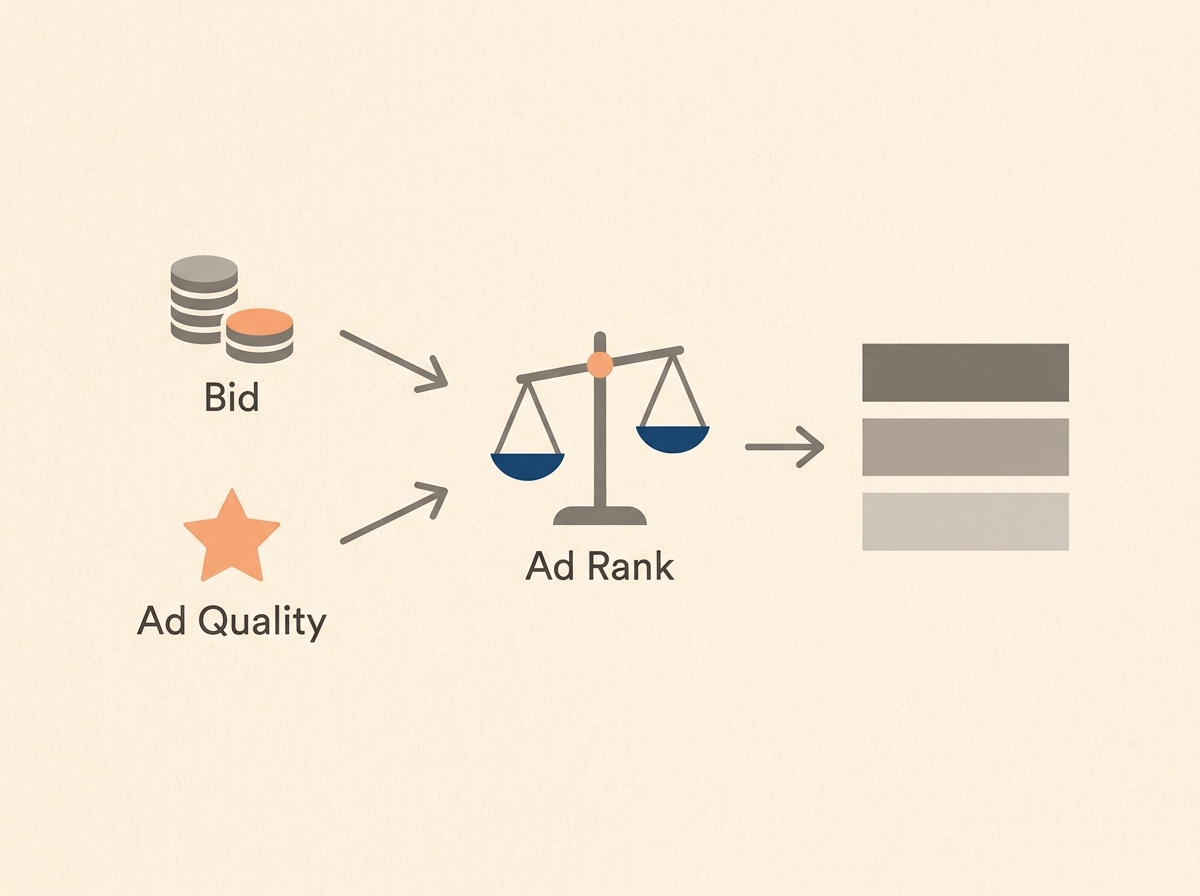
Every Google search triggers a split-second auction to decide which ads appear and in what order. The winner isn’t necessarily the one willing to pay the most. Several factors are weighed to determine the outcome.
What Decides the Winner
- Your Bid: The maximum amount you're willing to pay for a single click. This is often managed automatically by platform bidding strategies.
- Ad Quality: A score based on your ad's relevance to the search query, its expected click-through rate (CTR), and the user experience on your landing page.
- Search Context: Factors like the user's location, the device they're using, the time of day, and the specific search terms.
- Ad Assets: Additional information like site links, phone numbers, and callouts that enhance your ad's usefulness.
Why Quality Is More Important Than Your Bid
A highly relevant ad can win a better position than a higher bidder and often at a lower cost per click. This is why it's critical to ensure your keyword, ad copy, and landing page are all tightly aligned. A cohesive message signals quality to the platform, which rewards you with better placement and pricing.
The Main PPC Platforms
| Platform | Where Ads Appear | Best For |
|---|---|---|
| Google Ads | Google Search, Shopping, YouTube, Maps, Gmail, partner sites | Capturing users with high purchase intent as they search. |
| Meta Ads | Facebook, Instagram, Messenger, WhatsApp (click-to-chat) | Generating demand, direct-to-consumer sales, and lead capture. |
| Microsoft Ads | Bing, Yahoo, and other Microsoft properties | Reaching an additional search audience, often strong for B2B on desktop. |
| Amazon / Flipkart Ads | Within their respective marketplaces | Targeting shoppers directly at the point of sale. |
| LinkedIn Ads | LinkedIn feed, sidebar, and InMail | B2B marketing, professional services, and recruitment. |
Common PPC Pricing Models
- CPC (Cost-Per-Click): The standard model for search ads where you pay for each click.
- CPM (Cost-Per-Thousand Impressions): You pay for every 1,000 times your ad is shown. This is common for brand awareness campaigns on social and display networks.
- CPA (Cost-Per-Action): You define a desired action (like a sale or signup) and pay when it's completed. The platform's algorithm adjusts bidding to meet your target CPA.
- CPV (Cost-Per-View): Used for video advertising, where you pay when someone watches a certain length of your video ad.
PPC vs. SEO: What's the Difference?
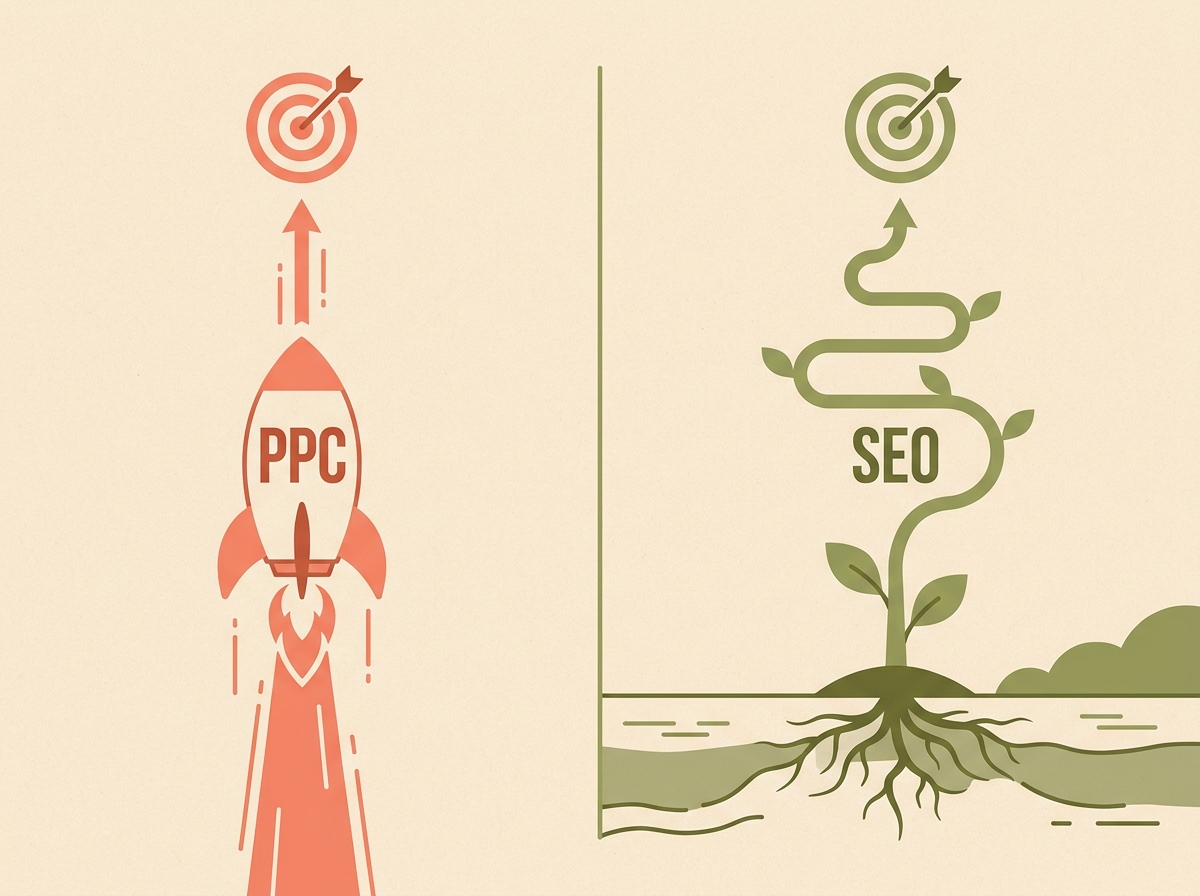
PPC and Search Engine Optimization (SEO) both aim to drive traffic from search engines, but they operate differently.
When to Use PPC
Choose PPC when you need immediate results. It's ideal for new product launches, time-sensitive promotions, or testing which keywords and messaging resonate with your audience before committing to a long-term content strategy.
When to Use SEO
Invest in SEO when your goal is to build sustainable, organic traffic that doesn't require paying for every click. It's a long-term strategy that can take several months to show results but can become a powerful, cost-effective asset over time.
Pros and Cons of PPC
| Pros | Cons |
|---|---|
| Immediate results from day one. | Traffic stops as soon as you stop paying. |
| Granular control over budget and targeting. | Costs can be high in competitive markets. |
| Highly measurable and data-rich. | Requires constant monitoring and optimization. |
| Excellent for testing offers and creative. | Vulnerable to "click fraud" if not monitored. |
How to Start with PPC: A 5-Step Checklist
- Set Up Conversion Tracking: Before you spend a single rupee, ensure tracking is in place to measure which clicks lead to actual sales or leads.
- Determine Your Break-Even Point: You must know the maximum you can afford to pay for a customer. This will guide your bidding strategy and help you stay profitable.
- Start with a Narrow Focus: Launch your first campaign with a small set of 10-30 high-intent keywords. Expand only after you can achieve your target cost-per-sale consistently.
- Use Negative Keywords: Every week, review your search terms report and add irrelevant queries as negative keywords to avoid wasting money on unqualified clicks.
- Measure Success by Cost-Per-Sale: Don't get distracted by clicks or impressions. The ultimate metric is profitability. Scale the campaigns that are meeting your break-even goals.
Frequently asked questions
What does PPC stand for?
PPC stands for pay-per-click. It's an advertising model where businesses pay a fee each time one of their ads is clicked.
Is PPC the same as Google Ads?
Google Ads is the largest and most well-known PPC platform, but the term PPC also covers advertising on other platforms like Microsoft Ads, Meta Ads, and Amazon Ads.
How much does PPC cost?
There is no set price. Costs are determined by a live auction and depend on factors like keyword competition, ad quality, and industry. Clicks can range from a few rupees to several hundred for highly competitive terms.
Is PPC better than SEO?
Neither is inherently better; they serve different purposes. PPC offers speed and control, while SEO provides long-term, organic traffic. A strong digital strategy typically uses both.
Can I run PPC campaigns myself?
Yes, platforms like Google Ads and Meta Ads are built for self-service. You can start with a small, controlled budget (e.g., 10% of your total) to test campaigns with high-intent keywords and careful tracking before scaling up.