
Seasonal E-commerce Strategies: Black Friday & Q4 Meta Ads
Q4 is the most expensive quarter to run Meta ads for fashion ecommerce. CPMs routinely double or triple in November as major retailers flood the auction. A standard lowest-cost Facebook ad campaign during Black Friday Cyber Monday burns budget fast unless you prepared in Q3 and switch bidding strategy for peak days.
The winning seasonal marketing strategy has three layers: build your email list and pixel audiences when traffic is cheap in Q3, pivot creative to urgency-driven offers before BFCM, and use cost cap bidding during the four-day peak so CPA stays within a profitable ceiling.
Teams using AI ad performance and creative for fashion eCommerce consolidate creative testing, budget pacing, and cross-channel reporting so Meta campaigns improve without manual spreadsheet work.
Q4 CPM spikes on Meta and what to expect
More advertisers enter the same auction in October and November. Retail, travel, and consumer brands increase daily budgets simultaneously, pushing CPMs up even when your targeting stays the same. Shopify's 2025 BFCM data showed global ecommerce sales concentrated in a narrow November window, which concentrates ad demand on Meta's feed and Reels inventory. Conversion rates often rise in parallel, which partially offsets higher CPMs. The chart below shows how CPM and conversion rate move in opposite directions through the quarter. Your job is to capture the conversion lift without letting CPA exceed your margin.
- Average CPM ($)
- Conversion Rate (%)
Q3 prep before Black Friday Meta ad costs rise
Q3 is list-building season. Run lead generation campaigns with email capture offers when CPMs sit at annual lows. A 15% off first-order popup backed by a Meta lead ad costs far less per subscriber in September than the same ad in November. Also use Q3 to test BFCM creative angles. Run small-budget A/B tests on offer framing, video hooks, and landing page layouts. Lock winning variants before November so you are not guessing under auction pressure. An AI product video generator for fashion ecommerce can produce seasonal variants from existing product photos without a full studio shoot.
Cost cap bidding strategy for Black Friday
During BFCM, lowest-cost bidding can chase expensive impressions and blow past your CPA target in hours. Cost cap tells Meta the maximum you will pay per result while still competing for high-intent shoppers. Set the cap at your breakeven CPA plus 10–15% to account for auction volatility.
Bid cap is more aggressive and works for brands with hard margin floors. Test both in the first 24 hours of BFCM on duplicate ad sets with equal budget. Keep the strategy that delivers volume without breaching ROAS targets.

BFCM creative that converts in crowded auctions
Standard lifestyle imagery underperforms during peak sale days. Shoppers expect bold offer graphics, countdown timers, and clear discount amounts on the creative itself, not buried in primary text.
- Put the discount percentage or dollar amount on the image or first video frame.
- Add urgency copy: "ends Sunday" or "limited sizes" only when true.
- Consolidate budget into one Advantage+ Shopping Campaign for the BFCM window so the algorithm reacts to hourly trends.
- Refresh creative every 48 hours during the four-day window to combat fatigue at high frequency.
Budget pacing through November and December
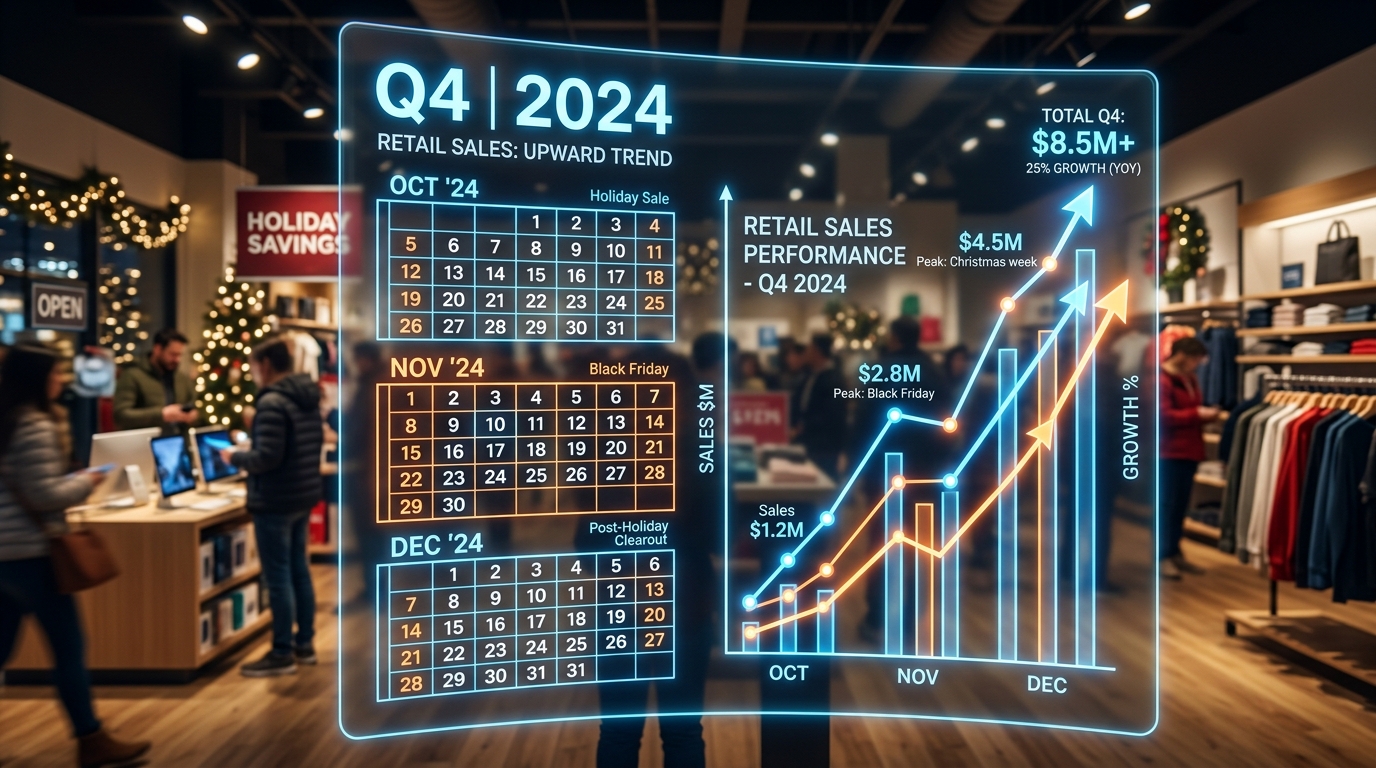
Front-load retargeting to your Q3 email list and site visitors during the BFCM window when they convert at the highest rate. Shift prospecting budget to warm audiences first, then expand cold prospecting only if ROAS holds above target after 48 hours. After Cyber Monday, CPMs typically drop while conversion rates remain elevated through mid-December. Many brands cut spend too early and miss the gift-buying tail. Maintain cost cap bidding through December 15, then taper prospecting as shipping cutoff dates pass. For Seasonal E-commerce Strategies: Black Friday & Q4 Meta Ads, track purchase ROAS, cost per purchase, and add-to-cart rate at the ad level-not only the campaign. Fashion accounts that review ad-level data twice weekly cut wasted spend faster because creative fatigue shows up in CPA before it appears in blended ROAS. Pair platform metrics with MER (total revenue divided by total ad spend) so iOS signal loss does not hide true profitability.
Metrics to track weekly on Meta fashion campaigns
Splitting budget across too many ad sets is the most common error: none reach 50 conversions per week and learning resets. Running only static catalog images in prospecting is second-Reels and Stories video with on-model motion consistently outperform flat product shots. Third, retargeting recent buyers in cold campaigns wastes budget; use a purchaser exclusion of at least 30 days.
Common mistakes that hurt fashion e-commerce ROAS
Add new ads inside existing ad sets instead of cloning whole campaigns. Test one variable per week: hook, offer, or thumbnail. When a variant beats the control by 15% on CPA after 1,000 impressions, duplicate the ad set and shift 20% of budget gradually. This preserves the performance history Meta uses for delivery optimization.
How to test creative without resetting campaign learning
The product shown in the ad must be above the fold on mobile PDPs. Load time under three seconds matters-every extra second can cost 7% of conversions on apparel traffic. Match price and promo copy between ad and page; mismatches increase bounce and hurt quality ranking.
Pre-launch checklist for seasonal e-commerce strategies
Before scaling black friday meta ads, confirm your Meta Pixel and Conversions API both fire purchase events that match Shopify order volume within 10%. Exclude recent purchasers from prospecting for at least 30 days, load a minimum of three video variants per ad set, and set a frequency alert above 2.5 on cold audiences. Document your control creative so weekly tests have a clear baseline.
Budget split between prospecting and retention
Apparel brands in the $50K–$500K monthly revenue range typically allocate 70–80% of Meta budget to prospecting and 20–30% to retention. Raise the retention share during sale periods when cart abandoners spike, but avoid starving prospecting-new customer acquisition fuels long-term MER. Review the split weekly using blended ROAS, not platform-reported ROAS alone.
Reporting cadence for fashion performance marketers
Check spend pacing and CPA daily; review creative frequency and hook retention twice per week; run a full ad-level ROAS audit every Friday. Compare Meta purchase revenue to Shopify total revenue to calculate MER. When MER holds but platform ROAS drops, the issue is usually attribution signal-not true performance. Pair platform dashboards with a simple MER spreadsheet updated every Monday.
Frequently asked questions
How long before seasonal e-commerce strategies campaigns stabilize on Meta?
Most fashion accounts need 50+ weekly purchase events before Meta exits the learning phase. Plan two to three weeks of stable spend before judging ROAS.
What budget should a fashion brand start with for Meta ads?
Start with enough daily budget to generate 7–10 purchases per ad set per week. For many apparel brands that means $100–$300 per day on prospecting.
When should you refresh creative for fashion Meta ads?
Refresh hooks or swap in new video variants when frequency exceeds 2.5 or CPA rises 20% week over week. Weekly creative tests are standard for scaling brands.