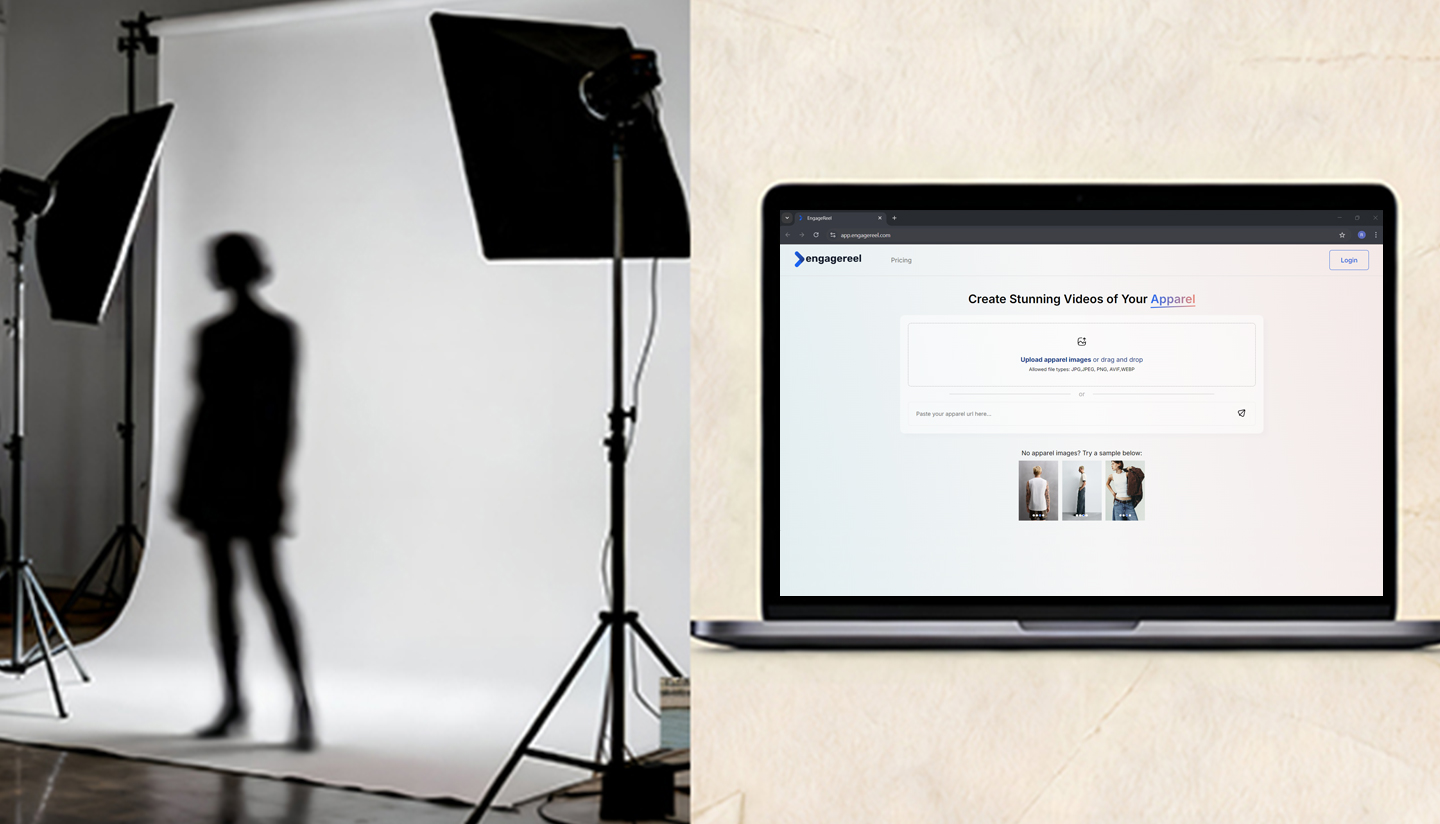
The New Era of Fashion Powered by AI
The New Era of Fashion Powered by AI
AI is setting new trends in the Fashion industry, and currently, one of the most effective trends is creating fashion creations using AI. We give prompts to turn them into images, and we got something OK. These results are used as a product catalog or as a brand face.
At EngageReel, we have developed a more advanced workflow that makes it production-ready and scalable, yielding more consistent results and higher quality, where you just need to share a product image, and you will get a studio-quality AI Fashion model dressed up in the provided Product image.
The Prompt-Driven Fashion: Impressive but Consistency Remains the Challenge
For many brands, the trend of creating fashion creations using AI began with prompting-based Generative AI tools, where users need to provide prompts to obtain results, such as: “a male model wearing a red shirt, urban streetwear background, high-resolution, natural light.”
…when you generate the results. Sometimes it’s good. Often, you get weird arms, fingers, and messed-up poses that do not align with your prompts. This happens as these models are not specifically trained on the fashion data to provide consistency or the desired results.
Also, this process takes a longer duration to generate results, so if you need one social post, this might be fine. But for a full catalog launch, or 500+ SKUs or seasonal refreshes, it becomes chaotic.
- These are the major roadblocks that arise when you plan to scale using Prompting tools:
- Inconsistency of quality
- Less control over model type, pose, lighting, or background
- Brand aesthetic drift – some images feel “off-brand.”
- Time spent cleaning up, rejecting, and redoing images
In short, Generative AI prompt-based tools are not yet ready to scale in that fashion, which brands could depend on.
What Fashion Teams Expect: Speed + Consistency + Scalability
Every fashion brand, regardless of its size, needs the same drivers to scale its brand and maintain consistency.
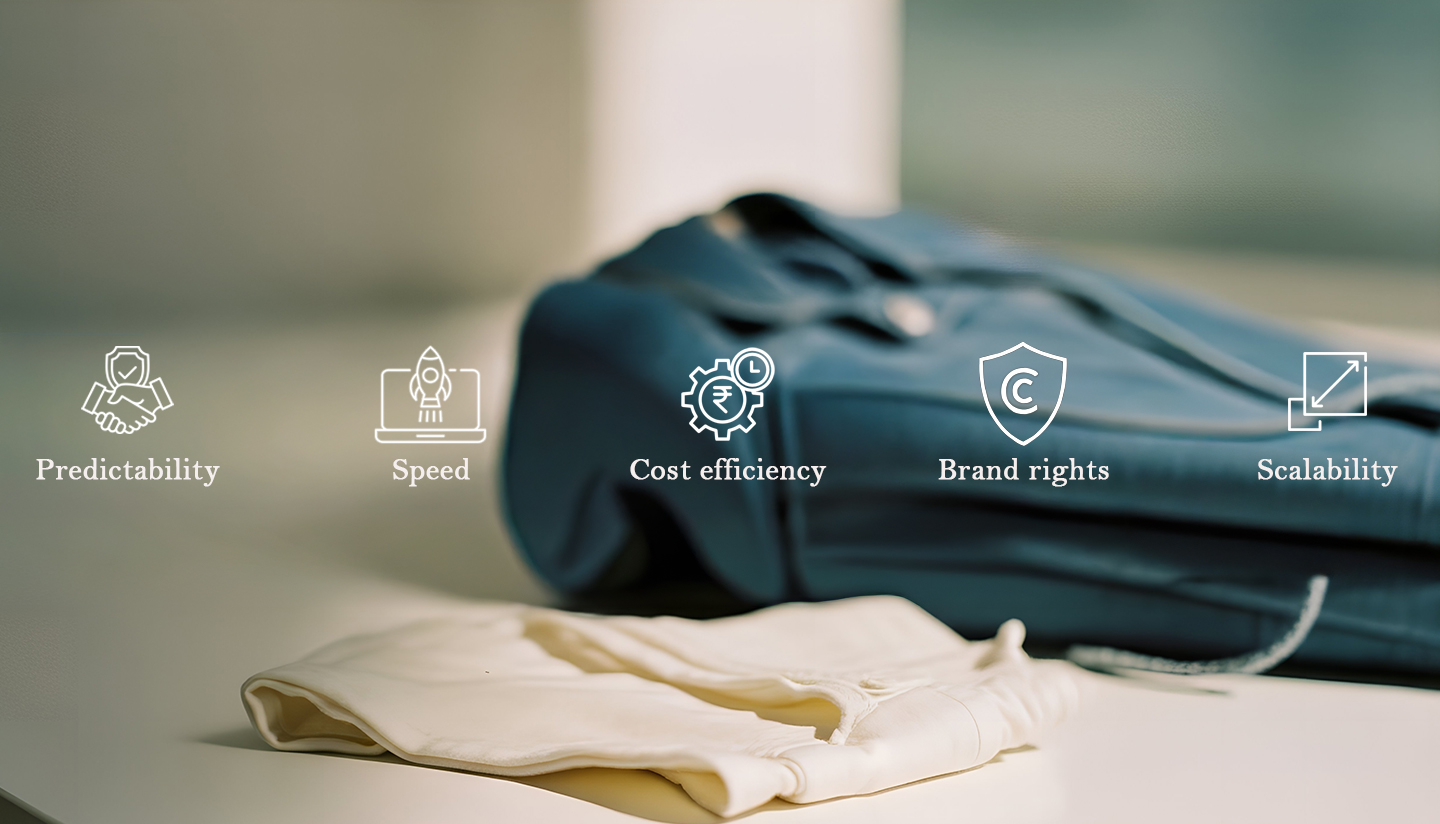
Predictability When you upload the product images, you want to be sure about the output that meets your quality bar, not something that varies each time.
Speed The turnaround time should be faster to scale, whether it is about generating product video from images, launching new collections, refreshing images, should be faster.
Cost efficiency Traditional photoshoots – models, photographers, and venues are expensive, slow and hard to scale, so the fashion brands need to be smarter.
Brand control and rights Brands need to ensure that the images they are using for product outreach have the legal rights to use and repurpose, avoiding legal and ethical
Scalability Brands need to ensure that the images they are using for product outreach have the legal rights to use and repurpose, avoiding legal and ethical
The Only Question That Truly Matters
- When a brand evaluates an AI-powered visual system, the real test isn’t one feature or another. It’s this:
- “Can this workflow remain reliable, consistent, fast, and scalable—all at the same time?”
If even one part collapses—say, the quality fluctuates or the output slows—the entire workflow becomes unstable, and teams end up right back where they started.
Enter The Era of Specialized, Brand-Ready AI Tools
This is where specialized platforms differ from generic prompt tools. We designed EngageReel – a Specialized AI-powered fashion tool. Instead of relying on generic prompt-based generators, EngageReel is designed specifically for apparel brands that require speed, consistency, and scalability.
Here is how we transformed abstract technology into a production-ready asset.
From Flat Lays to High-Performing Visuals Forget typing complex text descriptions and hoping for a good result. You simply start with your existing product photography—whether it’s a flat lay, a ghost mannequin, or a basic model shot—and map it onto a diverse AI Fashion model from our curated library. These models are pre-trained to offer various ethnicities, poses, and body types, ensuring consistent brand aesthetics without the need for casting calls.
Built on Fashion Intelligence, Not Just Data Unlike general-purpose diffusion models, our foundation is built on fashion-specific datasets. The AI understands the nuances of fabric drape, garment fit, and natural movement. This ensures that the clothing doesn’t just look “real”—it looks accurate to the product you are selling.
Full Ownership and Brand Safety All visuals created in EngageReel belong entirely to the brand producing them. And because every model is synthetic, there’s no dependency on real people or third-party likenesses. That clarity eliminates legal uncertainty and safeguards long-term brand integrity. Move beyond the use of text prompts to a Specialized AI video generator, ensuring total control and reliability every time you generate a new AI Fashion model.”
Comparison with Prompt-tool vs brand-ready tool
| Workflow Aspect | Prompt-based (Generic) | Brand-ready (Fashion-specific) |
|---|---|---|
| Input | Text prompt | Product photo |
| Consistency | Each run may differ | Same model + style = consistent results |
| Speed for SKUs | Slow — often needs manual fixes | Fast — optimized for batch workflows |
| Scalability | Breaks at high volume | Built to scale with thousands of SKUs |
After working closely with fashion teams, I’ve seen the same problem play out repeatedly: prompt-only AI can deliver a fine one-off image, but it struggles the moment a brand tries to apply it across an entire catalog.
For a solo creator, a text prompt is fine. But for a global fashion brand, relying on generic generative AI creates operational chaos.
How the AI-powered fashion tool – EngageReel works
Let me walk you through, step by step, how a brand using EngageReel can execute an efficient workflow:
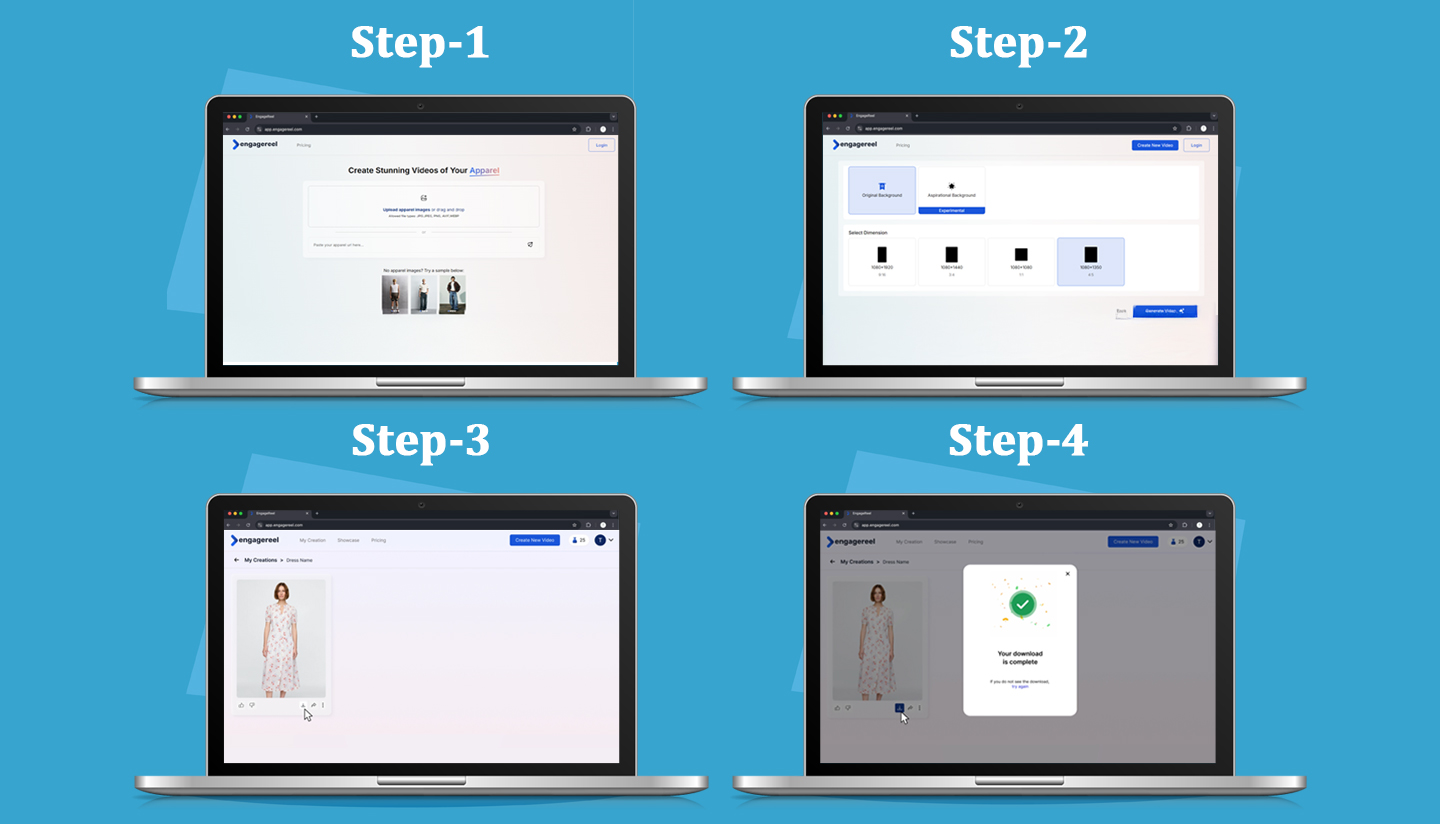
Step 1: Product photo upload
Start with uploading any clear garment shot—flat image, mannequin or on model. Good lighting and visible texture help the system prep your file for production. The key: clear lighting, visible seams, good fabric texture. Our system accepts these inputs and prepares for production.
Step 2: Analyze & Animate: The AI analyzes the photo, identifies the garment, and generates a 3D model. It then intelligently animates it, creating realistic movement that showcases the product’s unique qualities.
Step 3: Optimize & Export: The final video is optimized for all your channels—from Shopify and Amazon to Instagram Reels and TikTok. The entire process takes minutes, not weeks.
Final thoughts
The shift from prompt-based creation to structured AI powered fashion workflows marks an important change. Fashion brands no longer have to compromise with results; they can build visual systems that scale, stay consistent, and support creativity instead of slowing it down. Because when your workflow is stable, your creativity can finally run free.
Once AI creation is repeatable, brand-aligned, and predictable, it moves beyond a mere technological experiment and achieves the status of essential infrastructure. This is the quiet revolution unfolding now: consistent reliability fueling creative advantage.
Frequently asked questions
What is The New Era of Fashion Powered by AI?
The New Era of Fashion Powered by AI describes how fashion brands use specialized AI workflows to turn product photos into consistent, studio-quality visuals and video at catalog scale—without relying on unpredictable prompt-only generators.
How does EngageReel help fashion ecommerce teams?
EngageReel provides a brand-ready AI workflow: upload a product image, map it to diverse synthetic models, and export channel-ready creatives from app.performanceloop.ai with predictable quality and faster turnaround than traditional shoots.
Why is consistency important for AI fashion content?
Fashion catalogs need predictable model type, pose, lighting, and fabric accuracy across hundreds of SKUs. Inconsistent prompt-based outputs create rework, brand drift, and slow launches—structured AI tools solve that at scale.