
Meta Ads Optimization: Why Your Ads Stopped Converting and How to Fix It
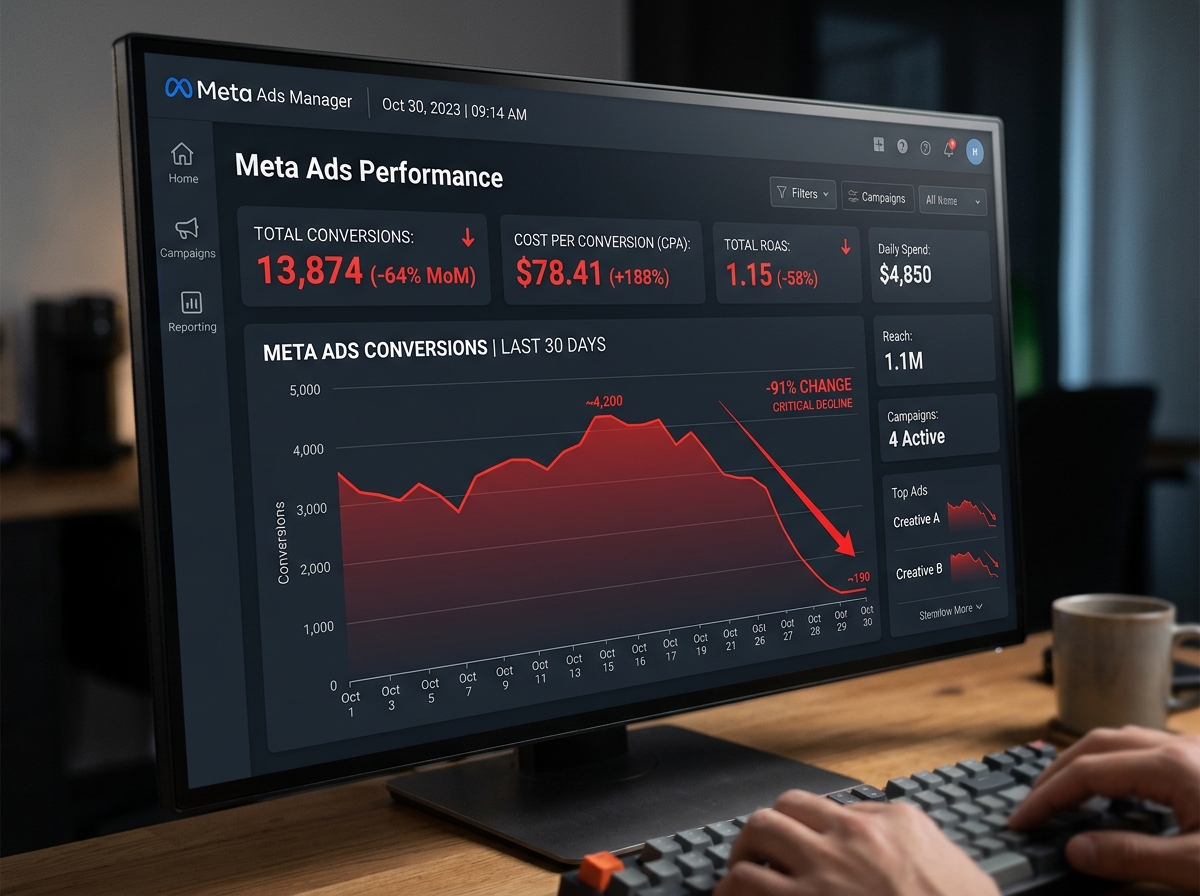
When Meta ad conversions drop, teams often edit campaigns that aren't broken. This guide provides a systematic approach for performance marketers to diagnose the root cause—whether it's a delivery failure, a measurement error, or a genuine performance dip—before making any changes.
- Identify the exact date your campaign performance changed
- Distinguish between reporting glitches and actual conversion drops
- Diagnose issues related to delivery, ad learning, and creative saturation
- Explore how EngageReel helps automate creative diversification
Did your Meta ad conversions suddenly collapse? The issue is usually one of three things: your ads stopped running, performance genuinely declined, or Meta's reporting changed how it counts sales. Before you touch a single ad set, your first job is to find the exact date the numbers broke and determine which of these problems you're actually facing.
What's the First Step When Conversions Drop?
Your diagnosis must start with a date, not a theory. Open Ads Manager and break down your spend, purchases, and cost per acquisition (CPA) by day for the last 30 to 60 days. Pinpoint the specific day the trend line shifted. That date is your most important clue, telling you which category of problem you're dealing with.
| Problem Category | What You See in Ads Manager | Likely Causes |
|---|---|---|
| Delivery | Spend dropped sharply without a budget change. | Billing errors, account spending limits, ad rejections, or inactive ad sets. |
| Performance | Spend is stable, but CPA is up and store sales are down. | Learning phase resets, creative concentration, or on-site offer changes. |
| Measurement | Your store's sales are stable, but Meta-reported purchases have fallen. | Attribution window changes, a broken Pixel or CAPI, or a new checkout app. |
After finding the date, cross-reference it with your own team's activity log. Did you update your site theme, install a new checkout app, change payment gateways, or alter prices? Often, the "Meta problem" corresponds directly to a change made on the brand's own website.

Could a Meta Reporting Change Be the Cause?
Yes, especially if the performance drop aligns with key dates in 2026. Meta made significant changes to its reporting that can create the illusion of a performance decline when your actual sales are unaffected.
For example, industry sources reported that on January 12, 2026, Meta removed the 7-day and 28-day view attribution windows. In March 2026, post-engagement actions like likes, saves, and shares were reportedly moved from the "click-through" attribution bucket to a new "engage-through" category. One third-party analysis estimated this change alone could cause a 15-40% drop in reported conversions. The key is to compare apples to apples; when analyzing historical data, ensure you're using the same attribution windows.
How Do You Confirm if Sales Actually Dropped?
Your store's backend is the source of truth, not Ads Manager. Compare the daily purchase numbers from Meta with the net orders (after cancellations and returns) from your Shopify or WooCommerce dashboard. If your store's order volume has remained steady while Meta's reported purchases have plummeted, the problem is almost certainly with measurement, not performance. In this case, do not edit your campaigns. Instead, investigate your tracking setup. Confirm your Pixel and Conversions API (CAPI) are firing correctly and deduplicating events properly. A new payment gateway or checkout app is a frequent culprit for breaking the Purchase event.
What If My Ad Sets Stopped Spending?
Sometimes conversions fall simply because your ads stopped getting delivered. Before diving into complex performance metrics, run through this quick, five-minute checklist:
- Billing: Check for expired credit cards or failed payments that can pause an entire account.
- Spending Limits: Ensure you haven't hit a forgotten account-level spending limit.
- Ad Rejections: Filter for rejected ads; sometimes ads are disapproved on re-review.
- Schedules: Look for campaigns with fixed end dates that may have passed.
- Inactive Ad Sets: Some ad sets using deprecated interest targets reportedly stopped spending around January 15, 2026, without generating an error. Rebuild these on broad or Advantage+ audiences.
Did Recent Edits Reset the Learning Phase?
Constant tweaking is a common self-inflicted reason for performance drops. According to Meta's guidelines, an ad set typically needs around 50 conversions in the week following a "significant edit" to exit the learning phase. Every time you make such an edit, the clock restarts.
A significant edit, as cited by industry guides like Scalemate, includes changing the optimization event, audience, or creative. Even budget changes can trigger a reset depending on the amount. To check, add the "Last significant edit" column in Ads Manager and compare it to your performance drop date. If they align, you've likely found your answer: your ad sets are relearning.

Is Your Creative Less Diverse Than You Think?
If you have 20 active ads but Meta is only spending on three of them, you might have a creative concentration problem. Ad systems may group visually similar creatives and treat them as a single ad. Swapping headlines or changing background colors on a winning ad might not be enough to create true variety.
To effectively diversify, you need to change the core concept. Test different hooks, formats (UGC vs. static), on-screen talent, or visual styles. Track the click-through rate (CTR) and CPA of each creative over time to spot the early signs of fatigue before performance collapses entirely. Our full guide to creative fatigue offers a deeper dive on this topic.
How EngageReel Fits
Diagnosing these issues manually is time-consuming and prone to error. EngageReel’s platform is designed for fashion e-commerce brands to manage ad performance and creative optimization automatically. The Ad Engine handles the complexities of bidding, budgeting, and audience management, while the Content Engine analyzes what’s converting and generates new, on-brand video creative from your existing product imagery. This allows your team to focus on strategy by turning performance data into your next winning ad, automatically. Learn more at EngageReel.com.
Frequently asked questions
Why would my Meta conversions drop in early 2026?
Reports from sources like [PPC Land](https://ppc.land/meta-restricts-attribution-windows-and-data-retention-in-ads-insights-api/) indicate that Meta removed 7-day and 28-day view attribution windows on January 12, 2026. This means conversions previously credited under those windows are no longer counted, causing a drop in reported numbers even if actual sales remained the same.
Does changing my ad budget reset the learning phase?
It can. While small changes may not have an impact, significant budget or bid adjustments can be considered a "significant edit" by Meta, which restarts the learning phase. Always check the "Last significant edit" column in Ads Manager to confirm.
Why is my active ad set not spending any money?
First, check for basic issues like billing failures or spending limits. If those are clear, the ad set might be targeting a deprecated interest audience that was phased out in January 2026. These ad sets often stop delivering without an error message. The solution is to rebuild them using broad or Advantage+ targeting.
Should I duplicate a campaign to fix its performance?
This is an outdated tactic that practitioners report is no longer reliable for resetting performance. Duplicating a campaign simply starts the learning process from scratch. It's more effective to diagnose and fix the root cause of the performance drop in the original campaign.
How do I know if my ads are experiencing creative fatigue?
Creative fatigue occurs when your audience has seen your ad too many times and it loses its effectiveness. Key indicators include a rising frequency, a declining click-through rate (CTR), and an increasing cost per acquisition (CPA). Monitor these metrics at the individual ad level to catch fatigue early.
References
- PPC Land — Meta restricts attribution windows and data retention in Ads Insights API (2026)
- Good Morning Co — Meta attribution changes and engage-through (2026)
- Webblend — 2026 Meta targeting changes and deprecated interests (2026)
- Scalemate — Meta ads learning phase reset and significant edits (2025)
- EngageReel — Creative Fatigue in Meta Ads: Signs, Causes and Fixes (2026)