How to Create AI Product Photography for Fashion E-commerce
This guide explains how fashion e-commerce brands can use AI to create a wide variety of product images at scale, reducing costs and increasing creative output for ad campaigns. It's for D2C and performance marketers who want to improve ad performance by testing more creative variations.
- Discover the 5 types of images you can generate from a single product photo.
- Learn the best practices for preserving product accuracy in AI-generated images.
- Understand the workflow for turning AI images into high-performing video ads.
- See how EngageReel helps you test and scale your new creative assets.
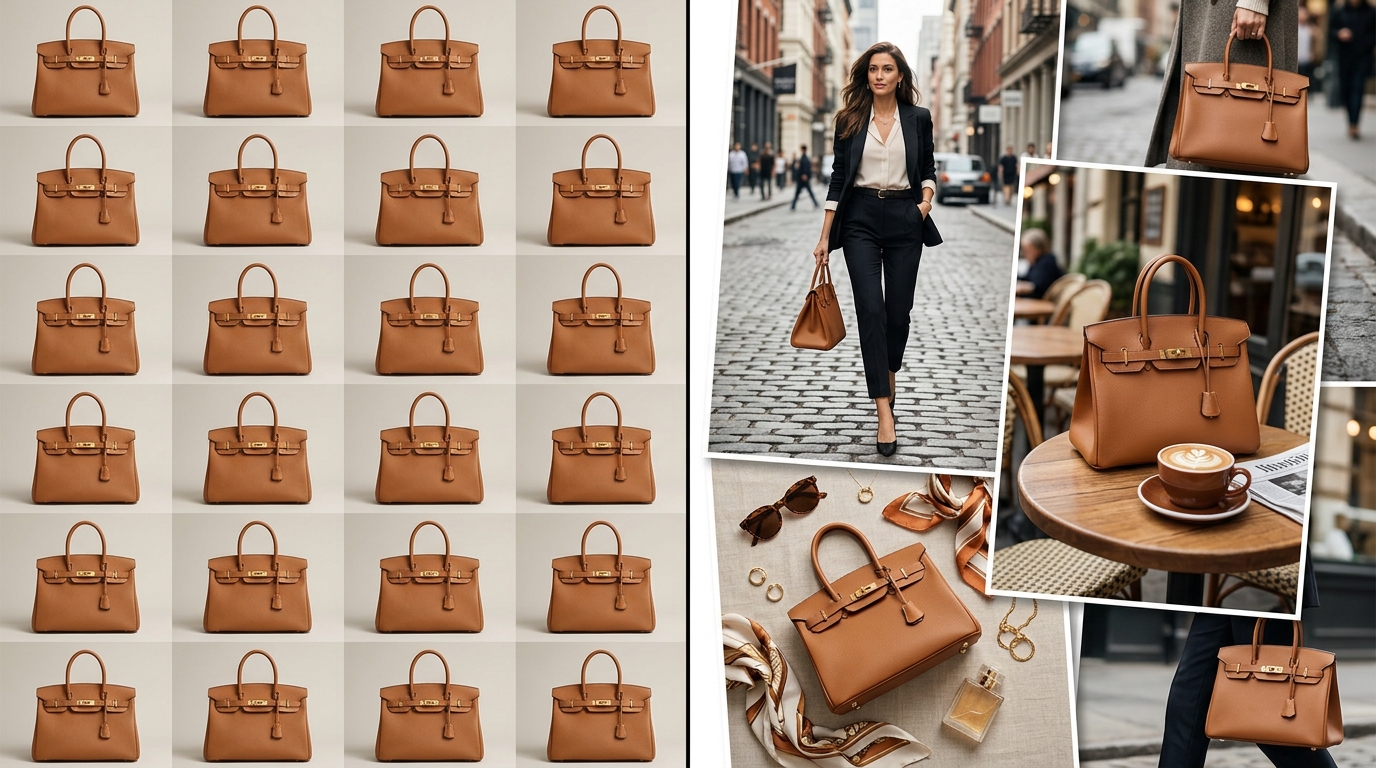
What is AI product photography and how can it help my fashion brand? AI product photography is the process of using artificial intelligence to create new, high-quality product images from existing ones. For fashion brands, this means you can take a single photo of a garment and generate dozens of variations—on different models, in various locations, and in multiple styles—without the need for expensive and time-consuming photoshoots. This allows you to create a wealth of new ad creative to test, which, according to a 2023 Google study, can lead to a 14% lower cost-per-acquisition.
What creative fatigue costs a fashion brand at scale
Creative fatigue is a major challenge for fashion brands that rely on paid social channels like Meta Ads. When your audience sees the same ad creative too many times, they start to ignore it, leading to a decline in click-through rates (CTR) and an increase in cost-per-acquisition (CPA). According to data from Tinuiti, ad fatigue can increase CPA by up to 150% in just a few weeks. To combat this, you need a constant stream of fresh, relevant creative, which is where AI product photography comes in.
Why product-page relevance determines ad ROAS
The journey from an ad click to a purchase is a delicate one. If the product image in your ad doesn't align with the images on your product page, it can create a jarring experience for the customer, leading to a higher bounce rate and lower conversion rate. For example, ASICS saw a 150% increase in conversion from product page to cart for shoppers who used True Fit's size guidance, demonstrating the power of on-page relevance. By using AI to generate a wide range of on-brand images, you can ensure that your ad creative is not only eye-catching but also consistent with your product page, leading to a better customer experience and a higher return on ad spend (ROAS).
The playbook top-performing fashion brands use for AI ad creative
Top-performing fashion brands are using AI to create a feedback loop between their ad creative and their product development. By testing a wide variety of AI-generated images, they can quickly identify which styles, colors, and contexts resonate most with their audience. This data can then be used to inform future product development and marketing campaigns. This is a core component of "AI ad performance and creative for fashion eCommerce," where data from ad campaigns directly influences business decisions.
| Dimension | Traditional Photoshoot | AI-Assisted Product Photography |
|---|---|---|
| Cost | High (photographer, model, studio, etc.) | Low (software subscription) |
| Time | Weeks or months | Hours or days |
| Scalability | Low | High |
| Creative Variations | Limited by budget and time | Virtually unlimited |
| Best for... | Hero campaign images, new product launches | A/B testing ad creative, creating lifestyle images, generating on-model photos |
A step-by-step playbook for testing market-specific creative

- Start with a high-quality source image. Your AI-generated images will only be as good as your source image, so make sure it's a high-resolution photo with good lighting and a clear view of the product.
- Generate a variety of images. Use an AI image generation tool to create a range of images with different backgrounds, models, and styles. Make sure to test both studio and lifestyle shots.
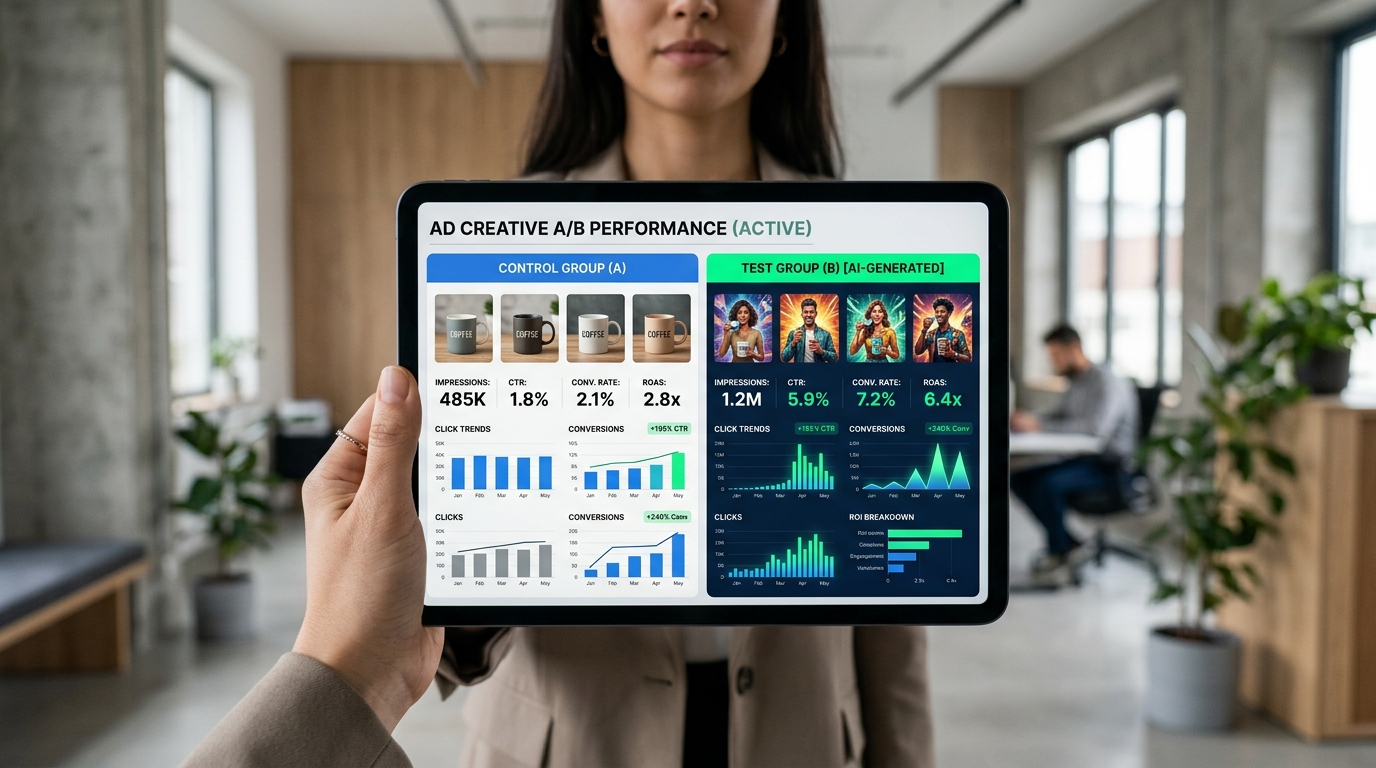
- Launch A/B tests on Meta Ads. Create multiple ad sets with different creative variations and target them to specific audiences. Monitor the results closely to see which images are performing best.
- Analyze the results and iterate. Once you have enough data, analyze the results to see which creative elements are driving the most engagement and conversions. Use this information to inform your next round of creative testing.
How EngageReel automates creative learning at scale
EngageReel is an AI-powered ad performance and creative platform for fashion eCommerce. It connects to your ad accounts and uses machine learning to analyze the performance of your creative assets. This allows you to quickly identify which images are driving the most revenue and get recommendations for new creative to test. By combining the creative power of AI image generation with the analytical power of EngageReel, you can create a powerful feedback loop that will help you constantly improve your ad performance.
Metrics to track after launching localized creative variants
When you launch new creative variations, it's important to track the right metrics to see what's working. In addition to standard metrics like CTR and CPA, you should also look at metrics like ROAS, conversion rate, and average order value. By tracking these metrics, you can get a more complete picture of how your creative is impacting your bottom line.
Frequently asked questions
What is AI product photography?
AI product photography is the use of artificial intelligence to create new product images from existing ones. This can include changing the background, adding a model, or even changing the style of the image. It allows brands to create a large number of creative assets quickly and cost-effectively.
How can I create AI product photography?
You can create AI product photography using a variety of online tools. The general process is to upload a high-quality image of your product, and then use the tool's features to generate new images with different backgrounds, models, and styles. Some tools also allow you to use text prompts to describe the image you want to create.
Is AI product photography accurate?
The accuracy of AI product photography depends on the quality of the source image and the sophistication of the AI tool. To ensure accuracy, it's important to use a high-resolution source image and to carefully inspect the generated images for any inaccuracies in fabric texture, stitching, or other product details. Many modern tools have features to help preserve product fidelity.
Can AI product photography replace traditional photoshoots?
AI product photography can replace traditional photoshoots for many use cases, such as creating ad creative, lifestyle images, and on-model photos. However, for hero campaign images and new product launches, a traditional photoshoot may still be the best option to ensure the highest level of quality and control.
How can I use AI product photography for Meta Ads?
You can use AI product photography to create a wide variety of creative assets for your Meta Ads campaigns. This will allow you to A/B test different images to see what resonates most with your audience, which can lead to a lower CPA and a higher ROAS. Platforms like EngageReel can help you analyze the results of these tests at scale.