
How to Create a Complete AI Ad (Image, Video, Voice & Music)

This article provides a step-by-step playbook for creating a complete, multimodal AI ad, from concept to performance analysis. It is for marketers who want to move beyond generating standalone assets and learn to build coherent, high-performing campaigns.
- Integrate AI-generated images, video, voice, and music into a single creative.
- Follow a 13-step process from initial brief to performance analysis.
- Understand the strategic role each AI modality plays in an ad.
- Connect creative decisions to advertising results with EngageReel.
How do you create a complete AI ad? A complete AI ad combines a creative concept, product reference, image/video generation, voice, music or sound, editing, captions, a call-to-action, and platform-specific formatting. While AI tools can generate the individual assets, the real challenge for marketers is turning these multimodal components into a structured creative that is adapted for advertising platforms and can be improved based on its performance.
Why Your AI-Generated Assets Aren’t an Ad (Yet)
AI generation tools are incredibly powerful. In minutes, you can create stunning images, dynamic video clips, professional voiceovers, and custom music. However, a folder full of AI-generated assets is not an advertisement. An ad is a structured piece of communication with a specific objective, and simply combining assets without a clear strategy often results in a creative that is incoherent and ineffective. The goal is not just to generate, but to assemble these pieces into a persuasive story that drives a specific action.
Furthermore, consumer trust in AI-generated content is a growing concern. A 2024 report from Statista found that consumer comfort with brands using AI fell from 57% to 46% in just one year. This makes it even more critical to use AI thoughtfully, creating ads that are not just technically impressive, but also authentic and strategically sound.
What is the 13-Step Playbook for Creating a Complete AI Ad?
Follow this end-to-end workflow to turn a product into a finished, multimodal AI advertisement. We will use a fictional fashion e-commerce product as an example throughout.
- Define Audience and Objective: Who are you trying to reach, and what action do you want them to take? (e.g., Target Audience: Women 25-34 interested in sustainable fashion; Objective: Drive traffic to a new product page).
- Choose Product Reference: Start with a high-quality image of the product you want to advertise.
- Develop the Hook and Concept: What is the core message or story? What will grab the audience's attention in the first three seconds?
- Generate Supporting Imagery: Use your product reference and concept to generate additional images showing the product in different contexts or on different models.
- Generate or Transform Video: Use image-to-video or text-to-video models to create short clips that bring the product to life.
- Create Voiceover: Write a script and use a text-to-speech tool to generate a compelling voiceover that narrates the ad.
- Add Music and Sound Effects: Generate a music track that matches the mood of the ad and add subtle sound effects to enhance key moments.
- Assemble Scenes: Use a video editor to combine the video clips, imagery, voiceover, and music into a coherent sequence.
- Add Captions and CTA: Add on-screen text to reinforce the message and a clear call-to-action.
- Create Platform-Specific Versions: Adapt the ad for different platforms (e.g., square for Meta Feed, vertical for Reels and TikTok).
- Launch Structured Creative Tests: Don't just launch one ad. Launch multiple variations to test different hooks, visuals, or CTAs.
- Analyze Results: Track key metrics like click-through rate, conversion rate, and return on ad spend (ROAS).
- Brief the Next Creative Batch: Use the performance data to identify winning patterns and inform your next round of AI ad creation.
What Does Each AI Modality Contribute to an Ad?
A successful multimodal ad uses each component strategically. It's not about using every tool for every ad, but about choosing the right combination to achieve your objective. The key is to understand what each modality brings to the table.
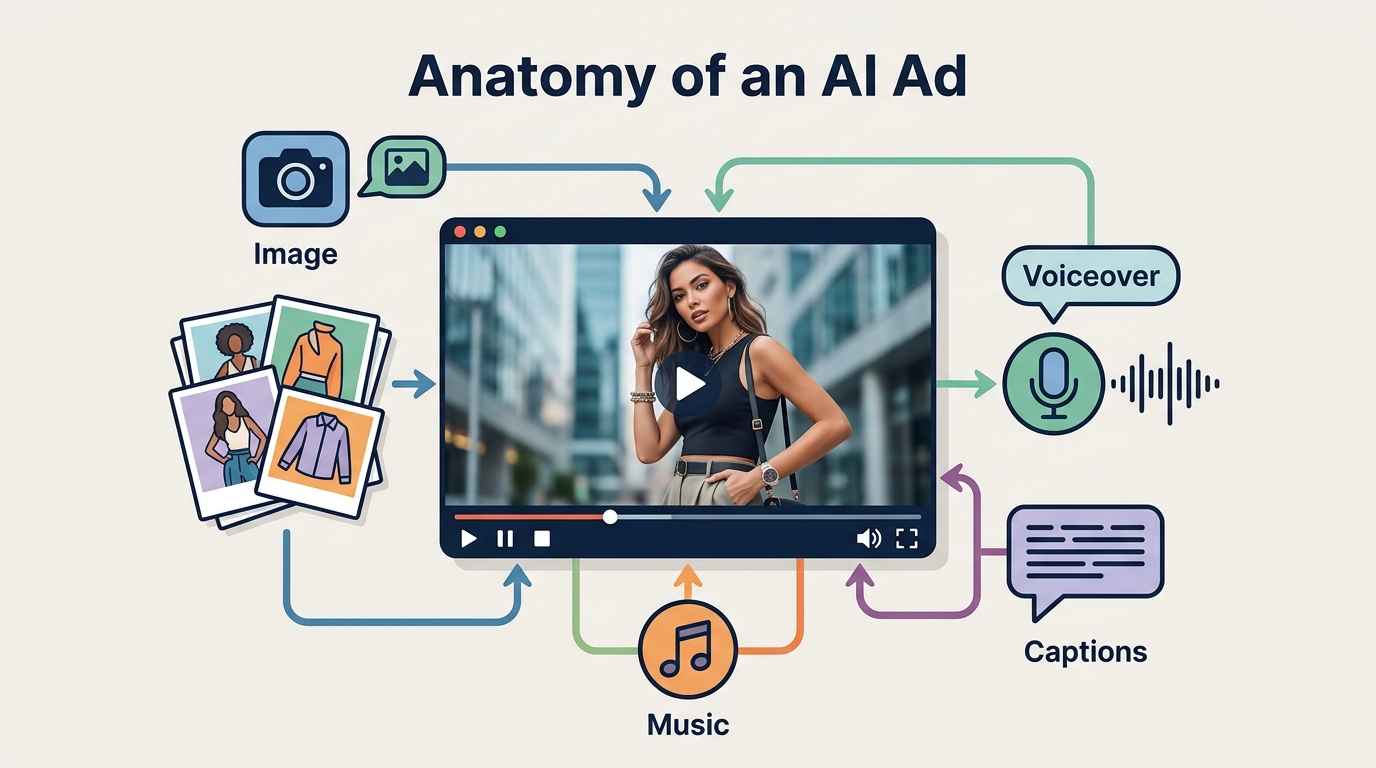
| Modality | Role in the Advertisement |
|---|---|
| Image | Provides the core visual identity, showcases the product, and establishes the setting. |
| Video | Adds motion and dynamism, demonstrates the product in use, and captures attention. |
| Voice | Delivers the narrative, explains the value proposition, and provides a human touch. |
| Music | Sets the mood and pace, evokes emotion, and makes the ad more memorable. |
| Sound Effects | Add realism and draw attention to specific actions or moments. |
| Editing | Brings all the elements together, controls the timing and flow, and ensures a coherent final product. |
Illustrative Example: A 15-Second Storyboard for a Fashion Product
Here is a fictional storyboard for a 15-second ad for a sustainable handbag, demonstrating how the different modalities work together. This is a simplified example, but it illustrates the process of planning a multimodal creative.
| Time | Visual | Voice | Music/SFX | On-screen Text | Purpose |
|---|---|---|---|---|---|
| 0-3s | Fast-paced montage of AI-generated images of the handbag in different settings (city, nature, cafe). | (No voice) | Upbeat, modern music begins. | The All-Day Tote | Hook/Intro |
| 3-8s | AI-generated video showing the handbag being opened, revealing a spacious interior. | "From your laptop to your lipstick, it all fits." | Music continues. A subtle 'zip' sound effect. | Crafted from Recycled Materials | Feature/Benefit |
| 8-12s | Split screen showing AI-generated models wearing the handbag with different outfits. | "Style that feels good, and does good." | Music swells slightly. | Build Desire | |
| 12-15s | Final shot of the handbag on a clean background with the brand logo. | (No voice) | Music resolves with a final beat. | Shop Now & Get 15% Off | CTA |
How Do You Turn Ad Performance into Your Next Great Idea?
The real power of AI in advertising is not just in generating a single ad, but in creating a system for continuous improvement. The goal is to move from a linear production process to a circular feedback loop, where performance data from live campaigns directly informs the next creative brief. This is the most significant differentiator between brands that simply use AI tools and those that build a scalable creative optimization engine.
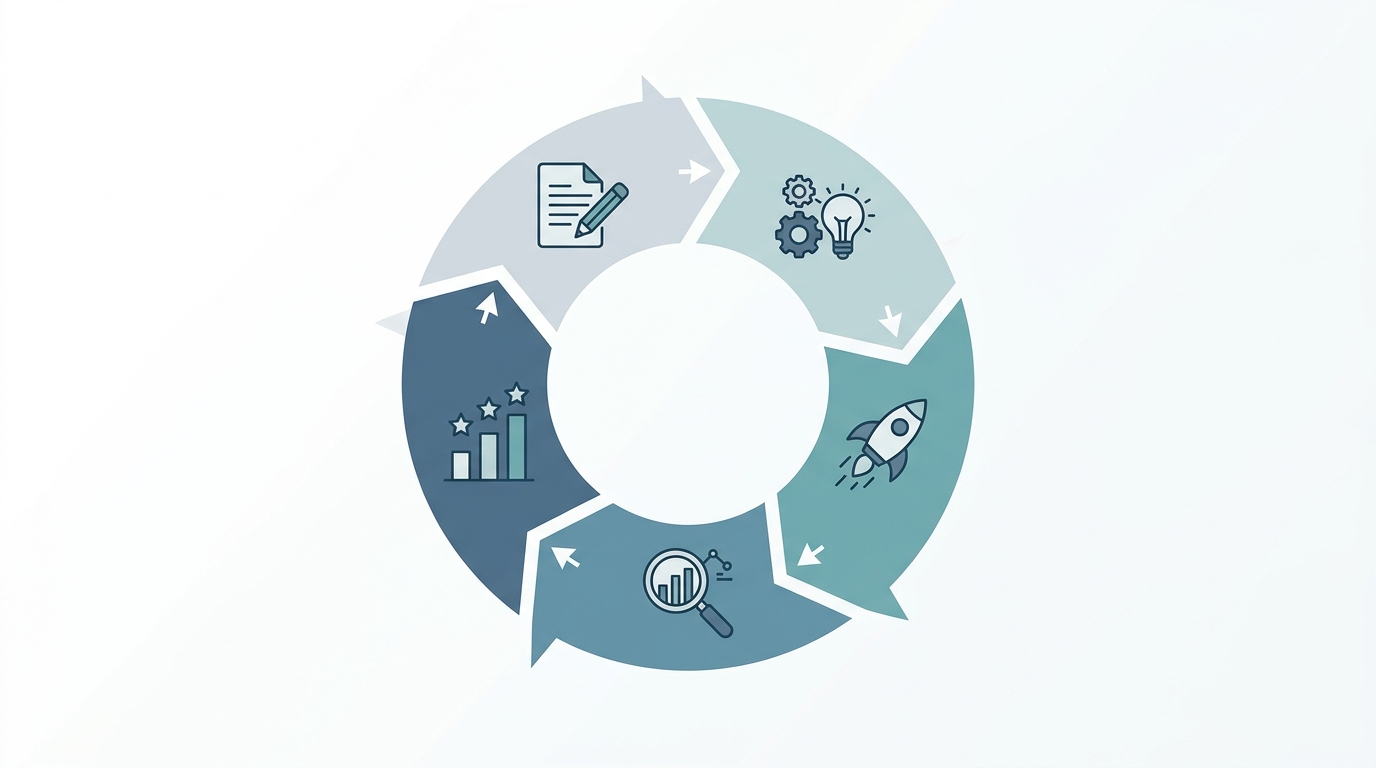
This process transforms AI from a simple production tool into a strategic asset. Instead of guessing what might work, you are using real-world data to guide your creative decisions. This allows you to systematically test hypotheses, identify the visual styles, messages, and hooks that resonate with your audience, and double down on what works.
How EngageReel Connects Creative to Performance
This is where the process moves from production to optimization. While the steps above show you how to create the assets, a platform is needed to manage the testing, analyze the results, and connect those insights back to the creative process. EngageReel is an AI ad performance and creative platform for fashion eCommerce that is designed to manage this entire feedback loop. It allows you to launch structured tests, see exactly which creative elements are driving performance, and use those signals to brief your next round of AI-generated ads. This closes the loop between creative production and performance marketing, enabling you to make smarter, data-driven decisions.
Before You Launch: A 10-Point Checklist
- Clear Objective: Does the ad have a single, clear goal?
- Strong Hook: Does the ad grab attention in the first 3 seconds?
- Coherent Narrative: Do the visuals, voice, and music work together to tell a story?
- Clear Value Proposition: Is it obvious what the product is and why the viewer should care?
- On-Brand: Does the ad align with your brand's style and tone?
- Platform-Optimized: Have you created versions for each platform and placement?
- Clear Call-to-Action: Is it clear what you want the viewer to do next?
- Correct Licensing: Do you have the rights to use all AI-generated assets in a commercial ad?
- Tracking in Place: Are your analytics and tracking set up to measure performance accurately?
- Testing Plan: Do you have a plan to test multiple variations and learn from the results?