Fashion Ad Editing Styles: Boost Conversions with Pacing & Transitions
This article breaks down the essential video editing styles, pacing techniques, and transitions that turn fashion ad views into sales. It’s for creative strategists, video editors, and performance marketers who need to create visually compelling ads that drive measurable results and improve ROAS.
- Identify which editing styles resonate with different fashion audiences.
- Master video ad pacing to hold attention and drive action.
- Choose transitions that enhance, not distract from, your product.
- See how EngageReel helps automate creative decisions with performance data.
Your fashion ad looks stunning—but is it actually selling product? For creative strategists and performance marketers, the gap between a visually beautiful ad and a high-converting one often comes down to the unseen art of editing. The right pacing, cuts, and transitions don't just create a mood; they guide the viewer's eye and drive them toward a purchase decision.
What is "Editing Style" in Fashion Video Ads and Why Does It Matter for ROAS?
Editing style is the unique blend of pacing, shot selection, transitions, and effects that gives a video its distinctive rhythm and feel. In the world of fashion advertising, it's the critical factor that can turn a passive scroll into an active click. While a brand's overall aesthetic sets the tone, the editing style is how that aesthetic is communicated in the first few seconds of a video ad. Research from Meta for Business emphasizes that viewers form an impression of a video ad almost instantly, making these initial editing choices paramount for capturing attention and preventing scroll-away.
The impact on Return on Ad Spend (ROAS) is direct and measurable. An engaging editing style captivates viewers for longer, leading to higher video completion rates and a greater probability of a click-through. Conversely, an ad with jarring or sluggish pacing is likely to be ignored, wasting the impression and inflating campaign costs. A well-executed editing style elevates the product, tells a compelling micro-story, and presents the call-to-action as the logical next step for the viewer. This is not just about making pretty videos; it's about crafting a visual argument that leads to a sale. Every cut, every transition, every second of footage should be working towards that goal.
How Does Video Pacing Influence Ad Performance for Apparel?
Pacing, or the speed at which shots change, is arguably the most powerful tool in a fashion ad editor's arsenal. It dictates the energy and flow of the ad, directly influencing viewer engagement and retention. Different pacing strategies can be employed to achieve specific campaign goals:
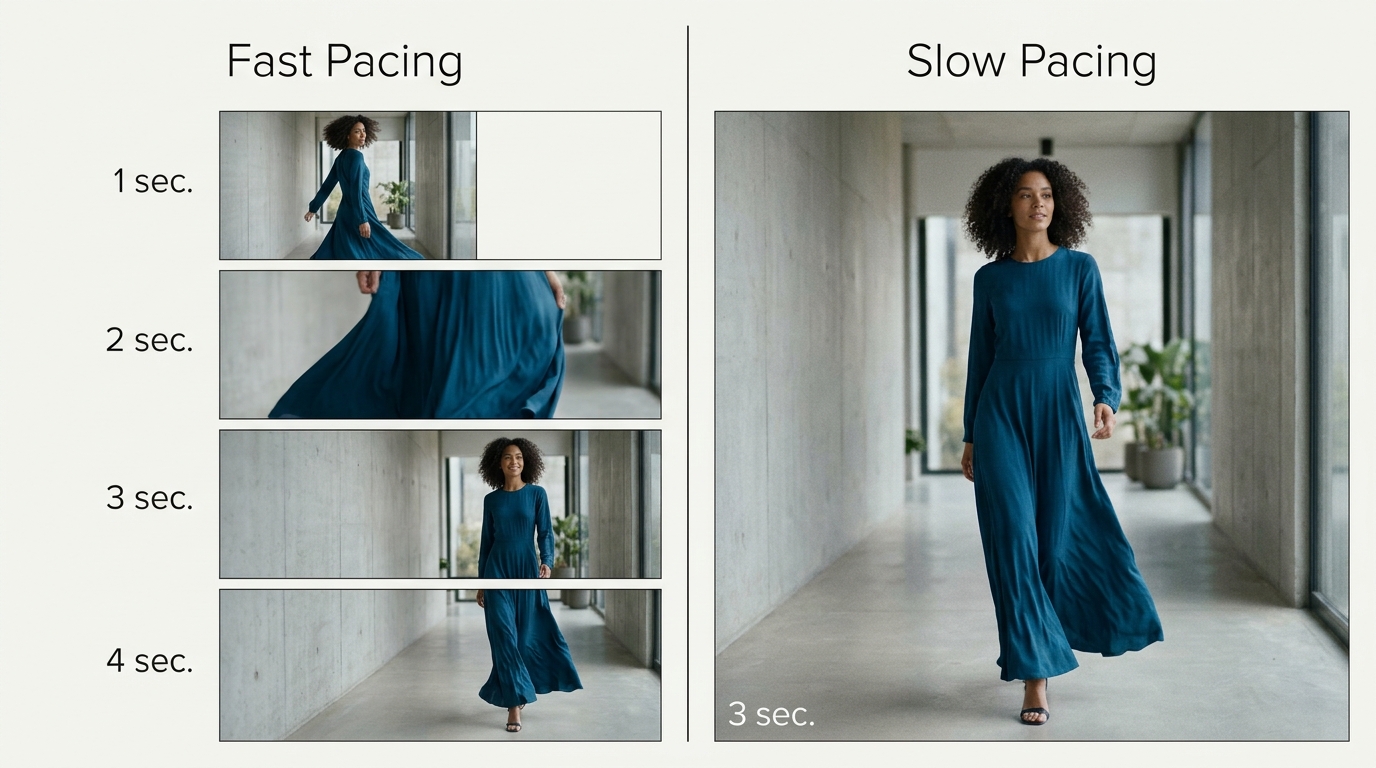
- Fast Pacing (Quick Cuts): This style uses rapid-fire shots, each lasting just 1-2 seconds, to create a sense of urgency, excitement, and high energy. It's particularly effective for flash sales, new collection announcements, and campaigns targeting younger demographics on platforms like TikTok and Instagram Reels. The quick cuts allow for showcasing a wide range of outfits or product features in a short amount of time, keeping the viewer engaged and curious for what's next. This approach mirrors the fast-paced nature of social media feeds, making the ad feel more native and less disruptive.
- Slow Pacing (Longer Takes): A more deliberate and measured approach, slow pacing involves shots that last 3-5 seconds or longer. This builds a feeling of luxury, sophistication, and attention to detail. It is the preferred style for high-end fashion, bridal collections, and campaigns that focus on the craftsmanship and quality of the materials. The longer takes give viewers the opportunity to appreciate the fabric, cut, and movement of the garment, reinforcing a premium brand image and justifying a higher price point.
- Rhythmic Pacing: This technique involves syncing the video cuts to the beat of the background music, creating a hypnotic and memorable viewing experience. Rhythmic pacing is highly versatile and can be adapted to both fast-paced tracks and slower, more melodic scores, making it a popular choice for brand awareness campaigns that aim to leave a lasting impression on the viewer. When done well, it can make the ad feel more like a music video than a commercial, increasing its shareability and organic reach.
The key to effective pacing is to align it with the campaign's objective, the product's story, and the target audience's expectations. A fast-paced ad for a luxury evening gown would likely feel out of place, just as a slow-paced ad for a new streetwear collection would fail to capture the desired energy. Testing different pacing strategies is crucial to understanding what resonates with your specific audience.
Which Video Transitions Best Drive Engagement for Fashion Products?
Transitions are the bridges that carry the viewer from one shot to the next. While they are often subtle, their impact on the overall flow and professionalism of an ad is significant. In fashion advertising, the most effective transitions are those that are seamless and serve to highlight the product, rather than drawing attention to themselves.
| Transition Type | Best For | Conversion Impact |
|---|---|---|
| Hard Cut | Fast-paced, rhythmic ads; showcasing multiple products or looks quickly. | Creates a clean, modern feel. Maintains high energy and keeps the viewer focused on the product. |
| Match Cut | Connecting two different scenes by matching an object or action; e.g., a model's spin transitions to a different outfit. | Creates a clever, visually satisfying link that highlights product versatility or transformation. |
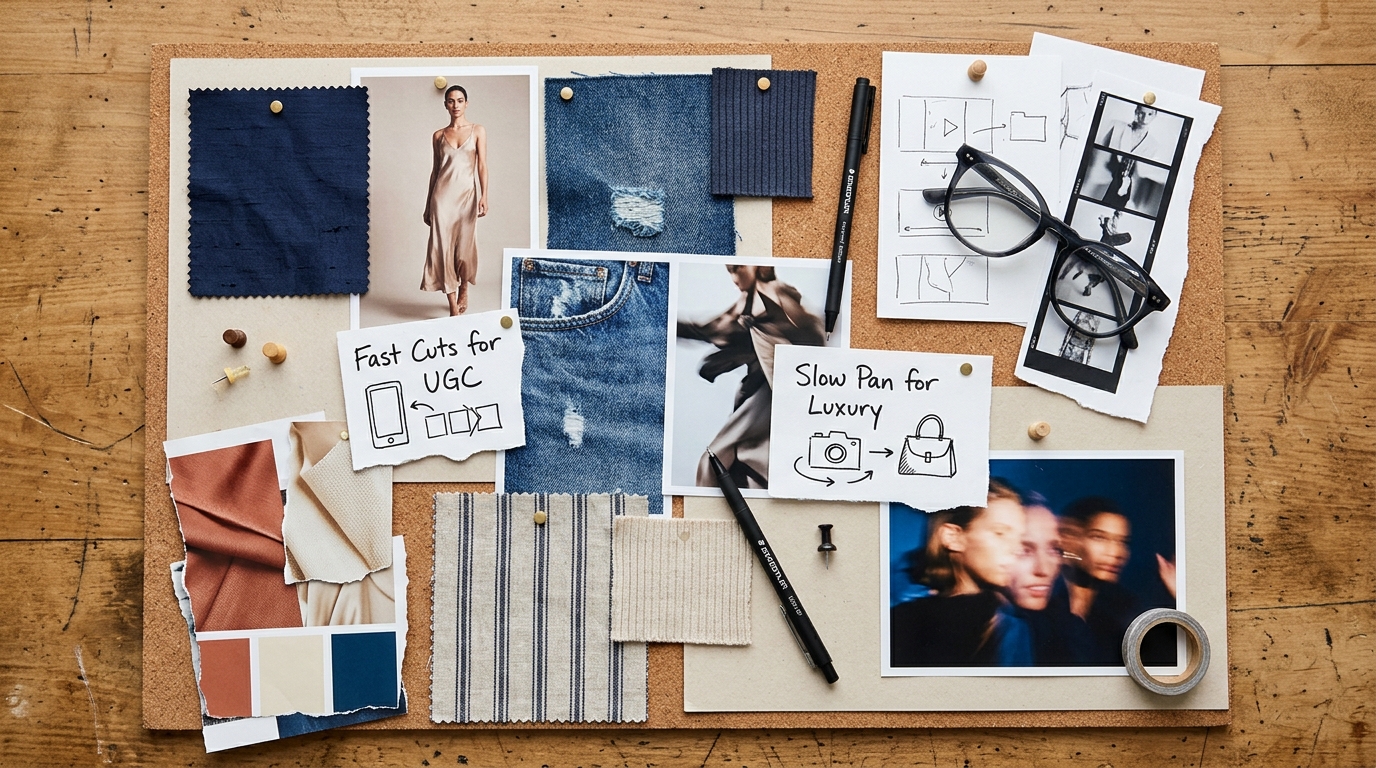
| Whip Pan / Zoom | User-generated content (UGC) style ads; creating a sense of authentic, in-the-moment action. | Adds energy and a native feel to ads on platforms like TikTok, which can increase trust and click-through rates. |
| Smooth Fade / Dissolve | Luxury, bridal, and storytelling campaigns where a softer, more elegant mood is required. | Builds an emotional connection and a sense of timelessness, supporting a premium brand image. |
Overly elaborate or flashy transitions, such as star wipes or page peels, are generally seen as distracting and can make an ad look unprofessional, potentially cheapening the brand's image. The primary goal of a transition should always be to enhance the narrative and maintain a smooth viewing experience, not to become the main attraction. A well-chosen transition can make the difference between a video that flows and one that feels disjointed and amateurish.
Strategies for Choosing the Right Editing Style for Different Campaign Goals
The most effective editing style is not a one-size-fits-all solution; it is a strategic decision that should be tailored to the specific product, target audience, and campaign objective. A successful approach involves carefully mapping the editing style to the desired outcome of the ad.
To do this, start by asking these key questions:
- What is the product being advertised? A rugged, durable winter coat will require a different editing approach than a delicate, flowing silk dress. The editing style should reflect the inherent attributes of the product—whether it's meant to be seen as tough, elegant, playful, or professional. The texture, weight, and movement of the fabric should all be considered when deciding on the pacing and transitions.
- Who is the target audience? A Gen Z audience browsing TikTok will likely respond better to fast-paced, trend-driven edits that incorporate popular sounds and effects, while a more mature audience on a platform like Facebook may prefer a slower, more narrative-focused style that tells a story and builds an emotional connection. Understanding your audience's media consumption habits is key.
- What is the primary goal of the campaign? A brand awareness campaign might prioritize visually stunning, memorable shots with rhythmic pacing to create a lasting impression. In contrast, a conversion-focused campaign for a limited-time flash sale will benefit from quick cuts and a clear, urgent call-to-action to drive immediate sales. The editing style should directly support the desired action you want the viewer to take.
For instance, a campaign for a new line of high-performance activewear could use fast cuts, an upbeat electronic soundtrack, and dynamic whip-pan transitions to convey a sense of movement, energy, and performance. Conversely, a campaign for a bespoke tailoring service would be better served by slow, deliberate shots, classical music, and smooth dissolves to emphasize the craftsmanship, precision, and luxury of the brand. By aligning these three elements—product, audience, and goal—you can create an editing style that is not only visually appealing but also highly effective at driving conversions.
Leveraging Data to Inform Your Fashion Ad Editing Decisions
The most successful fashion brands have moved beyond subjective creative decisions and now rely on data to inform their editing choices. By analyzing key performance metrics from their ad campaigns, creative teams can identify patterns and trends that lead to higher engagement and conversions. The most important metrics to monitor include:
- 3-Second View Rate: This metric indicates how effective your ad's opening hook is. A low rate may suggest that the initial pacing or visual is not capturing the viewer's attention.
- Average Watch Time: Analyzing where viewers tend to drop off can provide valuable insights. A significant drop-off at a specific point might indicate a jarring transition or a section where the pacing becomes too slow.
- Click-Through Rate (CTR): This shows which ad variations are compelling enough to make viewers want to learn more. A/B testing different editing styles for the same product is a powerful way to identify clear winners.
- Conversion Rate: This is the ultimate measure of an ad's success. Tracking which editing styles are actually driving sales provides the most valuable data for future creative development.
This is where an AI ad performance and creative platform for fashion eCommerce can provide a significant competitive advantage. Tools like EngageReel are designed to analyze these metrics across all your campaigns, automatically identifying which creative elements—including pacing, transitions, and even music—are contributing most to your ROAS. Instead of spending hours manually sifting through data, you receive actionable insights on what to create next. EngageReel’s content engine can then help you produce new ad variations based on the patterns that are already proven to be successful, taking the guesswork out of creative optimization.
By forging a direct link between creative decisions and hard performance data, you can shift from making ads that are subjectively "good" to making ads that are objectively high-converting. To learn more about how EngageReel can help you achieve this, visit engagereel.com.
Frequently asked questions
What is the ideal pace for a fashion video ad?
There is no single "ideal" pace. It depends on your goal and platform. For quick conversions on social media, fast pacing with 1-2 second cuts is often effective. For luxury or brand-building, slower pacing with 3-5 second shots can be more impactful by conveying quality and detail. According to Think with Google, the first few seconds are critical, so front-load the most important message.
Do fast cuts work better for all fashion ads?
No. Fast cuts create excitement and urgency, which is great for streetwear, flash sales, or trend-focused items. However, for products that require viewers to appreciate craftsmanship, fabric texture, or intricate details, slower pacing is more effective at building perceived value.
What kind of transitions should I use in my fashion video ads?
Stick to clean, purposeful transitions. Hard cuts are the standard for most modern ads. Match cuts can be very effective for showing product transformations. Avoid flashy, distracting transitions that draw attention away from the product itself, as this can cheapen your brand's image.
How does music choice relate to editing style in fashion ads?
Music and editing are deeply connected. The rhythm of the music often dictates the pace of the cuts. A high-energy electronic track naturally pairs with fast pacing, while a classical or ambient score complements slower, more cinematic editing. The music should always enhance the mood you're trying to create with your visual style.
What makes a good fashion ad convert?
A good fashion ad converts when it combines a strong visual hook, a clear product value proposition, and an editing style that matches the platform and audience. Data from Meta suggests that ads that feel native to the platform and get to the point quickly have a higher chance of success.
References
- Meta for Business — Creative Best Practices for Video Ads (2023)
- Think with Google — The YouTube Video Advertising Playbook (2024)
- TikTok for Business — The Anatomy of a High-Performing Ad Creative (2023)
- Glossy — Fashion Brands Are Getting Smarter About Their Video Ad Spend (2024)
- Creatopy - 20 Fashion Ad Examples to Inspire Your Next Campaign (2024)