
How AI Fashion Variations Drive Meta Ad Performance
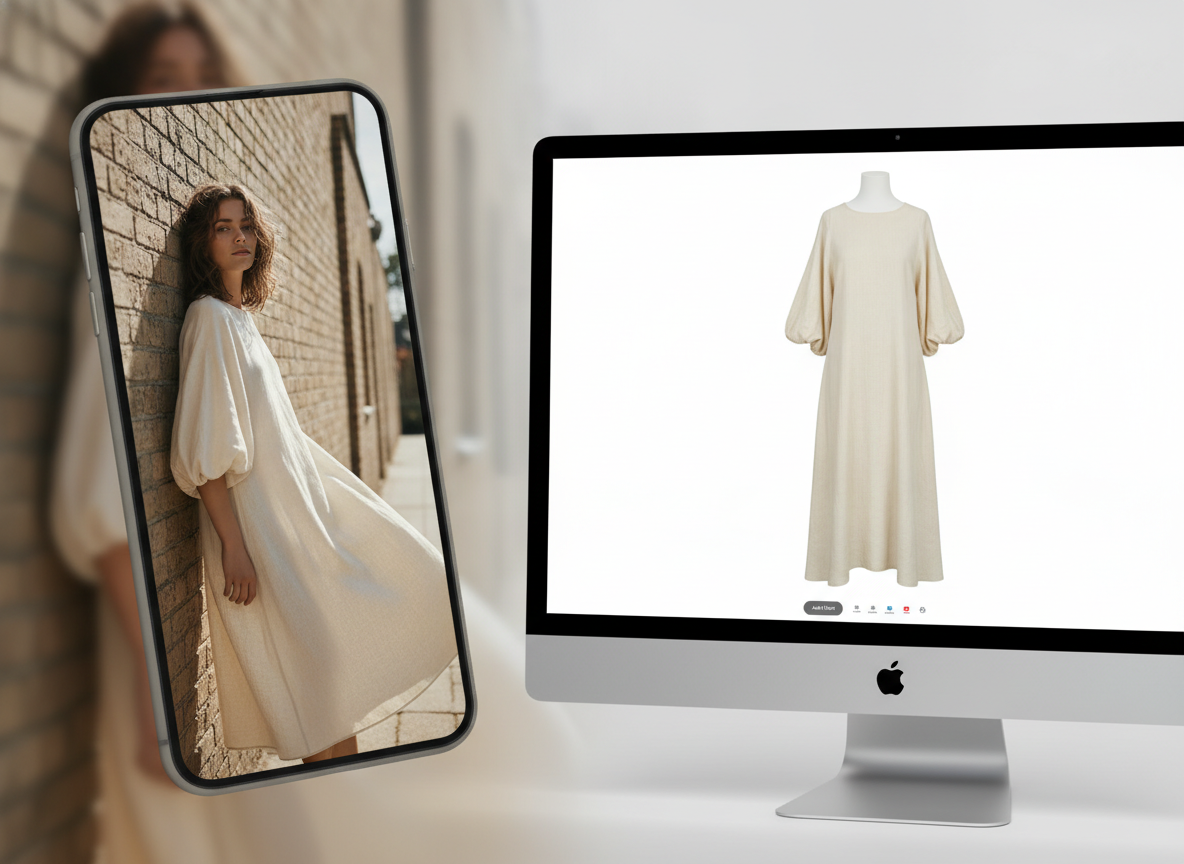
Fashion brands burn budget on traffic and creative that does not convert because AI-generated variations alter the physical product. Your growth team will learn how to build a high-fidelity creative testing matrix that scales Meta ads without sacrificing garment accuracy. This framework connects visual consistency directly to ROAS.
- What garment distortion in ad creative costs your eCommerce brand
- Why prompt-based AI generation breaks your creative testing
- The exact QA framework to align ad clicks with product page reality
- See how EngageReel connects visual fidelity to Meta ad ROAS
Are inconsistent AI garments killing your Meta ad ROAS? Generating hundreds of AI fashion variations is easy, but keeping the exact physical product consistent across different models and campaign treatments is a revenue-critical challenge. According to Baymard Institute (2024), image quality and accuracy are top factors in purchase hesitation. When your ad creative promises one garment and the product page delivers another, you are paying for bounced traffic.
What garment distortion in ad creative costs your brand
Every creative variation is an opportunity to find a winning hook, but it is also an opportunity for AI to hallucinate the product. When a $20M fashion brand scales its paid social, the volume of required creative often leads to degraded quality. If an AI generator hallucinates extra seams, alters a neckline, or changes the hardware from silver to gold, the ad might still click, but it will not convert.
This mismatch between the ad click and the product page reality creates friction. Graswald AI (2026) points out that a distorted logo or broken print is instantly recognizable as fake, undoing the credibility of the entire image. You are not just losing the sale; you are actively degrading brand trust and wasting Meta ad spend on users who feel bait-and-switched.
Why prompt-based AI generation breaks creative testing
The structural reason brands struggle with consistent variations is their reliance on text prompts rather than locked visual profiles. If your creative team specifies a model and setting using words, they are recasting the entire scene on every generation. As Astria (2026) explains, description is not identity. A prompt describes a category, not a specific, repeatable asset.
When you try to run a rigorous creative test—isolating the impact of a background change against a specific demographic—the test is invalidated if the garment itself shifts between the two variants. True creative testing requires isolating one variable at a time. If the AI changes the drape of the fabric while changing the background, you cannot definitively know which factor influenced the ROAS.
Fixing the gap between the ad click and the product page
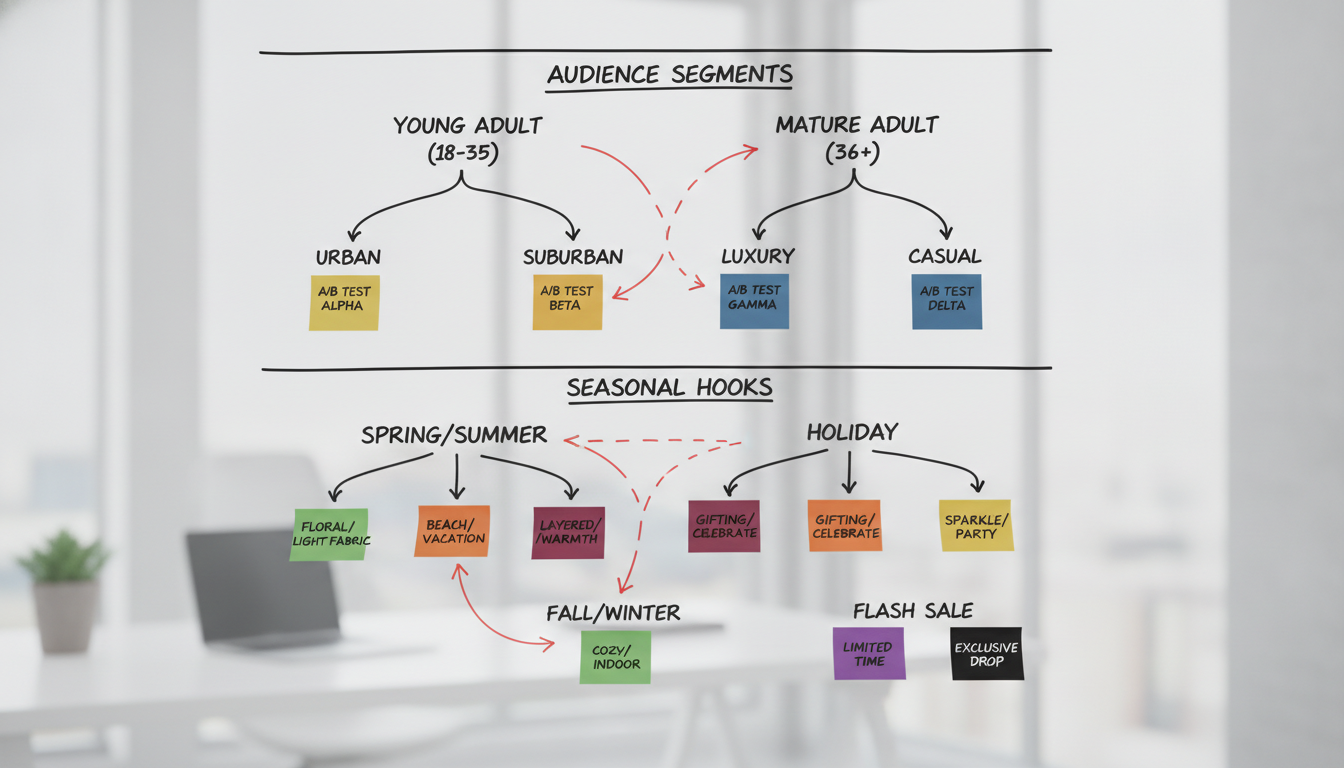
To scale AI ad performance and creative for fashion eCommerce, growth teams must enforce a strict division between what the AI can change and what must remain immutable. You want the algorithm to test different models, poses, locations, lighting, and styling to combat creative fatigue. But the core product must remain locked.
As outlined by DesignerBox (2026), consistency means holding four variables steady: the model’s identity, the lighting setup, the camera distance, and garment fidelity. By calibrating a brand profile once and applying it systematically, you ensure that the image driving the click perfectly matches the reality of the product page.
Structuring a high-fidelity creative variation matrix
When rolling out variations, establish a structured matrix rather than a random assortment of AI outputs. A recent study by Springer Nature (2026) validates the necessity of systematic QA, noting that VLMs can evaluate specific garment attributes like texture, color, and hardware.
A high-converting testing matrix should follow these steps:
- Lock the Garment: Extract the physical product geometry from a clean source photo. Treat this as immutable data, not a suggestion for the AI.
- Rotate the Hook: Apply the locked garment to three distinct model identities representing your target demographics.
- Vary the Context: Place those models in distinct seasonal or lifestyle locations to test which environment drives the lowest CPA.
- Audit the Details: Run the outputs through a VLM-based QA check to ensure seams, hardware, and prints match the original SKU perfectly.
- Deploy and Measure: Push the approved, highly-consistent variations to Meta and measure the impact on post-click conversion rates.

Evaluating Creative Testing Approaches
| Testing Method | Creative Velocity | Garment Accuracy | ROAS Impact |
|---|---|---|---|
| Text Prompts | Fast | Inconsistent | Negative (Bounces) |
| High-Fidelity Matrix | Automated | Strict | Positive (Scales spend) |
Connecting visual fidelity directly to ROAS
Creating consistent variations is only half the battle; knowing which ones drive revenue is the ultimate goal. EngageReel uses these consistent variations as measurable ad creatives. It connects attributes such as the model, scene, and styling hook directly with Meta performance.
Because the garment remains locked, the platform can isolate exactly which creative variables are moving the needle. It watches every creative, learns what converts, and automatically determines which high-fidelity variations deserve another generation cycle, ensuring your ad spend is always optimized.
Letting performance data guide the next variation
Once your high-fidelity matrix is live, the performance data must dictate your next creative cycle. If a specific model identity paired with an urban background drives a 20% higher ROAS, that combination should become the baseline for your next product drop.
Stop guessing what works and stop letting AI hallucinate your products. By locking garment fidelity and letting performance data guide the contextual variations, fashion brands can scale their paid social acquisition without burning budget on inaccurate creative.
Frequently asked questions
Why does garment distortion hurt Meta ad performance?
When an ad creative shows a distorted or inaccurate version of a garment, the click-through rate may remain high, but the conversion rate plummets once the user lands on the accurate product page. This mismatch burns ad spend on bounced traffic.
How many creative variations should a fashion brand test?
For a single hero product, testing a matrix of 15 to 30 variations across different models, settings, and lighting conditions allows the algorithm to match the right aesthetic to the right demographic without fatiguing the audience.
What is the biggest mistake brands make with AI fashion ads?
Treating each generation as an isolated image rather than a calibrated brand standard. When lighting and model identity drift wildly between ads, the campaign looks like a collection of disjointed experiments rather than a premium fashion brand.
How does AI affect creative fatigue?
By locking the garment and rotating the model, setting, and styling, brands can endlessly refresh their ad creative. This combats creative fatigue by presenting novel visuals to the audience while maintaining strict fidelity to the product being sold.
Which garment details matter most for ad conversion?
Surface details like color accuracy, print scale, and hardware visibility are critical. If an AI generates silver hardware on an ad when the physical product has gold, it creates immediate purchase hesitation at checkout.
References
- Baymard Institute — Product Page UX (2024)
- DesignerBox — Consistent On-Model Product Images With AI (2026)
- Astria — How to Keep the Same AI Model Across a Whole Collection (2026)
- Springer Nature — A VLM-based framework for evaluating garment consistency (2026)
- Graswald AI — AI Fashion Imagery: Keeping It Consistent at Scale (2026)